180 Gallon Tank 0 Nitrates Is So Easy, Why Does No One Do It?

For the average hobbyist, having 0 nitrates is not really important, unless they like the looks of plants and they enjoy doing water changes as I do.
For myself, being somewhere between a average hobbyist and a breeder of higher quality fancy guppies, I usually look to other breeders or fish farms for my inspiration.
For me, the system used by fish farms of a drip water and overflow system that is constantly circulating in new water from wells on the farm, it makes sense that fish need their waste, guppies in particular, to be gotten rid of and replaced by crystal clear water every couple days in order to grow and thrive.
Anytime fish are crowded in a breeding type setup, they may even become stunted if the water is not changed frequently. Ive had guppies get stunted from high nitrates. Fish may even release hormones by the bigger older adults that stunt the fry and juvinelles. This is how it may work in nature to control the population where there are too many fish in a small lake.
So to me its pretty important to control nitrates, and change the water frequently enough. My water is hard and alkaline and the harder the water, the more toxic that nitrate can become. Sensitive Fish can be harmed by nitrates over 40 and guppies and discus are definitely the more sensitive of fish species. Not saying its critical importance to the average hobbyist, but to a fish farm or "pro" breeder, keeping it below 20 is definitely important, particulary for growing out young fish! It is how nature works, nitrates are instantly gobbled up by plants, insects eat the plants, small fish eat the insects, bigger fish eat the smaller fish. Rain replaces evaporated water and the cycle continues.
86 ssinit ill keep that in mind thanks!
 

Advertisement

Advertisement
No plants need food. My tanks are currently so understocked that it probably would take a year to get to 40 nitrates. I find if I go longer then 2 months my tds start to rise and my dissolved oxygen starts to go down. I say start but I assume the trend woukd continue so its time to do a partial water change. Now I do 25% or so not huge changes but it keeps it humming along. Being able to borrow $6,000 worth of digital equipment has its advantages.
 
I justed tested the water in my 65 this morning, and despite being a bit behind on my water changes, it read 0 nitrates. It was definitely accidental, as this was actually supposed to be a temporary setup as I get some of my other tanks situated (this tank is pretty beat up with a lot of scratches). Wish my "fancier" looking tanks were as stable...
 
I doubt it's zero are you reading and doing the nitrate test correctly? Even with plants and almost daily pwc my tanks stay around 10
 
I actually add nitrates back to my tank on purpose as my plants eat them all. I've tested the "are you sure you're testing correctly" by testing an hour after dosing nitrates to the tank- it reads around 20ppm when dosed correctly and then reads zero a week later.
 

Advertisement
  • Thread Starter
  • #57
I doubt it's zero are you reading and doing the nitrate test correctly? Even with plants and almost daily pwc my tanks stay around 10

Daily water changes is probably preventing your denitrifying bacteria from building up. Plants help but the bacteria do the heavy lifting. We also know this because marine tanks can be stable 0 with no plants.
 
Or think it’s a myth. Why is denitrification so controversial? It is so easy and it makes your fish live longer. I have 8 tanks with stable N parameters of 0,0,0. It didn’t take months.. just 2-3 weeks after cycling. Denitrification is like a taboo subject on here. Or a magical thing only to be attained by a few experts.. or impossible! Shake that nitrate bottle for the 20th time and then go buy a new one.! Or only possible with loads of plants or a deep sand bed with a plenum. No it’s super easy! Often it happens by accident like in my husbands tank..

Here is one easy method ( there are others)

2.5 - 3 inches of natural gravel. There is a reason this depth was recommended on the bag. Hypoxic but not anoxic.
A good filter that doesn’t over-do flow. But you can start with high flow while cycling.
Some driftwood or fallen oak/ magnolia leaves for a carbon source
Cycle the tank the usual way and then get nitrates under 20 with water changes ( if you can’t because your tap has nitrates or whatever try nitrazorb for a week)
Don’t vacuum more than half the tank at a time leaving some gravel undisturbed. Then switch sides the next week. I only do every other week.
When you notice nitrate accumulating more slowly you can do smaller water changes and or space them out a little more and be careful not to disturb all the gravel when you do it.
You should notice nitrate accumulation rate dropping or even becoming negative.

Nitrates still not coming down?
Scatter some lava stones sold at Home Depot for grills on the bottom of the tank (don’t boil) to grow denitrifiers. If you start with this at the beginning it will go faster.

Still no ? .are you disturbing the deep parts of the gravel too much? Do you have too much flow in your tank? Try maximizing media in your filter while reducing flow or switch to (or supplement) your low flow filter with an air driven sponge or corner filter (make sure you seed it first in your tank or with used media) Always watch your parameters until things stabilize.

Has worked every time for me. Never had an ammonia spike. This also matches how fish were kept in the old days before we knew anything about cycling or bacteria. Back when fish lived forever.


Don’t believe me.? Try it with a small tank.
I am trying your method in one of test tank To see if it works.but I have some question :
1- why we need source of carbon for this kind of tank?
2- the purpose of this system is create the reproduce and form colonies for anaerobic bacteria, and it require the low flow in tank and / or no disturb in very bottom substrate's lay if I have 3-4 inches substrate.
So if I do not have 3-4 inches substrate ,instead of that I have 1 inch substrate and very low flow like 50 gals per hour or use sponge filter then is it work the same?
3- instead of Lava stone add up in tank, I 'll add seachem matrix bio media to maximize the contact surface.Will that product works faster to create the anaerobic and how fast?
 
  • Thread Starter
  • #60
I am trying your method in one of test tank To see if it works.but I have some question :
1- why we need source of carbon for this kind of tank?
2- the purpose of this system is create the reproduce and form colonies for anaerobic bacteria, and it require the low flow in tank and / or no disturb in very bottom substrate's lay if I have 3-4 inches substrate.
So if I do not have 3-4 inches substrate ,instead of that I have 1 inch substrate and very low flow like 50 gals per hour or use sponge filter then is it work the same?
3- instead of Lava stone add up in tank, I 'll add seachem matrix bio media to maximize the contact surface.Will that product works faster to create the anaerobic and how fast?

Organic Carbon feeds the denitrifying bacteria.

I’ve had it work with shallower gravel with a sponge filter

Seachem is like expensive lava so should work!
 
Or think it’s a myth. Why is denitrification so controversial? It is so easy and it makes your fish live longer. I have 8 tanks with stable N parameters of 0,0,0. It didn’t take months.. just 2-3 weeks after cycling. Denitrification is like a taboo subject on here. Or a magical thing only to be attained by a few experts.. or impossible! Shake that nitrate bottle for the 20th time and then go buy a new one.! Or only possible with loads of plants or a deep sand bed with a plenum. No it’s super easy! Often it happens by accident like in my husbands tank..

Here is one easy method ( there are others)

2.5 - 3 inches of natural gravel. There is a reason this depth was recommended on the bag. Hypoxic but not anoxic.
A good filter that doesn’t over-do flow. But you can start with high flow while cycling.
Some driftwood or fallen oak/ magnolia leaves for a carbon source
Cycle the tank the usual way and then get nitrates under 20 with water changes ( if you can’t because your tap has nitrates or whatever try nitrazorb for a week)
Don’t vacuum more than half the tank at a time leaving some gravel undisturbed. Then switch sides the next week. I only do every other week.
When you notice nitrate accumulating more slowly you can do smaller water changes and or space them out a little more and be careful not to disturb all the gravel when you do it.
You should notice nitrate accumulation rate dropping or even becoming negative.

Nitrates still not coming down?
Scatter some lava stones sold at Home Depot for grills on the bottom of the tank (don’t boil) to grow denitrifiers. If you start with this at the beginning it will go faster.

Still no ? .are you disturbing the deep parts of the gravel too much? Do you have too much flow in your tank? Try maximizing media in your filter while reducing flow or switch to (or supplement) your low flow filter with an air driven sponge or corner filter (make sure you seed it first in your tank or with used media) Always watch your parameters until things stabilize.

Has worked every time for me. Never had an ammonia spike. This also matches how fish were kept in the old days before we knew anything about cycling or bacteria. Back when fish lived forever.


Don’t believe me.? Try it with a small tank.
so disturbing the gravel is bad? and overcleaning gravel is bad? what about all the poo and food waste? shouldn't that get out of there? I mean not, sparkling clean or anything, but at least for maintaining?
 

Advertisement


  • Thread Starter
  • #62
The idea is an ecosystem.. for this method Clean only half of gravel at a time. No more than once a week. I actually do less. . If you have tons of food waste you are feeding too much.
 
so disturbing the gravel is bad? and overcleaning gravel is bad? what about all the poo and food waste? shouldn't that get out of there? I mean not, sparkling clean or anything, but at least for maintaining?
To be fair, if you have certain substrates, and especially if you have a good amount of plants, the waste is negligible and quickly dissolves. I don't gravel vac because it's usually not possible, and my nitrates might go up to 40 after a month and a half.
 
  • Thread Starter
  • #64
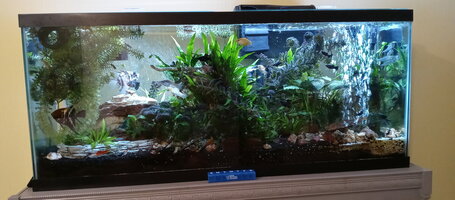
Here is my tank with 0 nitrates going on two years. Note slow growing plants do little to help. Hornwort helps but the denitrifying bacteria is the key to success here. Low flow filters and basalt lava do the trick. IMG_3699.JPG
 
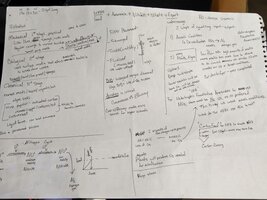
I started researching to understand how the mechanical/biological/chemical filtration processes worked. In the process, I stumbled into denitrification under the guise of a 'No Water Change Tank' and took few notes. Obviously I'm still new to this but most of it now makes enough sense that I'm excited to try it.

Thanks to those who have mentioned about only disturbing half of the gravel at time.
A deep substrate layer of a few inches or more seems like the best method.
I was thinking of a large, low flow sealed filter system where the O2 would be consumed before the end of the filter process leaving nitrates to be consumed since there's no oxygen, but it begs the question of how you can have water (H2O) without O2. I know the process releases Hydrogen. There is probably a simple 'DUH' answer to this. Again, I'm new to the denitrification process and by no means good with the science of molecules.

If anyone wants to learn about the denitrification process, I learned from this gentleman...
IMG_20200313_150719622_HDR.jpg
 
I've actually been happy to add in nitrates with Thrive because my tanks are so planted they seem to suck it up before it even occurs.
 
I've actually been happy to add in nitrates with Thrive because my tanks are so planted they seem to suck it up before it even occurs.
So plants do eat nitrates. I've read some people say they do and other that they don't. I think the do's are more in number. I want my next tank, that I did all this research for, to be moderately planted. Somewhere in between a few for decoration and owning an underwater jungle.
Thanks
 
So plants do eat nitrates. I've read some people say they do and other that they don't. I think the do's are more in number. I want my next tank, that I did all this research for, to be moderately planted. Somewhere in between a few for decoration and owning an underwater jungle.
Thanks
Oh I can tell you with certainty they do. I have one tank that barely sees any water changes, it has no filter (walstad). Whenever I test that tank, nitrates are 0.
 
I'm at 0, 0, 0 as well. I think it's cuz I only have 1 fish and he wouldn't dare let food go to waste the little piggy. Silk plants. Been like this for 3 months.

Take that back. I have 3 moss balls and 3 small pieces of water sprite, I think it's called.
 
Oh I can tell you with certainty they do. I have one tank that barely sees any water changes, it has no filter (walstad). Whenever I test that tank, nitrates are 0.
Walstad, that's the author of the book mentioned earlier in the thread who did research on fish-plant combo aquariums?
 
Walstad, that's the author of the book mentioned earlier in the thread who did research on fish-plant combo aquariums?
Ah yes, Diane Walstad. Mostly the term 'walstad' is used to refer to specific kind of set-up as advocated in her book, though the term is used much more freely to refer to any kind of dirted tank where the cycle is meant to be at least partially established in the dirt with plants eating the nitrates.
It might be useful in looking over her research and book that her foremost goal was to design an ecosystem that would work optimally, perhaps more for the plants than the fish themselves. It isn't necessarily geared towards fishkeeping (though it works perfectly in that sense, but this might help you understand some of the focus of discussions on this topic).
 

Advertisement


Ah yes, Diane Walstad. Mostly the term 'walstad' is used to refer to specific kind of set-up as advocated in her book, though the term is used much more freely to refer to any kind of dirted tank where the cycle is meant to be at least partially established in the dirt with plants eating the nitrates.
It might be useful in looking over her research and book that her foremost goal was to design an ecosystem that would work optimally, perhaps more for the plants than the fish themselves. It isn't necessarily geared towards fishkeeping (though it works perfectly in that sense, but this might help you understand some of the focus of discussions on this topic).
I believe I will. Thank you. I was a bit hesitant being a newer member to get into a thread of the advanced section. Thankfully I came with a basic understanding of the process and the folks here are friendly. Much appreciated.
 
I believe I will. Thank you. I was a bit hesitant being a newer member to get into a thread of the advanced section. Thankfully I came with a basic understanding of the process and the folks here are friendly. Much appreciated.
Nah, don't be afraid of mingling here ^^ What's 'advanced' and what isn't is all just relative, it's not like we have some kind of scale and your brain needs to contain this much knowledge to enter!
Questions are always more than welcome Don't be shy to ask and specifically ask for elaboration. We have lots of folks on here with different views and ideas and long threads with in-depth discussion frequently arise. There is no perfect way of building and maintaining tanks, you sort of have to read and look and discuss and try stuff and find what works best for you - whatever that is.
 
I wasn't able to answer this question earlier, but now I have done more research and can answer yo properly. If you have a tank with no plants, or a saltwater coral reef tank, then zero/almost zero nitrate tanks would be fine. In planted aquariums, however, it's a different story...all plants need at least some nitrogen for growth, and except for plants that can fix nitrogen from atmospheric nitrogen (which are very rare in the aquarium...can't think of any other than Azolla, which is a floating plant) that will need to come from the aquarium itself. Plants struggle when nitrogen levels hit zero, and when plants are unhealthy for any reason algae will quickly notice that and infest the tank. For planted tanks, nitrate levels are best kept about 5-10 ppm to avoid such nitrate stunting...in CO2 tanks nitrate usually needs to be dosed regularly to avoid having too little of it in the aquarium. (Aquatic plants will readily use ammonia and nitrite as well, but obviously we don't want those in a tank with livestock).
 
Yes plants need nitrate. But nitrate is not the problem it’s being made out to be. The whole reduce nitrate thing was just a way to push products like bio-home and matrix. It’s just a way to sell product. 10-40ppm nitrate is fine. Even much higher like 180ppm will take months to kill your fish (if it does). But for a regular tank weekly water changes should be done. Now these other experimental tanks do need different things and as stated there are lots of people here doing them so the info on how to is here.
 
Or think it’s a myth. Why is denitrification so controversial? It is so easy and it makes your fish live longer. I have 8 tanks with stable N parameters of 0,0,0. It didn’t take months.. just 2-3 weeks after cycling. Denitrification is like a taboo subject on here. Or a magical thing only to be attained by a few experts.. or impossible! Shake that nitrate bottle for the 20th time and then go buy a new one.! Or only possible with loads of plants or a deep sand bed with a plenum. No it’s super easy! Often it happens by accident like in my husbands tank..

Here is one easy method ( there are others)

2.5 - 3 inches of natural gravel. There is a reason this depth was recommended on the bag. Hypoxic but not anoxic.
A good filter that doesn’t over-do flow. But you can start with high flow while cycling.
Some driftwood or fallen oak/ magnolia leaves for a carbon source
Cycle the tank the usual way and then get nitrates under 20 with water changes ( if you can’t because your tap has nitrates or whatever try nitrazorb for a week)
Don’t vacuum more than half the tank at a time leaving some gravel undisturbed. Then switch sides the next week. I only do every other week.
When you notice nitrate accumulating more slowly you can do smaller water changes and or space them out a little more and be careful not to disturb all the gravel when you do it.
You should notice nitrate accumulation rate dropping or even becoming negative.

Nitrates still not coming down?
Scatter some lava stones sold at Home Depot for grills on the bottom of the tank (don’t boil) to grow denitrifiers. If you start with this at the beginning it will go faster.

Still no ? .are you disturbing the deep parts of the gravel too much? Do you have too much flow in your tank? Try maximizing media in your filter while reducing flow or switch to (or supplement) your low flow filter with an air driven sponge or corner filter (make sure you seed it first in your tank or with used media) Always watch your parameters until things stabilize.

Has worked every time for me. Never had an ammonia spike. This also matches how fish were kept in the old days before we knew anything about cycling or bacteria. Back when fish lived forever.


Don’t believe me.? Try it with a small tank.

I think more people don't attempt, because their tanks can survive with 20ppm or less of Nitrates.
 
If a tank is densely stocked (such as, for example, a mbuna tank) a denitrifying filter would be quite useful; however, in a less densely stocked tank (or one with a lot of plants) weekly water changes will do the job. Letting nitrates in the water column bottom out completely without giving plants any other source of nitrogen will stress the plants out and likely lead to an algae bloom (in particular, cyanobacteria thrive when plants are stressed from insufficient nitrogen), while nitrate in the 20 ppm range is harmless to most fish and plants and will not directly cause algae blooms (though algae will grow faster in such rich conditions if something else goes wrong...unstable CO2 levels, an ammonia spike, dying plant leaves, etc)
 
If a tank is densely stocked (such as, for example, a mbuna tank) a denitrifying filter would be quite useful; however, in a less densely stocked tank (or one with a lot of plants) weekly water changes will do the job. Letting nitrates in the water column bottom out completely without giving plants any other source of nitrogen will stress the plants out and likely lead to an algae bloom (in particular, cyanobacteria thrive when plants are stressed from insufficient nitrogen), while nitrate in the 20 ppm range is harmless to most fish and plants and will not directly cause algae blooms (though algae will grow faster in such rich conditions if something else goes wrong...unstable CO2 levels, an ammonia spike, dying plant leaves, etc)
Tanking nitrates are indeed a problem with low stocking and a disparaging issue with cyanobacteria. But nitrates are easy enough to dose. And eventually in a planted tank things will balance out with enough patience.
I afree that most people have no need or use to control them, but when you want to breed more exotic freshwater fish, completing the nitrogen cycle is invaluable. Or if you have a huge operation where water changes are a real task.
 
Or think it’s a myth. Why is denitrification so controversial? It is so easy and it makes your fish live longer. I have 8 tanks with stable N parameters of 0,0,0. It didn’t take months.. just 2-3 weeks after cycling. Denitrification is like a taboo subject on here. Or a magical thing only to be attained by a few experts.. or impossible! Shake that nitrate bottle for the 20th time and then go buy a new one.! Or only possible with loads of plants or a deep sand bed with a plenum. No it’s super easy! Often it happens by accident like in my husbands tank..

Here is one easy method ( there are others)

2.5 - 3 inches of natural gravel. There is a reason this depth was recommended on the bag. Hypoxic but not anoxic.
A good filter that doesn’t over-do flow. But you can start with high flow while cycling.
Some driftwood or fallen oak/ magnolia leaves for a carbon source
Cycle the tank the usual way and then get nitrates under 20 with water changes ( if you can’t because your tap has nitrates or whatever try nitrazorb for a week)
Don’t vacuum more than half the tank at a time leaving some gravel undisturbed. Then switch sides the next week. I only do every other week.
When you notice nitrate accumulating more slowly you can do smaller water changes and or space them out a little more and be careful not to disturb all the gravel when you do it.
You should notice nitrate accumulation rate dropping or even becoming negative.

Nitrates still not coming down?
Scatter some lava stones sold at Home Depot for grills on the bottom of the tank (don’t boil) to grow denitrifiers. If you start with this at the beginning it will go faster.

Still no ? .are you disturbing the deep parts of the gravel too much? Do you have too much flow in your tank? Try maximizing media in your filter while reducing flow or switch to (or supplement) your low flow filter with an air driven sponge or corner filter (make sure you seed it first in your tank or with used media) Always watch your parameters until things stabilize.

Has worked every time for me. Never had an ammonia spike. This also matches how fish were kept in the old days before we knew anything about cycling or bacteria. Back when fish lived forever.


Don’t believe me.? Try it with a small tank.
I’m at zero now and I am looking into using Seachem nitrogen to resupply I have a lot of plants and not sure what will happen to them if I keep it like this for long
 
its hard because i do dumb things like dose Dr Tim's Ammonium Chloride instead of Bio Booster after a water change on accident
*doh
 
Most of my tanks read 0,0,0 too even though they're cycled. I like to pack my filters and keep a ton of plants in there and eventually I end up there. I still do my water changes but really if I stopped completely my tanks would probably be fine for months.
i had a tank 0,0,0 didnt do a wayer change for a cpl months got blue green algae real bad i think maybe phosphurus build up idk i was still feeding my plants
 

Advertisement


I'm interested in how this works with plants. I'm given to understand that some nitrates is a good thing for medium/well planted tanks, but I'm also reading above that lots of plants can be a part of the 'recipe' for denitrification, ie 0 nitrates. Seems contradictory (or, more likely, I'm missing a piece of the groundwork LOL).
Also, what's the exit path for nitrogen gas from the system? I presume it's released by the microbes that make it directly into the water, then passes from the water to the air with circulation?
Is 2-3" of substrate a minimum for this process to happen? In something like a 10 gallon, that's a lot of the water volume taken away.
Can you get this to work by banking substrate up the back or a back corner of a tank? Eg 3" of sand in back left quadrant, less everywhere else?
Plants help but get them small not already big and not to many just enough and let them grow once they start growing that whats going to help with nitrites and nitrates try fast growing plants and alway trim so they can keep growing 10 gallon tank try 2inches all the way and make sure you have small flow not too much water flow hitting the gravel with the hang back filters to allow a stable aerobic bacteria to colonize and process nitrates better since they get their oxygen from nitrates. If you want to seed anerobic bacteria use seachem stability by far the most stable bacteria in the market.
 
Since the Walstad approach was mentioned in this thread; I also started getting my head around it just recently. Still have to read her book. There is another forum where the author is a moderator and might chime in from time to time. I registered under the same handle over there, too.

It seems that successful Walstad tanks do well even with high bio load (aka overstocking) and scarce water changes (if at all).
 
Honestly you don't even need plants, if you don't mind the appearance you can just let algae grow in any tank with decent light and you get 0 nitrates easy.
 
Here is my tank with 0 nitrates going on two years. Note slow growing plants do little to help. Hornwort helps but the denitrifying bacteria is the key to success here. Low flow filters and basalt lava do the trick. View attachment 654113
Is that a 5 gallons tank?
 
Love this Bc I don’t have a root planted tank and thought that was the only way.
Thank you for your first hand experience. You've all got me thinking about setting up a test tank just to play with the idea. But it seems like there are some factors here that aren't well controlled in a no change scenario. So, I won"t try it on discus, but a 55 gallon community tank could make a nice test subject.
Ahhhh to be able to set up a test tank. JEALOUS MUCH?!!
 
Honestly you don't even need plants, if you don't mind the appearance you can just let algae grow in any tank with decent light and you get 0 nitrates easy.
Algae also eat nitrates but its not appealing to me although I have a little bit of algae growing from a airstone that I took off because It was growing faster the what the shrimps and snails can eat.
Since the Walstad approach was mentioned in this thread; I also started getting my head around it just recently. Still have to read her book. There is another forum where the author is a moderator and might chime in from time to time. I registered under the same handle over there, too.

It seems that successful Walstad tanks do well even with high bio load (aka overstocking) and scarce water changes (if at all).
Its very interesting 3inches of substrate, well planted a good light maybe around 7000 kelvins wattage depends on how big the tank. With led should be around 10 to 12 watts.

I've tried it with low to moderate light plants and they are thriving with 5000 kelvins on 7 watts led. I'm currently using gravel rocks 2inches deep in a 10 gallon nano tank occupied with 10 Ember Tetras, 1 yellow with multicolored spots Endler and 7 cherry shrimps along with pest snail which I call hemp seed snails. It works as long as you got deep substrate, plants that are actually growing not stalled or dying. It works but I don't see my fish active as when my hang back power pump is on which I have it at the lowest pressure and I fill up the water until it touches the lip to cause a stream river like at the top. Even though this works yet it may not work with some species of fish and your fish may be more comfortable with a cleaner tank water and some water movement.
I started researching to understand how the mechanical/biological/chemical filtration processes worked. In the process, I stumbled into denitrification under the guise of a 'No Water Change Tank' and took few notes. Obviously I'm still new to this but most of it now makes enough sense that I'm excited to try it.

Thanks to those who have mentioned about only disturbing half of the gravel at time.
A deep substrate layer of a few inches or more seems like the best method.
I was thinking of a large, low flow sealed filter system where the O2 would be consumed before the end of the filter process leaving nitrates to be consumed since there's no oxygen, but it begs the question of how you can have water (H2O) without O2. I know the process releases Hydrogen. There is probably a simple 'DUH' answer to this. Again, I'm new to the denitrification process and by no means good with the science of molecules.

If anyone wants to learn about the denitrification process, I learned from this gentleman...
View attachment 674745
Your living species fish and bacteria will produce co2 your plants will release some of that co2 back at night.
 
Wow, a thread from 2019

I don't think the conversion of nitrate to nitrogen gas occurs much in our aquariums. This would be ideal because the gas would bubble out leading to net loss of nitrogen from the aquarium.

Instead, I think the intermediate steps are happening where plants and bacteria are eating up nitrate and incorporating it into their bodies. The good thing is nitrate is reduced, but the problem is the nitrogen is still in the aquarium. Eventually the bacteria will run out of space to grow....then what happens? Possibly tank crash or "old tank syndrome"?? I think this is what is happening when a lot of commercial filtration systems run into problems if they are not cleaned once a year... The denitrifying bacteria simply ran out of space to grow.

Anyways for me I just trim my plants and do water changes and so far that is good enough to remove nitrogen from the system
I have a couple of reasons why I use my hang back filter one is to imitate a slow stream river and the other is a cleaner environment for my aquatic species. My deep gravel, lava rocks, plants and stability by seachem is what controls nitrates for me. I also trim my plants and do weekly water changes with only 10% and sometimes 20%monthly that's all I do.
 
Most of my tanks read 0,0,0 too even though they're cycled. I like to pack my filters and keep a ton of plants in there and eventually I end up there. I still do my water changes but really if I stopped completely my tanks would probably be fine for months.
My plants are why I no longer go for zero nitrates.

I ended up with my java and my Amazon sword dying by starvation, which then crashed my shrimp colony.

I had maintained several tanks over the years that were planted well enough to read 0/0/0, and the tanks were **gorgeous**.

Now that I am moving outside my comfort zone and growing more challenging plants, I have found nature is pretty smart.

Most of the streams I have collected from, nitrates ranged from 0 ppm, marginal plant growth, to 80 ppm, and dense green growth.

Rainbow Sprinkles is spot on regarding best method to achieve.
 
Some common house plants and garden plants/fruits/veggies yield the best filtration and water conditions in my opinion.
With my squash,philodendron, pothos and tomato plants my nitrates are at 5ppm always,my vals growth went from well over 4 ft tall and engulfing the tank to staying just under a foot tall and too one corner of the tank for whatever reason.
I changed the water this last weekend after almost 2 months.
P.h never fell below the 8.2 it started at,ammonia was not present and nitrates remained at the 5ppm.
May I suggest you get away from submerged plants and let some tomato roots run rampid in the top of your tank and b.t.w pothos will grow under water fully submerged without rot,after an adjustment time you will or could have 3/4 diameter stocks and a beautiful place for fish to frolic.
 

Advertisement


Or think it’s a myth. Why is denitrification so controversial? It is so easy and it makes your fish live longer. I have 8 tanks with stable N parameters of 0,0,0. It didn’t take months.. just 2-3 weeks after cycling. Denitrification is like a taboo subject on here. Or a magical thing only to be attained by a few experts.. or impossible! Shake that nitrate bottle for the 20th time and then go buy a new one.! Or only possible with loads of plants or a deep sand bed with a plenum. No it’s super easy! Often it happens by accident like in my husbands tank..

Here is one easy method ( there are others)

2.5 - 3 inches of natural gravel. There is a reason this depth was recommended on the bag. Hypoxic but not anoxic.
A good filter that doesn’t over-do flow. But you can start with high flow while cycling.
Some driftwood or fallen oak/ magnolia leaves for a carbon source
Cycle the tank the usual way and then get nitrates under 20 with water changes ( if you can’t because your tap has nitrates or whatever try nitrazorb for a week)
Don’t vacuum more than half the tank at a time leaving some gravel undisturbed. Then switch sides the next week. I only do every other week.
When you notice nitrate accumulating more slowly you can do smaller water changes and or space them out a little more and be careful not to disturb all the gravel when you do it.
You should notice nitrate accumulation rate dropping or even becoming negative.

Nitrates still not coming down?
Scatter some lava stones sold at Home Depot for grills on the bottom of the tank (don’t boil) to grow denitrifiers. If you start with this at the beginning it will go faster.

Still no ? .are you disturbing the deep parts of the gravel too much? Do you have too much flow in your tank? Try maximizing media in your filter while reducing flow or switch to (or supplement) your low flow filter with an air driven sponge or corner filter (make sure you seed it first in your tank or with used media) Always watch your parameters until things stabilize.

Has worked every time for me. Never had an ammonia spike. This also matches how fish were kept in the old days before we knew anything about cycling or bacteria. Back when fish lived forever.


Don’t believe me.? Try it with a small tank.
Why does too much flow keep nitrates high? I have a 55 gal with 1 hob aqueon 75; undergravel filter with a powerhead on each lift tube - only 2 tubes one for each plate, 18 in bubble wand and a 4 in bubbler. I have alot of flow. I change 50% of water almost weekly and slightly vacuum the gravel. Once a month I siphon water from under the undergravel filter plates. My nitrates are are always dark red using the api liquid test tube thingies.

Thank you
 

Attachments

  • 20210814_122205.jpg
    20210814_122205.jpg
    161.3 KB · Views: 126
Nice looking tank! The thing with an under gravel filter is lots of waste builds up under the filter. This will raise nitrates. Some have reverse flowed the filter which you would think would make a denitrifying bed out of the gravel but I’ve never heard of it working like that. Undergravels were used in the 60s till the late 70s and than pretty much done away with. Yes people still do use them but there are much better ways to filter. As to to much flow = higher nitrates I also don’t get that. My tanks all have way to much flow and I dont even check nitrate :).
 
Why does too much flow keep nitrates high? I have a 55 gal with 1 hob aqueon 75; undergravel filter with a powerhead on each lift tube - only 2 tubes one for each plate, 18 in bubble wand and a 4 in bubbler. I have alot of flow. I change 50% of water almost weekly and slightly vacuum the gravel. Once a month I siphon water from under the undergravel filter plates. My nitrates are are always dark red using the api liquid test tube thingies.

Thank you
The bacteria that are capable of consuming nitrates are anaerobic, meaning they live in an environment with no oxygen. Anything that oxygenates the substrate is going to prevent their growth. High flow = high water oxygenation as well as more of this highly oxygenated water flowing over and into the substrate. So in my mind at least, it's not that high flow produces more nitrates, it's just that lower flow makes consumption of nitrates more likely.

Undergravel filters force the oxygenated water in the water column to circulate through the substrate, again making the substrate less suitable for anaerobic bacteria. And of course, as 86 ssinit said, they collect debris that's going to decompose and raise the nitrate levels.

This is why deep, undisturbed gravel beds work best for growing anaerobic nitrate consuming bacteria - the highly oxygenated water in general circulation isn't going to reach the lowest level of the substrate, making the conditions ideal.
 
The bacteria that are capable of consuming nitrates are anaerobic, meaning they live in an environment with no oxygen. Anything that oxygenates the substrate is going to prevent their growth. High flow = high water oxygenation as well as more of this highly oxygenated water flowing over and into the substrate. So in my mind at least, it's not that high flow produces more nitrates, it's just that lower flow makes consumption of nitrates more likely.

Undergravel filters force the oxygenated water in the water column to circulate through the substrate, again making the substrate less suitable for anaerobic bacteria. And of course, as 86 ssinit said, they collect debris that's going to decompose and raise the nitrate levels.

This is why deep, undisturbed gravel beds work best for growing anaerobic nitrate consuming bacteria bacteria - the highly oxygenated water in general circulation isn't going to reach the lowest level of the substrate, making the conditions ideal.
Thank you. Now that makes sense.
Brad
 
The bacteria that are capable of consuming nitrates are anaerobic, meaning they live in an environment with no oxygen. Anything that oxygenates the substrate is going to prevent their growth. High flow = high water oxygenation as well as more of this highly oxygenated water flowing over and into the substrate. So in my mind at least, it's not that high flow produces more nitrates, it's just that lower flow makes consumption of nitrates more likely.

Undergravel filters force the oxygenated water in the water column to circulate through the substrate, again making the substrate less suitable for anaerobic bacteria. And of course, as 86 ssinit said, they collect debris that's going to decompose and raise the nitrate levels.

This is why deep, undisturbed gravel beds work best for growing anaerobic nitrate consuming bacteria - the highly oxygenated water in general circulation isn't going to reach the lowest level of the substrate, making the conditions ideal.
Interesting subject.

Many caution that UGF could develop "dead spots" that could go anaerobic, and that this would be very very bad. Never mind that there is nothing to prevent this from happening in a substrate without UGF. (actually it seems even more likely) How do we know when an anaerobic substrate is good or bad?

And now here we have support for anaerobic substrate as a means to reduce nitrates. Where exactly do they go, or what do they turn into?

"And of course, as 86 ssinit said, they (UGF) collect debris that's going to decompose and raise the nitrate levels."

Correct, the same as every other type of filter. That's why they all need to be regularly cleaned.
 
Interesting subject.

Many caution that UGF could develop "dead spots" that could go anaerobic, and that this would be very very bad. Never mind that there is nothing to prevent this from happening in a substrate without UGF. (actually it seems even more likely) And now here we have support for anaerobic substrate as a means to reduce nitrates. Where exactly do they go, or what do they turn into?

"And of course, as 86 ssinit said, they (UGF) collect debris that's going to decompose and raise the nitrate levels."

Correct, the same as every other type of filter. That's why they all need to be regularly cleaned.
The anaerobic bacteria get their source of oxygen from nitrates - NO3 - thus turning nitrates into nitrogen gas. There was/is a long-standing mindset that having a deep undisturbed bed of substrate was dangerous because toxic hydrogen sulfide can also result from "dead spots." Which is true (although unrelated to the nitrate-consuming bacteria, I believe), and they're not wrong that it is toxic, but often hydrogen sulfide bubbles just stay in their own little pockets not harming anything. And when substrate is disturbed, the hydrogen sulfide bubbles to the surface and releases into the air, causing the rotten egg smell that aquarists have described many times. I've watched the bubbles rise and smelled the rotten egg smell in my own tanks with undisturbed substrate.

The issue with the toxic hydrogen sulfide theory, at least in my mind, is that the hydrogen sulfide gas never has an opportunity to diffuse into the water column and cause a toxic environment to livestock. They're always either tucked away in the substrate, or rising to the surface much too fast to diffuse. Like I said, I've seen it in my own tanks many times and never had a sudden die-off after thoroughly disturbing the substrate and creating a cascade of rotten egg bubbles.

I'm taking a guess here because I've never run a tank with an UGF, but perhaps hydrogen sulfide is more likely to diffuse into the water column and create a toxic environment in these setups as the water is forced through the substrate and past the hydrogen sulfide pockets then back into circulation.
 
You can poke the substrate with a then stick once a week or Malaysian trumpet snails can help since they like to dig in through the substrate and they do much better in sand. I belive that deep substrate aquariums are the most natural way to go and the best to my opinion. If tank is cycled right after a month or two you can stop vacuuming your gravel and stop water changes just adding water with a faster result with seading all kinds of bacteria such as stability by seachem will allow bacteria to act as filter and eat organic material, waste, and other bacteria. I use a hang back filter with only a sponge to pick up larger particles such as dead algae or pieces of plant material and that you can use chemical filters especially in the 1st month or two of setting up your tank.
 
So I guess we need a plenum with very slow moving water and thick layer of substrate.
 
Slow enough for the water and co2 to move around. Thick substrate is the way to go but what substrate your going to use matters, are you going to use plants, the size of tank and will it be a dirted tank.
 

Random Great Topic!

Advertisement


Advertisement


Advertisement


Back
Top Bottom