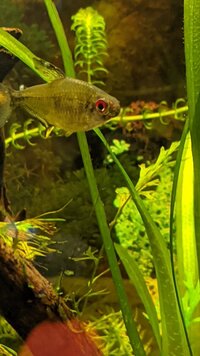
Is this hole in the head?! What's wrong with my lemon tetras??

Fae

Active Member
Member
Messages
455
This is honestly so weird, I have no idea why this is happening to my lemons. They've always been super healthy and happy, they spawn all the time. They were the first fish I got when I got into the hobby almost 2 years ago, and I haven't lost a single one until this morning when I found one floating dead at the top of the tank. Now one that has, in hindsight, been acting a little strange has a freaking nasty looking... Something!? In its brain. I'm just so weirded out. Anyway here's the template:

Tank
What is the water volume of the tank?
-48gal long

Does it have a filter?
-Fluval 307 and seachem tidal 55 plus air stones

Does it have a heater?
-2 of them

What is the water temperature?
-76° give or take 1° or 2s°

What is the entire stocking of this tank?
16347987614861314712560721105982.jpg

-11 lemon tetras (9 from PetSmart, same school, at least 2yrs old + 2 from LFS, at least 1.5yrs old)

-3 honey gouramis (2 adults had them 1.5/.5 years + 1 juvenile I just added the other day after 1 month quarantine with no issues)

-8 bronze cories (used to be 10, about 3 months ago 1 died from trauma during a rescape and the other died of a mysterious disease that caused it to waste away with no obvious cause of death. The rest have been fine since, I've had 8 for 1.5+ years and 2 about a year, not sure which ones passed)

-a handful of mystery/ivory snails, lots of Malaysian trumpet snails and random other little snails

- cherry shrimp and Amano shrimp

-other previous inhabitants include a school of 13 celestial pearl danios, of which all but 1 died from fast acting columnaris (the type that creates the saddle). This was about 8 months ago, however, and all but one of them died in a hospital tank. Stress caused them to get sick, I had a female Betta in there who was terrorizing them when the lights went out

Maintenance
How often do you change the water?
-Once every 2 weeks or so, sometimes a little longer. The nitrate has never been above 5ppm.

How much of the water do you change?
-30%-50%

What do you use to treat your water?
-prime and equilibrium (no gH in my tap water)

Do you vacuum the substrate or just the water?
- I move everything around and get as much detritus as possible

*Parameters - Very Important
What do you use to test the water?
-liquid test kit

What are your parameters?
1634799738250125304203256385575.jpg

Feeding
How often do you feed your fish?
-usually about 4 times a week, but since I added the little honey I upped it to every day to keep the lemons full

How much do you feed your fish?
- enough for the lemons to eat for a couple minutes, then I target feed the honeys a little cause they're slow, then I drop some stuff down for the cories. Inevitably the lemons hog as much as they can.

What brand of food do you feed your fish?
-clays neighbours omnivore (high fibre), repashy, frozen brine/bloods, live aphids/bloodworms/seed shrimp etc, high quality flakes, high quality pellets, homemade calcium/green powder, seaweed, shrimp/algae sinking pellets, boiled vegetables. I use 2-3 different foods every time and switch them up every time.

Illness & Symptoms
How long ago did you first notice these symptoms?
- this morning there was the dead lemon, which I thought looked kinda bloated (I took more pics too if needed)
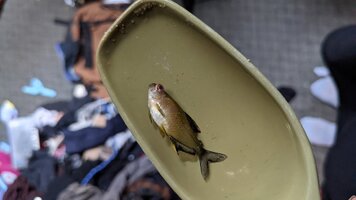
PXL_20211020_185409197.jpg
When I was thinking what could have happened, I remembered that one of the lemons had been hiding in the back for a few days. I didn't think anything of it because I'm used to seeing them hold territories for a few days leading up to spawning, which they do all the time.

I had to leave right after this, but when I got home the lemon was still in the back, so I fed the tank to see if he would join everyone. He didn't, so I caught him and put him in a breeder box while I got the hospital tank ready. Then I saw how messed up he looked.
PXL_20211021_063423313.MP.jpg

Here's a link to a short clip of the weird behaviour, also showing the black growth better
PXL_20211021_062259013~2.mp4


In a few words, can you explain the symptoms?
-see video, but: weak, hiding, off balance, GIANT BLACK GROWTH IN BRAIN?!

Have you started any treatment for the illness?
-moved to hospital tank, no meds

Explain your emergency situation in detail.
-see literally everything else lol, is this hole in the head?? Parasites??
 

Advertisement
-see literally everything else lol, is this hole in the head?? Parasites??
Old age causing lowered immune response plus bacteria would be my take on the dead specimen.

If you have the tetras in question for over two years (which is the life expectancy in the wild) I've found it to be relatively normal to see numbers slowly dwindling one by one.

Sure, there are always people that have that 1-4 fish that miraculously survived to the age of 6 or 7, but for most tetras in this size category between 2 and 3 years is the timeframe they start to die off.

The "black growth/shadow" is likely internal bleeding. There is nothing one can do anymore at that stage.

Up the waterchanges to weekly 50% and please stop doing this:
Do you vacuum the substrate or just the water?
- I move everything around and get as much detritus as possible
This is how you stress out fish, also mulm is not necessarily bad. It often helps stabilizing the biological balance.

I would also stop feeding bloodworms, that stuff causes many problems all over the place.

-8 bronze cories (used to be 10, about 3 months ago 1 died from trauma during a rescape and the other died of a mysterious disease that caused it to waste away with no obvious cause of death. The rest have been fine since, I've had 8 for 1.5+ years and 2 about a year, not sure which ones passed)
If a cory dies of "mysterious" reasons it's usually either starvation or a bacterial infection. Often both.
 

Advertisement
Old age causing lowered immune response plus bacteria would be my take on the dead specimen.

If you have the tetras in question for over two years (which is the life expectancy in the wild) I've found it to be relatively normal to see numbers slowly dwindling one by one.

Sure, there are always people that have that 1-4 fish that miraculously survived to the age of 6 or 7, but for most tetras in this size category between 2 and 3 years is the timeframe they start to die off.

The "black growth/shadow" is likely internal bleeding. There is nothing one can do anymore at that stage.

Up the waterchanges to weekly 50% and please stop doing this:

This is how you stress out fish, also mulm is not necessarily bad. It often helps stabilizing the biological balance.

I would also stop feeding bloodworms, that stuff causes many problems all over the place.


If a cory dies of "mysterious" reasons it's usually either starvation or a bacterial infection. Often both.
What problems come from feeding bloodworms? Do you suggest limiting them, or not feeding them at all?
 
  • Thread Starter
  • #4
When I say I move everything around, I don't mean I literally move every piece every time- not even close. I mean I get the siphon (just the tube) into nooks and crannies moreso. Come to think of it, the only thing I really move is the hut decoration (since it's a poo trap). Everything else gets moved like once every couple months when I decide to move some things around, or like if I knock rocks aside or replant, etc. What I was intending to get across, was that there isn't like 6month old poo jammed beneath a rock somewhere

Why do bloodworms cause issues? I feed them maybe once every two weeks

I doubt the Cory died from starvation since I feed the bottom feeders just as much as everyone else.

I took another closer look at my remaining tetras and noticed this:
PXL_20211021_082732005.MP.jpg
PXL_20211021_082741670.MP.jpg
A few of them have black marks on them

So with that new info, I looked up "black patches on tetra," and found some pics that perfectly matched my fish.. and that led to some info about fish tuberculosis (myxobacteriosis). I've looked into it before and been suspicious, but I wasn't sure. But this time, everything fits.

The Cory. The two lemons. The other black patch lemons. Other fish I've had die mysteriously in the past for unexplained reasons. If they are getting older as you say, this makes sense that with their immune systems slowing down the disease is starting to get a foothold.

I read this excellent article on the subject on tfh magazine: Mycobacteriosis: the Stealth Disease | Tropical Fish Hobbyist Magazine

I'll have to wait until payday, then I'm going to buy a UV sterilizer. No point in rushing (I say that, but I love them and I'm very sad) since this has been in the system since I first started keeping fish. This explains why despite putting in countless hours of research and care and effort I keep getting random fish deaths
 
It's your choice of course but I'm not sure that UV is justified in your case. Even if it is MB, I think it would only have a noticeable benefit during a severe outbreak when there is lots of bacteria (especially from open lesions) being shed into the water column. I went through a similar process as Walstad and removed the UV about 8 months after initial outbreak.
 
What I was intending to get across, was that there isn't like 6month old poo jammed beneath a rock somewhere
Even if there was... not a problem in a well established tank. I myself cultivate a whole layer of mostly plantbased low nutrient mulm from the leaf litter.
Anyway, your original statement came across very differently.

Why do bloodworms cause issues? I feed them maybe once every two weeks
Ok, in that case it's fine. Many people use them as a staple, which can cause problems as the nutrient ratio of protein:fats:fiber in bloodworms makes them basically junk food for fish.

I'm a bit torn about Mycobacteriosis as there are no sources or quotations newer than 2006/7 and there very likely has been more research done meanwhile. But I also agree with the author that too clean conditions makes for a much bigger likelihood of unwanted bacteria to find feeding grounds. Overly clean and sterile conditions make for weak immune systems in fish. That's why many losses after adding fish to a new tank are due to bacterial infections (provided there are no parasites present.).

It's your choice of course but I'm not sure that UV is justified in your case. Even if it is MB, I think it would only have a noticeable benefit during a severe outbreak when there is lots of bacteria (especially from open lesions) being shed into the water column. I went through a similar process as Walstad and removed the UV about 8 months after initial outbreak.
Agree on that. UV is likely going to kill of many of the bacteria that would usually outcompete the MB.
 

Advertisement
Agree on that. UV is likely going to kill of many of the bacteria that would usually outcompete the MB.
I think that it is a rare occasion, such as an initial acute outbreak, where MB densities in the water column would warrant it, i.e:

"More than 99% of the mycobacteria in an aquarium are in biofilms attached to surfaces within the aquarium".

Page 5,
 

Attachments

Considering the Tetras have lived a very good life in your tank for two years & were likely a year old on the initial purchase date, making them three years old, I agree w/ MacZ
Old age & a declining immune system were likely the primary contributors to the Tetras death.
 
  • Thread Starter
  • #9
I think that it is a rare occasion, such as an initial acute outbreak, where MB densities in the water column would warrant it, i.e:

"More than 99% of the mycobacteria in an aquarium are in biofilms attached to surfaces within the aquarium".

Page 5,

Thank you for sharing that paper. I read the whole thing, and I was wondering if you could explain one section for me. The part about UV light made sense for the most part, but this line threw me off:
"Thus, if ultraviolet disinfection is used in aquarium systems, it is necessary to ensure that the water retention time is short enough to prevent the recovery of bacteria, particularly
when nutrient-rich aquarium water is encountered"

MacZ what do you think of this quote from the paper? I respect your opinion immensely, but this seems to directly contradict what you (and many other knowledgable people) say about waste build up in aquariums:

"Although there is no firm evidence to confirm that environmental stress can cause mycobacteriosis infection, it has been suggested that an unnatural environment, such as an aquarium, may actually promote the disease. Inappropriate aquarium management can result in abnormal stress and a
reduction in the normal resistance of the host. Overcrowding, accumulation of waste and organic matter in the water and increasing water temperature (above 28°C) may all be
predisposing factors."

Anyway, the following symptoms I've observed in my fish that have died, highlighted in bold:

"If clinical signs develop, emaciation, cachexia (wasting, loss of weight), exophthalmia (pop-eye), dropsy and hyperaemia,
skeletal deformities (curvature of the spine), haemorrhagic and dermal ulcerative lesions or loss of scales may be observed."

"Chronic mycobacteriosis may also manifest as an infection of the gills. This can be seen grossly as small white nodules among the gill filaments, in wet mounts as discrete granulomas within the gill tissue, Non-specific signs include emaciation, haemorrhagic and dermal lesions, swelling of the abdomen due to large amounts of ascites, lethargy and death."

In my two years of fish keeping, I've lost to unexplained or unclear causes:

3/6 honey gouramis (slowly wasted away until death, darkening, two of which happened after breeding stress)

2/11 lemons (pictured, hyperamia and swelling)

1/10 bronze cories (wasting and emaciation)

15/15 celestial pearl danios (I suspect chronic mycobacteriosis combined with columnaris as a secondary infection)

3/3 black mollies (wasting, swelling)

And my beloved betta Flower, who had it the worst. Along with a lowered immune response, he went through every single highlighted symptom, including white nodules amongst the gills and scale loss.

Most of these fish have had their disease documented on here as I tried to treat them.

The only thing that worked was spectrogram for Flower, which suppressed the disease for a few months at least. Spectrogram contains pure medical grade kanamycin, which supports my theory of mycobacteriosis according to the paper as well:

"Mycobacteria infections in Siamese fighting fish were reported as being successfully controlled by the addition of kanamycin (100 mg/L) to aquarium water so as to maintain a permanent bath of the antibiotic over a 5-day period."

And, as I realized upon getting to the end of the paper, another supporting factor would be the fact that I recently developed small granulomas on my hands (fish keepers diseases, caused by mycobacteria). I thought it was caused by my bird bath or by fishing/cleaning my catch, but this seems more likely to be the root of it. (Don't worry, Ive seen a doctor and am treating it).


So all this leads me to: what should I do about it?

At least two other lemons are clearly infected. I'm sure it's ubiquitous in all my systems at this point, and according to the paper it's all but impossible to eradicate. If I had to disinfect everything, and throw away that much material/plants, and euthanize all my fish and axolotls.... I would just quit the hobby entirely, since according to the paper even laboratory grade bleach wasn't enough to completely rid the system of it. Thousands of dollars and thousands of hours of time and effort would be gone. And then it's likely that as much as 50% of the fish available have it anyway.

So basically at this point, the question becomes for me, should I use UV? Should I seperate the lemons showing the most symptoms since they will be shedding more bacteria? If they are just old, then I might as well let them live out their days... But will that put my other fish at a major risk for too high of a bacterial load for their immune systems to handle?
 
Faye, please don't over think things. Be a good idea to remove any obviously infected fish & euthanize.
Do a big 50% WC and allow time for things to stabilize.
I ran an in line UV unit on a marine tank I kept many years ago. The UV light had little to no effect regarding disease prevention.
Beneficial bacteria embedded in the substrate should take care of excess waste. If you have at least a three inch deep bed of substrate, there is really no need to gravel vac. I haven't vacuumed my substrate in several years. The tank remains healthy & the water clear. The BB quickly devours any excess waste the reaches the bottom.
IMO, there is no need to completely break down & sterilize your tank.
There exist beneficial & detrimental
bacteria in all aquarium environments. Healthy fish can repel the bad bugs, but the weak & injured often succumb. I believe that's what is happening to your fish community.
Hang in there.
 
  • Thread Starter
  • #11
Faye, please don't over think things. Be a good idea to remove any obviously infected fish & euthanize.
Do a big 50% WC and allow time for things to stabilize.
I ran an in line UV unit on a marine tank I kept many years ago. The UV light had little to no effect regarding disease prevention.
Beneficial bacteria embedded in the substrate should take care of excess waste. If you have at least a three inch deep bed of substrate, there is really no need to gravel vac. I haven't vacuumed my substrate in several years. The tank remains healthy & the water clear. The BB quickly devours any excess waste the reaches the bottom.
IMO, there is no need to completely break down & sterilize your tank.
There exist beneficial & detrimental
bacteria in all aquarium environments. Healthy fish can repel the bad bugs, but the weak & injured often succumb. I believe that's what is happening to your fish community.
Hang in there.
Thank you for the encouragement. It's frustrating because it seems like no matter what I do, I frequently have sick fish.

This is the two lemons now, in better light:

PXL_20211022_211418644.MP.jpg
PXL_20211022_211435080.MP.jpg

They are still acting completely normal, and happy and healthy as ever. Would the dark marks be hemorrhages? I don't want to euthanize them since they are not suffering. Would it be okay to move them to a hospital tank by themselves? Or equipping an inline UV sterilizer to deal with what they shed, and just let them live out their days with their school :(

Aw man. I'm so sad. When I got them, I bought all the lemons PetSmart had because I read that they have social structures and relationships with individual fish, even though I only had a 20 gallon at the time I couldnt bear to break up their family. I know I'm overthinking it but I can't help it :/

I would link to the UV sterilizer I am thinking about buying, but I'm not allowed. But basically, it's a sterilizer rather than a clarifier- so longer dwell time/more powerful UV.

This is my sand bed. I think it's probably not deep enough to do what you say. I never vaccuum right on the sand, I just wave the siphon hose above it. You can see the detritus layers. Plus my Malaysian trumpet snails burrow in, and cories and skrimps move stuff around

PXL_20211022_175829371.MP.jpg

I've had the inhabitants of this tank for almost two years, and the decorations and some plants started in my 29gal 1.5 years ago. About a year ago I set this tank up with new sand, some new plants, and some new driftwood added. And some new fish obviously. New filters, but I never had to cycle it because I just moved everything over (moved one filter over a week prior). Like I used the same media etc.

PXL_20211022_180119816.MP.jpg
I'd say the tank is very healthy overall. Every couple weeks, I'll turn a circulation pump on and aim it at all corners of the tank for a while. The lemons and cories have big orgies all the time (not together!). Everyone seems happy.

Is 2-3 years really the expected lifespan for lemons? I tried to research it myself but I can't find any scientific sources of info on it. Just blogs and such that repeat 3-4 or even 5-6 years with no citations
 

Advertisement


Looks like you have done a great job keeping your fish & maintaining your tank. I'd venture to say that most hobbyist couldn't keep Lemon Tetras alive for two years.
If your local Petsmart is like mine, Copper Sulfate is pumped through their filtration system as to prevent Ick & Oodinium. IMO, fish exposed to copper have shortened lives.
I've treated with Copper Sulfate before. The surviving fish, although looked healthy, all died within a year after the treatment. Perhaps the Lemon Tetra die off has something to do with that.
I feed New Life Spectrum Thera +A
It's heavily laced with garlic. Which is said to have anti parasitc & antibacterial properties.
Just don't get frustrated. When you restock, look at Columbian, Diamond & Buenos Aires Tetras. Much more durable Tetras & just, if not more colorful than Lemons.
 
  • Thread Starter
  • #13
Looks like you have done a great job keeping your fish & maintaining your tank. I'd venture to say that most hobbyist couldn't keep Lemon Tetras alive for two years.
If your local Petsmart is like mine, Copper Sulfate is pumped through their filtration system as to prevent Ick & Oodinium. IMO, fish exposed to copper have shortened lives.
I've treated with Copper Sulfate before. The surviving fish, although looked healthy, all died within a year after the treatment. Perhaps the Lemon Tetra die off has something to do with that.
I feed New Life Spectrum Thera +A
It's heavily laced with garlic. Which is said to have anti parasitc & antibacterial properties.
Just don't get frustrated. When you restock, look at Columbian, Diamond & Buenos Aires Tetras. Much more durable Tetras & just, if not more colorful than Lemons.
Thank you for that, it means a lot to hear from someone who also keeps fish (hearing it from a partner with no real interest is kinda like having your mom say you're good looking LOL)

I'll look into that food, thank you. When I make repashy (once every couple weeks for a couple days of food), I always add garlic guard. Garlic is so awesome, on an unrelated/related side note try eating a few cloves of raw garlic sometime, you'll feel better.... After about 12 hours

I'm in Canada, where most fish medication is illegal. That's not to say PetSmart doesn't use it, but they're not supposed to.

I was observing my lemons more just now, and I think I may know part of the problem, beyond age. I rescaped the tank a little bit a couple weeks ago, and now there's a lot more open space on the left side. I've also been meaning to get another school of a small fish to replace the cpds that passed. Watching them now, there's a lot more bullying going on from the most dominant male lemons. I haven't been watching my tank as much lately since I've been busy, but I don't recall ever seeing bullying like this from them before.

I'm thinking they're being bullies because there's less territories due to the addition of open space, because my school is very male-heavy, and because they are the dominant fish in the tank. The only bigger fish are the honey gouramis, and they are very shy (the male is incredibly shy even for a honey gourami, more than the female even). I had been waiting to add another small school, since my quarantine tank was unexpectedly full of an axolotl I ended up rescuing. So it's been a few months of them getting used to being the biggest baddies in the tank ‍

I'm not sure what to do here. Removing the obviously sick fish might just concentrate the bullies on another lemon? (Or worse, my juvenile honey). I think I will try removing the aggressors temporarily
 
Removing the obviously sick fish might just concentrate the bullies on another lemon? (Or worse, my juvenile honey). I think I will try removing the aggressors temporarily
Tetras are simply rough among each other. What you call "bullying" is normal behaviour among adult lemon tetras. I am opposed to call aggression within a species bullying, as it simply misses the point: The behaviour is instinctive and not purposefully malevolent. Chasing and nipping is something I have observed with almost all tetras and pencilfish I owned and people around me owned. The difference to generally aggressive fish like, let's say Malawi cichlids, is they neither kill the opponent outright, nor do they attack fish of other species. And even those cichlids I would never call bullies. They also leave fish alone as soon as they leave the territory, which for most tetras is a small spot between some plants, twigs or branches. Usually more structure and places to hide out of sight help a lot pacifying a tank. If indeed the aggression leads to stress levels high enough to make the fish sick, the tank is either too small or poorly structured. A reason why I always advice to not leave too much open space. I sometimes have the feeling people either overestimate aggression (e.g. calling it bullying and trying to prevent it by removing aggressive fish) or underestimate it (e.g. interpreting it as play, when in actuality the fish on the short end of the pecking order is simply pushed into the corner of an almost barren, much too small tank.

So I would definitely not be afraid for the gourami.

I would add some branches and twigs reaching into the water and maybe use some plants or driftwood to break lines of sight.

I was observing my lemons more just now, and I think I may know part of the problem, beyond age. I rescaped the tank a little bit a couple weeks ago, and now there's a lot more open space on the left side. I've also been meaning to get another school of a small fish to replace the cpds that passed. Watching them now, there's a lot more bullying going on from the most dominant male lemons. I haven't been watching my tank as much lately since I've been busy, but I don't recall ever seeing bullying like this from them before.

I'm thinking they're being bullies because there's less territories due to the addition of open space, because my school is very male-heavy, and because they are the dominant fish in the tank. The only bigger fish are the honey gouramis, and they are very shy (the male is incredibly shy even for a honey gourami, more than the female even). I had been waiting to add another small school, since my quarantine tank was unexpectedly full of an axolotl I ended up rescuing. So it's been a few months of them getting used to being the biggest baddies in the tank ‍

I'm not sure what to do here. Removing the obviously sick fish might just concentrate the bullies on another lemon? (Or worse, my juvenile honey). I think I will try removing the aggressors temporarily
 
  • Thread Starter
  • #15
Tetras are simply rough among each other. What you call "bullying" is normal behaviour among adult lemon tetras. I am opposed to call aggression within a species bullying, as it simply misses the point: The behaviour is instinctive and not purposefully malevolent. Chasing and nipping is something I have observed with almost all tetras and pencilfish I owned and people around me owned. The difference to generally aggressive fish like, let's say Malawi cichlids, is they neither kill the opponent outright, nor do they attack fish of other species. And even those cichlids I would never call bullies. They also leave fish alone as soon as they leave the territory, which for most tetras is a small spot between some plants, twigs or branches. Usually more structure and places to hide out of sight help a lot pacifying a tank. If indeed the aggression leads to stress levels high enough to make the fish sick, the tank is either too small or poorly structured. A reason why I always advice to not leave too much open space. I sometimes have the feeling people either overestimate aggression (e.g. calling it bullying and trying to prevent it by removing aggressive fish) or underestimate it (e.g. interpreting it as play, when in actuality the fish on the short end of the pecking order is simply pushed into the corner of an almost barren, much too small tank.

So I would definitely not be afraid for the gourami.

I would add some branches and twigs reaching into the water and maybe use some plants or driftwood to break lines of sight.
Unfortunately this is one of those things that can't be fully understood without seeing it.

After having observed this particular school for a couple years now, I'm pretty confident that: their behaviour has changed; what they're doing is bullying; and the bullying is causing stress to the bullied. At no point would I describe this behaviour as aggressive, however it is deliberate.

Being that the lines of sight are not well restricted, and exasperated by the fact that so many of the lemons seem to like this area, the most dominant ones seem to think their territories deserve to be much bigger than usual. Also, since there is 2 or 3 big males in this area, they are ganging up on the females and smaller males.

Lemon tetras are excellent in that their nips very, very rarely are ever intended to make contact. But they have been chasing the smaller fish almost relentlessly, and not just until they're out of the territory. Any lemon on their half of the tank is fair game.

The reason I worry about my (much smaller) honey is because I've had two honeys I raised from eggs in there before, who I added once they were close to the size of my current honey. And they both got killed. I think it was the female Betta I had in there, but I'm just being cautious.

My tank is fairly well planted. I had some plants die off, and I rescaped a little, so I'm waiting for an area to fill in. I will look for some driftwood to add temporarily today.

It's a 48in long, 50 gallon tank. It's definitely not too small. The lemons rarely swim the length in one shot. They usually get distracted first.

The reason I was thinking to remove the aggressors, was to disrupt their territories. I would put them back in later. I'm still unsure about what to do though. Catching any of the lemons will stress everyone out cause they're so tough to catch
 
Maybe just change things up a bit.
Treat the Lemons like Mbuna, over stock.
Either add several more Lemons,
or a entire new group of a more boisterous Tetra or Barb.
Make things so busy in your community that territorial squabbles become nonexistent.
 
I see we have a very different range of vocabulary describing behaviour.

And I find my statements do not contradict your's in the slightest, because of this one - important - statement by you:

Being that the lines of sight are not well restricted, and exasperated by the fact that so many of the lemons seem to like this area, the most dominant ones seem to think their territories deserve to be much bigger than usual.
This explains EVERYTHING.

Can you please post a picture of the whole tank?

It's a 48in long, 50 gallon tank. It's definitely not too small.
In comparison to the habitat, where the fish that are chased away can simply move on, a tank is always somewhat "too small". At least it has limited space, and nowhere for fish at the lower end of the pecking order to go. So usually in tank conditions this has to be counterbalanced by structures that allow for smaller territories and more possibilities to move out of sight. (see above)

The reason I was thinking to remove the aggressors, was to disrupt their territories. I would put them back in later. I'm still unsure about what to do though.
Useless. As soon as the males have re-acclimated they will establish territories again.

Maybe just change things up a bit.
Treat the Lemons like Mbuna, over stock.
Either add several more Lemons,
or a entire new group of a more boisterous Tetra or Barb.
Make things so busy in your community that territorial squabbles become nonexistent.
Could work as well. Not my style, but depending on the total number... possibly an alternative.
 
  • Thread Starter
  • #18
Maybe just change things up a bit.
Treat the Lemons like Mbuna, over stock.
Either add several more Lemons,
or a entire new group of a more boisterous Tetra or Barb.
Make things so busy in your community that territorial squabbles become nonexistent.

That's what I'm thinking I should do with them honestly, they were never like this when it was more crowded in there (not that it was ever crowded, but they obviously need competition or they fight amongst themselves)

Do you have a recommendation for another species? My ultimate goal is to introduce either Bolivian rams or some type of apisto eventually, but that will be whenever everything else is settled. I'm thinking something that is smaller than the lemons but not shy. Something that won't nip or harass my other fish too much either. Maybe ember tetras? I'm open to ideas

I'm probably just going to let the lemons live out their days and not restock their school so I can try another schooling fish after. But I'd like to get the new school in asap, after minimum 2 weeks quarantine though.

I see we have a very different range of vocabulary describing behaviour.

And I find my statements do not contradict your's in the slightest, because of this one - important - statement by you:


This explains EVERYTHING.

Can you please post a picture of the whole tank?


In comparison to the habitat, where the fish that are chased away can simply move on, a tank is always somewhat "too small". At least it has limited space, and nowhere for fish at the lower end of the pecking order to go. So usually in tank conditions this has to be counterbalanced by structures that allow for smaller territories and more possibilities to move out of sight. (see above)


Useless. As soon as the males have re-acclimated they will establish territories again.


Could work as well. Not my style, but depending on the total number... possibly an alternative.

I'll just keep them in there then, do larger more frequent water changes to reduce the amount of bacteria in the water column (yes I know a lot of it is on surfaces, but more water changes can't hurt), and remove the more ill fish to hospice as their health degrades.

I don't have a picture of the tank as it was when the aggression first started for some reason, but I have this pic from right before:

PXL_20210914_045507152_exported_3050.jpg

I had just removed the thing at the back left, which was a large fake rock shelf decoration, and replaced it with a shorter rock and some plants (seen in next pic). My intention was to have the area grow out more over time.

This is today, after some adjustments:

PXL_20211025_024505682.MP.jpg

I'm currently searching for another nice piece of driftwood to add on the left. Plus I'll probably pick up another plant or two to speed the grow out up. But so far, even that small rescape has had a big impact on the aggression :)
 
It's a beatiful tank, and yes, a small change can have a lot of impact.

What I can only encourage you to do:
Go outside and collect a number of small, dry and dead twigs (no more than 0.5 - 0.75cm thick), make maybe 2-3 bundels and just hang them in the tank. I have had great success with this reducing average territory size for my pencilfish and before that with cardinals. Same trick worked for a friend's bleeding hearts and emperors.

Just be aware, I don't need the twigs to be very deep in the water, you might have to take longer ones and small branches.

20211027_105700.jpg 20211027_105705.jpg
 
I think a group of either one or both of these species, Columbian & Diamond, would look awsome in your pretty tank. Both are very colorful & durable.
 

Attachments

  • 20211027_062558.jpg
    20211027_062558.jpg
    251.6 KB · Views: 6
  • 20211027_062754.jpg
    20211027_062754.jpg
    156.9 KB · Views: 6
  • Thread Starter
  • #21
It's a beatiful tank, and yes, a small change can have a lot of impact.

What I can only encourage you to do:
Go outside and collect a number of small, dry and dead twigs (no more than 0.5 - 0.75cm thick), make maybe 2-3 bundels and just hang them in the tank. I have had great success with this reducing average territory size for my pencilfish and before that with cardinals. Same trick worked for a friend's bleeding hearts and emperors.

Just be aware, I don't need the twigs to be very deep in the water, you might have to take longer ones and small branches.

View attachment 819583 View attachment 819584
That looks beautiful! I am definitely going to do that. What plant is that growing against them?
I think a group of either one or both of these species, Columbian & Diamond, would look awsome in your pretty tank. Both are very colorful & durable.
I will look into those, thank you! I like the ones with the red, reminds me of my cpds
 
That looks beautiful! I am definitely going to do that. What plant is that growing against them?
Thank you! My tank is overgrown with Brasilian Pennywort (Hydrocotyle leucocephala) and Pothos. Both make up for 98% of the plant mass in my tank. I take the inspiration from nature and usually only one or two species of plants dominate a biotope.

photo_2021-10-28_11-48-54.jpg
photo_2021-10-28_11-49-12.jpg
 
Advertisement


Advertisement


Advertisement


Back
Top Bottom