Water changes for aquariums, but not for ponds?

aquamist666

Active Member
Member
Messages
131
Why is it that you have to do weekly water changes for indoor aquariums, but none for outdoor ponds? My outdoor 300 gallon pond has been running with the same water for a year and my fish are thriving. The pond has a pressurized canister filter that has established bio-balls. If ponds can go without water changes, why can't you do the same for aquariums?
 

Advertisement
Technically a pond without an independent water source such as a spring should get water changes. Everything that ends up in it stays in it because only the water evaporates while rain merely replaces some of the evaporated water.

They are closed systems just like aquariums unless there is new water coming in all the time, as with a spring fed pond, plus somewhere for the water to drain away so it doesn’t just get bigger and bigger.

Fish can adapt to a lot of less than ideal conditions especially if changes in the conditions happen gradually but without that, water changes should be done.
 

Advertisement
Actually, both aquariums and ponds can go with or without water changes. With proper conditions, such as a Walstad, an aquarium can go months, years, or its entire lifetime without a water change. This is how all of my aquariums run, with only occasional top-offs

However, the reason why ponds often aren't given water changes is because of generally low bioload, high filtration, and additional biological help from aufwuchs (e.g. fungi, microorganisms, beneficial bacteria, detritus, plants, and insects) that we remove in our aquariums, for we find them "ugly"

I, however, care for my aquariums much like a pond; by allowing a small amount of algae, biofilm, and microorganisms to grow (like a refugium in saltwater tanks) with low stock, riparian growth to enhance natural filtration that plants provide, and very low stocking, etc.

This method allows for thriving ecosystems in either ponds or aquariums! It's just our job to embrace the "new" and still respect the "old" ;)
 
We can construct a pond so that it does get water changes, just as a natural pond or depression gets water changes due to overland stormwater flow.
 
We can construct a pond so that it does get water changes, just as a natural pond or depression gets water changes due to overland stormwater flow.
I’m sure that’s possible but an awful lot of garden ponds are not so constructed.

Actually, both aquariums and ponds can go with or without water changes. With proper conditions, such as a Walstad, an aquarium can go months, years, or its entire lifetime without a water change. This is how all of my aquariums run, with only occasional top-offs

However, the reason why ponds often aren't given water changes is because of generally low bioload, high filtration, and additional biological help from aufwuchs (e.g. fungi, microorganisms, beneficial bacteria, detritus, plants, and insects) that we remove in our aquariums, for we find them "ugly"

I, however, care for my aquariums much like a pond; by allowing a small amount of algae, biofilm, and microorganisms to grow (like a refugium in saltwater tanks) with low stock, riparian growth to enhance natural filtration that plants provide, and very low stocking, etc.

This method allows for thriving ecosystems in either ponds or aquariums! It's just our job to embrace the "new" and still respect the "old" ;)
I don’t understand how that’s possible.
 
Outdoor ponds also have denitrification going for it that you can't get in an aqaurium. Denitrification hinges on a very specific zone in the substrate that fluctuates with the oxygenation. It needs flow to carry nitrates to the zone but not enough to carry oxygen to it. denitrifiers need a low low oxygen zone to be forced to take nitrates and break them to create oxygen for themselves.

You simply can't do this in an indoor aqaurium but an established pond will get it occuring because the pond will have varying levels of substrate/mud/sand/dirt/ decaying matter ect. Ect. due to the volume of water and time and dirt settling in. If the oxygen is separated from the nitrate, nitrogen is then offgassed to the atmosphere.


Still though a pond should be tested every so often for nitrates, KH and GH at a minimum just to make sure nothing is building up or depleting on it. Some test the mud and water, and get very scientific (koi keepers for instance may do that) But outdoors, with so much outside influences, it should self balance and maintain itself once it's established if its not overstocked or imbalanced.

It can still get messed up from time to time if near city or agriculture from fertilizers or pesticides though. Something dumb like mosquito spraying by the city can kill off the food chain and if not supplementing foods, could cause a die off for instance, or like too much fertilizers entering it can cause it to choke out with algae bloom and kill everything. So while less water changes, water changes may still be necessary to maintain the pond and ecosystems health.
 

Advertisement
I’m sure that’s possible but an awful lot of garden ponds are not so constructed.
It's why I like using cattle troughs. They come with a bottom drain hole.

Just wish I used a much larger drain lol I frequently have to unplug it when doing the annual muck removal. The filter is super easy. Have it on an old surgical table using the blood trough drains for water outflow back to the pond. The table is covered in potted plants soaking up water and the filter itself is a hydroponic setup for kale. The pond grass and willow suck up most nutrients.
Pump maintenance bi weekly.
Bog filter twice annually.

Guess I didn't take a video of the filter back flush part. That's some dark water lol
 
Outdoor ponds also have denitrification going for it that you can't get in an aqaurium. Denitrification hinges on a very specific zone in the substrate that fluctuates with the oxygenation. It needs flow to carry nitrates to the zone but not enough to carry oxygen to it. denitrifiers need a low low oxygen zone to be forced to take nitrates and break them to create oxygen for themselves.

You simply can't do this in an indoor aqaurium but an established pond will get it occuring because the pond will have varying levels of substrate/mud/sand/dirt/ decaying matter ect. Ect. due to the volume of water and time and dirt settling in. If the oxygen is separated from the nitrate, nitrogen is then offgassed to the atmosphere.


Still though a pond should be tested every so often for nitrates, KH and GH at a minimum just to make sure nothing is building up or depleting on it. Some test the mud and water, and get very scientific (koi keepers for instance may do that) But outdoors, with so much outside influences, it should self balance and maintain itself once it's established if its not overstocked or imbalanced.

It can still get messed up from time to time if near city or agriculture from fertilizers or pesticides though. Something dumb like mosquito spraying by the city can kill off the food chain and if not supplementing foods, could cause a die off for instance, or like too much fertilizers entering it can cause it to choke out with algae bloom and kill everything. So while less water changes, water changes may still be necessary to maintain the pond and ecosystems health.
It really isn’t nitrate that would concern me though in a lot of smaller and shallow artificial ponds I don’t see denitrification as being something one could rely upon.

It would be depletion of minerals and buffers plus accumulation of DOCs that are not volatile that would concern me most.
 
Natural ponds get "water changes" all the time. New water comes through rain, run off, or the ground, and leaves via overflow or seeping back into the ground.

Not every aquarium needs water changes. Here's a video featuring a planted tank that hasn't had a water change in 28 years:
.
 
Natural ponds get "water changes" all the time. New water comes through rain, run off, or the ground, and leaves via overflow or seeping back into the ground.

Not every aquarium needs water changes. Here's a video featuring a planted tank that hasn't had a water change in 28 years:
.
Even natural ponds eventually run into silting issues and eventually become entirely new ecosystems over time. Sometimes even annually.

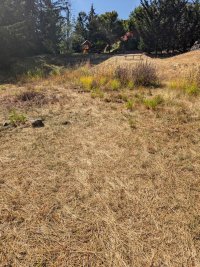
1000014158.jpg

This is where I was collecting tadpoles a few months ago to move to the nearby lake. Vernal pond. Took the opportunity to collect a lot of dry moss (microfauna eggs waiting for water) and another willow.
In the wet season water comes in over my rubber boots before I can reach the middle.
 
I’m sure that’s possible but an awful lot of garden ponds are not so constructed.
That's true but it's quite easy to do. The same way farm dams are constructed (which often contain fish and crustaceans).
 

Advertisement


We had a small pond in our garden when I was growing up, being always attracted to aquatic things, I insisted on making one when we moved there, and helped by my Dad, dug out the hole to make it when I was about 10. It was still in a healthy condition when that house was sold, about 17 years later. I only remember very few occasions when we completely emptied the pond, cleaned it out, removing excess mud and thinning out plants. Apart from these times we never did water changes, the pond had no pump or filtration system. Goldfish, frogs and newts regularly bred in the pond and there was always an interesting selection of aquatic invertebrates in there, the plants thrived. Of course water was lost due to evaporation and new water was added when it rained, but nothing more.
 
In all the 4 decades that I'm keeping outdoor ponds for my aquarium fish, I've never needed to do a water change. And never used a filter system for those outdoor tubs. Rainfall took care of adding water. And in case of a drought, I would add some water myself. That's all!
 
I know it’s done all the time and life can be incredibly adaptable, but it still doesn’t make a lot of sense to me that fish should remain healthy in such ponds. That they can is good for them and I suppose I shall have to remain puzzled as to why they do.

Vernal ponds make sense to me - the life that exploits them is exquisitely adapted to very specific conditions that are not present very long, but vernal ponds never contain fish.
Much like the lake I steward (getting more help from the county conservation district now :) ) The ecosystem that is there is surviving. The few small bass eat the few small pumpkinseed that make it large enough to not get eaten by other pumpkinseed. All the lower food chain gets eaten and the pumpkinseed breeding ground gets taken over by invasive hornwort a little more each year. Not sure how long the "lake" (2.7 acres) has existed for. Guessing it was created during the early colonial era of the region in the late 1800's early 1900's for a homestead. But, the lake is slowly dying. Probably started with just the pumpkinseed. When we moved in here there was a lot more fish. The bass only showed up a couple years ago.
The entire park is honestly slowly dying, hence my Stewardship. The berries lack nutrients, invasive blackberries are a constant thorn in my side.. ;) and use up what little nutrients are there. Found a dead baby heron a month or so back :( Probably lack of food. Didn't appear touched by a predator. Just a skinny baby.
Nature eventually reclaims everything, even pyramids. Our job as humans has always been management of the lands around us. When we stop caring for chinampas in central America, the water channels plug with silt and the jungle reclaims what was formerly a highly productive cichlid habitat. Productive enough to fertilize crops to feed people and fish to feed an entire culture.

But even that can disappear in a generation when we stop managing the lands. I violate leave only footprints in a regular basis lol I leave a better environment. Be it as simple as having a delicious trailside berry and making sure to spit some seeds out in an ideal location ;) Or propagating more native plants from cuttings to replace invasive plants with. I just do it as part of my forays into a natural world.
A very worthwhile endeavour but not an easy one.
 
All the lower food chain gets eaten and the pumpkinseed breeding ground gets taken over by invasive hornwort a little more each year.
Isn't hornwort native to the Seattle area?
 
Isn't hornwort native to the Seattle area?
There's a native one, but this is the bad one that forms massive mats.
Eurasian milfoil. For some reason my brain keeps calling it hornwort. Nasty stuff. Hornwort I have in my ponds for the goldfish. They like that and moss for their spawns.
 
My patio pond (110Gallon) get's bi-annual water changes....once in the spring when I drain the tub to bring it up from the basement and then once in the fall when I bring the tub off the concrete patio to the basement to winter. That's it.

Lots of pond plants, running sponge filter & separate fountain (another very large sponge filter rated to 500 gallons) and an air stone. I top off when the water gets low - right now that's weekly. Usually the wind whips up, it catches the water coming out the fountain head and redistributes it to my patio.

I have Shubunkin, some smallish koi, and a comet. I'm fully aware the koi will eventually need a rehome, I figure I have 1-2 years before that time arrives as largest (and oldest) is probably 12".
 
, but it still doesn’t make a lot of sense to me that fish should remain healthy in such ponds.
They'll do well in there. It's even more natural than keeping them in tanks indoors, to be honest. And all they need comes to the pond by itself. Each year when I harvest my livebearers from the outdoor tubs, they are much stronger, healthier, bigger and better colored than their relaives indoors. Even water parameters (with the exception of the temperature) remain more stable outdoors than indoors. Nature takes care of it... And fish adapt faster to other circumstances when kept outdoors.
 
In all the 4 decades that I'm keeping outdoor ponds for my aquarium fish, I've never needed to do a water change. And never used a filter system for those outdoor tubs. Rainfall took care of adding water. And in case of a drought, I would add some water myself. That's all!
This is where I slightly differ lol. I love Islamic gardens and the concept that the water should be alive. Be it moving, splashing etc... the water needs to be alive. So the larger ponds have water moving primarily for that reason. It's splashing and moving everywhere. So beautiful and soothing to just listen to.

But, our tubs are also alive. Be it green water, daphnia, full of plants and fish etc... the water is still alive :) I still want to do a moss covered rock drip wall, but everything gets sun blasted. Working on getting more shade, but that is still on the back burner.
OTOH because I'm South facing I get great views of Mt Rainier when it decides to show itself :)
 

Advertisement


They'll do well in there. It's even more natural than keeping them in tanks indoors, to be honest. And all they need comes to the pond by itself. Each year when I harvest my livebearers from the outdoor tubs, they are much stronger, healthier, bigger and better colored than their relaives indoors. Even water parameters (with the exception of the temperature) remain more stable outdoors than indoors. Nature takes care of it... And fish adapt faster to other circumstances when kept outdoors.
Interesting. I still can’t figure out how that happens but I know it does.
 
the water is still alive
Well, the wind goes over the surface which makes the water move and gets oxygen into the water overhere. Bacteria can do their job under these cicrumstances.
 
Well, the wind goes over the surface which makes the water move and gets oxygen into the water overhere. Bacteria can do their job under these cicrumstances.
But do bacteria remove or otherwise render harmless things like dissolved organic compounds, hormones, environmental toxins?

Don’t think so. If they could, DOC & industrial pollutants wouldn’t be the issue that they are in so many major bodies of water.
 
But do bacteria remove or otherwise render harmless things like dissolved organic compounds, hormones, environmental toxins?

Don’t think so. If they could, DOC & industrial pollutants wouldn’t be the issue that they are in so many major bodies of water.
Mushrooms can :) Fill the pond in with wood chips and let it go :) lol Ecology is so cool. Ponds can be natural or guided :)
 
But do bacteria remove or otherwise render harmless things like dissolved organic compounds, hormones, environmental toxins?

Don’t think so. If they could, DOC & industrial pollutants wouldn’t be the issue that they are in so many major bodies of water.

You're forgetting that wild bodies get vastly more pollution because they are the natural destination of all runoff. Wild lakes, ponds, and rivers exist in part because they're where water naturally collects after running the path of least resistance, and everything the water picks up along the way gets deposited there too. The storm drains we build to keep our roads unflooded also contribute to this by directing all street runoff directly into these bodies without much or any treatment for all the chemicals on the road.

Ornamental ponds, by contrast, are usually artificially made and enclosed within a residential yard. They're not the natural end-point for all runoff, no municipals build systems to dump stormwater directly into them, and generally, most homeowners try to keep industrial waste out of their yard.

Compared to unprotected wild bodies, ornamental ponds aren't as likely to accumulate dangerous levels of pollutants nearly as quickly. There're also a lot of natural things that consume and neutralize pollutants. Isopods can do this for heavy metals, so I don't think it's crazy that other life could neutralize these other pollutants too, given time and if not outpaced by the rate of accumulating pollution.

If any pollutants did build up over time purely due to the life within the pond and without introduction from outside sources, it probably wouldn't happen fast enough to be a problem for most pond owners.

It's also worth noting that some life just thrives in conditions that you may consider inhospitable. Cacti are perfectly happy and healthy in long droughts and severe heat because it's in their nature. Koi have been thriving in manmade ponds for hundreds of years, and will probably continue to do so because they're well suited for those conditions.
 
Domestication at play ;) Anatomical, gut and neurological changes all come into play as does disease resistance to the confined spaces. Happening to us too :)
 
But do bacteria remove or otherwise render harmless things like dissolved organic compounds, hormones, environmental toxins?

Don’t think so. If they could, DOC & industrial pollutants wouldn’t be the issue that they are in so many major bodies of water.
I understand your concern but you're overthinking it too much. Really, the way thse tubs are used won't do any harm to those fish. In the almost 40 (still minus 1) of keeping fish like this outdfoors, I never had those problems.
 
I understand your concern but you're overthinking it too much. Really, the way thse tubs are used won't do any harm to those fish. In the almost 40 (still minus 1) of keeping fish like this outdfoors, I never had those problems.
That’s good to know. I suppose I am overthinking it.
 
Advertisement


Advertisement


Advertisement


Back
Top Bottom