There has been a massacre in my tank!

nayalee

New Member
Member
Messages
7
What is the water volume of the tank?
90 Gal
How long has the tank been running?
June 2020
Does it have a filter?
Eheim canister
Does it have a heater?
No
What is the water temperature?
Not sure
What is the entire stocking of this tank? (Please list all fish and inverts.)
Currently one 2-in bristle nose pleco and possibly one 1/2 in bristle nose pleco, seven cardinal tetras, five glow light tetras, two Glo tetras, four black skirt tetras, one blue-eyed furcata rainbow fish, three Harlequin rasboras, three yo-yo loaches, one Siamese algae eater, two emerald corries, two spotted corries whose names I can't remember and one that 3-in pleco who's nerd I can't remember.

Maintenance
How often do you change the water?
Once a month but sometimes once every 2 months
How much of the water do you change?
30-40%
What do you use to treat your water?
Premiere by aqua vitro
Do you vacuum the substrate or just the water?
Substrate and every few cleanings I will scrape the glass. Two to three times a year I flush out the filter.

*Parameters - Very Important
Did you cycle your tank before adding fish?
Yes
What do you use to test the water?
Api freshwater test kit and test strips
What are your parameters? We need to know the exact numbers, not just “fine” or “safe”.
Ammonia:
0
Nitrite:
0
Nitrate:
40-80
pH:
6.6
GH:
150
KH:
0

Feeding
How often do you feed your fish?
At around 4:00 p.m. and then again at 9:00 p.m.
How much do you feed your fish?
1/8 of a teaspoon for us feeding and 1/16 of a teaspoon of second feeding
What brand of food do you feed your fish?
In every feeding I use ocean nutrition formula 1 flakes or formula 2 flakes, hikari algae wafers usually a quarter of a disc, kakari sinking wafers usually two, hakari vibra bites and hikari micro pellets
Do you feed frozen?
No
Do you feed freeze-dried foods?
No

Illness & Symptoms
How long have you had this fish? Some of these fish I have had for many years but I recently introduced a new batch which I believe is the problem
How long ago did you first notice these symptoms?
3 days ago
In a few words, can you explain the symptoms?
It looks like some of the new fish may be biting the faces off some of the old fish
Have you started any treatment for the illness?
Melafix
Was your fish physically ill or injured upon purchase?
No
How has its behavior and appearance changed, if at all?
New aggression amongst my black skirt tetras

Explain your emergency situation in detail.
(Please give a clear explanation of what is going on, include details from the beginning of the illness leading up to now)

3 weeks ago I purchased a batch of new fish. I got four white skirt tetras, one glofish tetra, three Harlequin rasboras, one female betta, One Siamese algae eater and three emerald cories.
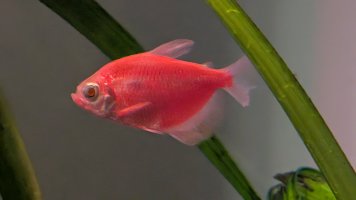
After a 2-week quarantine I bought another batch of fish. Five glow light tetras, one tiny bristlenose pleco, 3 Long thin black skirt tetras and a green GloFish Tetra.
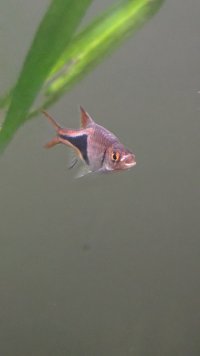
I added the first batch to my 90 gallon tank. Everything seemed completely fine but few days later I noticed that one of my Harlequin rasboras looked like it had its face chewed off.
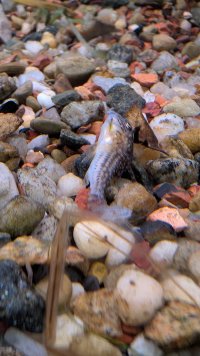
Since then I have lost count of how many fish have died. Most of them seem to have physical injuries like all of my old black skirt tetras had their fins chewed off and half of my Harlequin rasboras have had their faces chewed off. Today alone I lost five more fish.
I have never had issues with my black skirt tetras being aggressive but since the addition of the white ones it seems like they and one of the glofish tetras could be the problem.
In a panic I took my new batch of fish out of quarantine a week early and introduced them to the new tank so I could put the white skirts back in quarantine. I managed to take them out and put them in the quarantine tank but now it seems like my established and new black skirt tetras became aggressive.
I have lost all but one of my blue-eyed furcatas from a school of 6. Half the school of harlequins (9) are gone. They demolished the betta and all but one of the established black skirt tetras (4) have died.
My tank has a medium amount of live plants and lots of hiding spaces and I don't know what to do. I don't want to flush these living fish down the toilet but if they're the ones causing the problem I can't keep them. I'm also not even sure that the aggression is even the problem. I suppose I could be having a die off from some illness that was introduced to the
tank but none of the fish look any type of sick they all look damaged
 

Attachments

  • PXL_20250926_011453826.jpg
    PXL_20250926_011453826.jpg
    122.9 KB · Views: 65
  • PXL_20250926_011452406.jpg
    PXL_20250926_011452406.jpg
    152.2 KB · Views: 31

Advertisement
Hey, sorry you're going through this; that sounds really rough.
From what you described, it’s most likely aggression, especially from the black skirt tetras or Glo tetras. They're known to get nippy and territorial, especially when group dynamics change. I'd try to remove or rehome them ASAP.

A few things that might also help:

Add a heater: tropical fish need stable temps.
Your nitrates are high: try doing 30–40% weekly water changes.
KH is 0, which means your pH could be swinging. Try buffering slowly with crushed coral or Seachem Alkaline Buffer.
The tank is pretty heavily stocked, especially on the bottom. Make sure your filter can keep up.

Melafix is fine for healing, but don’t throw more meds at it unless you see signs of disease.
Once you remove the aggressive fish, monitor closely. If the deaths stop, you’ve found the problem. You’ve clearly put a lot of care into this. Hang in there! It’s fixable.
 

Advertisement
The pictured Rasbora appears to be suffering from "Mouth Rot", a bacteral infection.
 
  • Thread Starter
  • #4
That's what I originally thought too but doesn't that usually take a few days to develop? It happened within an hour and I noticed it right after I noticed the black skirts being aggressive.

Hey, sorry you're going through this; that sounds really rough.
From what you described, it’s most likely aggression, especially from the black skirt tetras or Glo tetras. They're known to get nippy and territorial, especially when group dynamics change. I'd try to remove or rehome them ASAP.

A few things that might also help:

Add a heater: tropical fish need stable temps.
Your nitrates are high: try doing 30–40% weekly water changes.
KH is 0, which means your pH could be swinging. Try buffering slowly with crushed coral or Seachem Alkaline Buffer.
The tank is pretty heavily stocked, especially on the bottom. Make sure your filter can keep up.

Melafix is fine for healing, but don’t throw more meds at it unless you see signs of disease.
Once you remove the aggressive fish, monitor closely. If the deaths stop, you’ve found the problem. You’ve clearly put a lot of care into this. Hang in there! It’s fixable.
Thank you. It is pretty brutal pulling out all these dead fish. When I had my 120 my nitrates were never high. When I got this 90 gallon they've always been high and even with weekly water changes they tend to jump right back up. I'm actually starting to wonder if it was my test kit because since I started using the strips it always showed a bit lower. Every time I check my pH it's always right around the 6.6 range. Highest I ever see it is 6.8 lowest is 6.4. if I add Coral will that raise the pH to an unsafe level for the fish I have?
I have a heater but when I downgraded to the 90 gallon I just never bothered to put it back in. I'm going to go do that.
I have had Long fin black skirt tetras for two decades now. They are my favorite because they've always been so peaceful. It's crazy that all of a sudden now it's an issue.
Thank you again. I really appreciate your help
 
That's what I originally thought too but doesn't that usually take a few days to develop? It happened within an hour and I noticed it right after I noticed the black skirts being aggressive.
The growth on the mouth can’t have shown up in just one hour - but I’m sure it seemed that way.

It would have been very small to begin with and let’s face it, you’ve had a lot of other things going on to occupy your attention so it is hardly surprising that it seemed to pop up out of nowhere

I fear that A201 is correct and this is a bacterial infection. Sadly, it is most likely to be columnaris.

In this presentation, which seems to be the most common one, the progress of the disease is quite a bit slower than in its other presentations, but even so, it must be treated asap to have any hope for a cure.

The fish needs to be in QT because columnaris is contagious.

Painting the area heavily with undiluted Methylene blue, with the fish confined in a net out of water just long enough to do the painting, has occasionally cured this form, but only if it’s used early enough.

Using it may slow it down a little even if it doesn’t cure it, which can buy a little extra time for antibiotics to work, assuming you have access to antibiotics.

If you do, the antibiotic(s) have to be mixed with food and eaten by the fish. They do next to no good when dosed into the water column. Using two different ones together has a bit better chance to work but the sad reality is that success with treatment is not common.

I know that the last thing you need with all your other troubles is more bad news but it is what it is. I am very sorry to be the bearer of the bad news.
 
  • Thread Starter
  • #6
Turns out it definitely wasn't a fungus. One of the other fish was literally biting the lips off of the other fish. I actually caught him doing it and he has been rehomed
 

Advertisement
Certain varieties of fish do have lip lock battles. It's more common in Cichlids but I have seen it in other species as well.

If the mouth is injured, infection may follow.
 
  • Thread Starter
  • #8
Certain varieties of fish do have lip lock battles. It's more common in Cichlids but I have seen it in other species as well.

If the mouth is injured, infection may follow.
Infection didn't have a chance. He was dead within hours
 
Thank you. It is pretty brutal pulling out all these dead fish. When I had my 120 my nitrates were never high. When I got this 90 gallon they've always been high and even with weekly water changes they tend to jump right back up. I'm actually starting to wonder if it was my test kit because since I started using the strips it always showed a bit lower. Every time I check my pH it's always right around the 6.6 range. Highest I ever see it is 6.8 lowest is 6.4. if I add Coral will that raise the pH to an unsafe level for the fish I have?
I have a heater but when I downgraded to the 90 gallon I just never bothered to put it back in. I'm going to go do that.
I have had Long fin black skirt tetras for two decades now. They are my favorite because they've always been so peaceful. It's crazy that all of a sudden now it's an issue.
Thank you again. I really appreciate your help
Of course! I've been there, it really is. I'm glad I can help. :)

About your nitrates and pH concerns:
  • Nitrates 40–80 ppm (as you said before) are definitely on the high side. Weekly water changes of 40% should keep nitrates in check. If you’re still seeing high nitrates after that, maybe there's a dead fish you haven't found? Or maybe it's just the heavy stocking.
  • Regarding your test kits, yep, strips are a lot less accurate than liquid API freshwater test kits. I'd recommend sticking to the liquid tests.
  • Your pH of 6.4–6.8 is fine and stable, which is great. Adding crushed coral or buffering agents will raise KH and help stabilise pH swings, but yes, it will slowly raise your pH a bit over time.
  • For your fish, a slight increase in pH to around 7.0–7.2 is usually okay, but try to do it very gradually. You don’t want a sudden pH jump. Maybe start with a small amount of crushed coral in your filter or substrate and monitor the changes weekly.
Oh, it's also good that you're adding the heater back! A stable temperature (maybe around 75–78°F?) reduces stress and might also help lower aggression.

As for the black skirts:
  • Even peaceful fish can suddenly become aggressive due to stress, overcrowding, or territorial disputes. The new white skirt tetras might be triggering this behaviour, or the crowding from multiple tetra species could be stressing them all out.
  • Sometimes aggression isn’t just about the fish themselves; it’s also about tank size, hiding places, and how many fish you have. Your tank is fairly large, but the number of fish you described is pretty heavy stocking (especially with bottom dwellers like plecos, loaches, and cories, though).
 
  • Thread Starter
  • #10
I've always heard the 1 inch to 1 gallon rule. Is that not accurate? I always try to do the calculations and make sure that I don't have more fish than inches. With the amount I have now I counted and it came out to under 60 inches of fish so I thought I wasn't overstocked.

I never had nitrate issues until this tank and now I'm wondering if it's my substrate. When I started up this tank I took all the old fluorite substrate that I had and baked it in the sun on tarps in my yard. I was having an issue with snails so I made sure to thoroughly dry it out. I went through and tried to pick out as many of the snails as I could but there were so many that I'm sure some got left behind. That was 5 years ago. Is it possible snail carcasses have been causing high nitrates this whole time? I don't change my water as often as I should but when I do I always vacuum the bottom.

The white skirts have all been rehomed and the black skirts have all died. I did have an emerald Cory die today too which is now making me paranoid there is something worse going on in there then aggression.
 
When was the last time you rinsed out the canister media? That can become a sort of nitrate reservoir if it gets too packed with muck.
I used to clean mine about twice a year, and write the date on a piece of tape on the top so I could easily check. Your schedule might need to differ though, since you have more fish and feed more often.
 

Advertisement


  • Thread Starter
  • #12
The last time was on the 9th and I typically do it four times a year
 
I've always heard the 1 inch to 1 gallon rule. Is that not accurate? I always try to do the calculations and make sure that I don't have more fish than inches. With the amount I have now I counted and it came out to under 60 inches of fish so I thought I wasn't overstocked.

I never had nitrate issues until this tank and now I'm wondering if it's my substrate. When I started up this tank I took all the old fluorite substrate that I had and baked it in the sun on tarps in my yard. I was having an issue with snails so I made sure to thoroughly dry it out. I went through and tried to pick out as many of the snails as I could but there were so many that I'm sure some got left behind. That was 5 years ago. Is it possible snail carcasses have been causing high nitrates this whole time? I don't change my water as often as I should but when I do I always vacuum the bottom.

The white skirts have all been rehomed and the black skirts have all died. I did have an emerald Cory die today too which is now making me paranoid there is something worse going on in there then aggression.
Ahh, so the 1 inch per gallon rule is quite flawed. It's a bit more nuanced than that; it depends on the fish's bioload, activity levels, and other factors. I mean, you can't put a 20-inch catfish in a 20-gallon tank. I'd recommend a tool like Aqadvisor - not perfect, but better.

I would think that the snail carcasses would have broken down completely after 5 years. They decay very quickly, often disappearing completely and leaving the shell behind within a few days.

Very sorry to hear about more fish passings. Could we get clear photos of any remaining fish you're concerned about to see how they're looking right now? It might help to determine whether there is disease. Great to hear the white skirts have been rehomed though! I'd recommend continuing the monitoring.
 
I’ve had Black-skirts for years, never saw any aggression, they tend to hide in my plant jungle. Tiger barbs are very aggressive and look very similar, had to move them out years ago.I have 2 different tetras, platys, and Mollies all prefer lower pH but my water is consistently 8.2, and they seem to do fine. I have several generations of platys and mollies born in my tank. I guess it really depends in each situation.
 
  • Thread Starter
  • #15
Ahh, so the 1 inch per gallon rule is quite flawed. It's a bit more nuanced than that; it depends on the fish's bioload, activity levels, and other factors. I mean, you can't put a 20-inch catfish in a 20-gallon tank. I'd recommend a tool like Aqadvisor - not perfect, but better.

I would think that the snail carcasses would have broken down completely after 5 years. They decay very quickly, often disappearing completely and leaving the shell behind within a few days.

Very sorry to hear about more fish passings. Could we get clear photos of any remaining fish you're concerned about to see how they're looking right now? It might help to determine whether there is disease. Great to hear the white skirts have been rehomed though! I'd recommend continuing the monitoring.
The crazy thing is none of the fish looked like there was anything wrong with them except for obvious fin/face nipping. Did a 40% water change today and ended up losing my year old Corey. The GloFish is the only survivor of the tetras

I’ve had Black-skirts for years, never saw any aggression, they tend to hide in my plant jungle. Tiger barbs are very aggressive and look very similar, had to move them out years ago.I have 2 different tetras, platys, and Mollies all prefer lower pH but my water is consistently 8.2, and they seem to do fine. I have several generations of platys and mollies born in my tank. I guess it really depends in each situation.
Me too! Literally two decades they've been a fish that I have kept consistently and never had a problem
 

Attachments

  • PXL_20251001_003739327.jpg
    PXL_20251001_003739327.jpg
    128 KB · Views: 46
  • PXL_20251001_002748392.jpg
    PXL_20251001_002748392.jpg
    284.5 KB · Views: 56
Advertisement


Advertisement


Advertisement


Back
Top Bottom