
You are using an out of date browser. It may not display this or other websites correctly.
You should upgrade or use an alternative browser.
You should upgrade or use an alternative browser.
New Aquascaping aquarium establishment
Advertisement

- Messages
- 12,570
It really doesn’t matter what kind it is so long as it isn’t cyanobacteria, and since that comes off with ease so it can’t be cyano’.
There is no point to attempting to clean off affected leaves - they’re going to die anyway.
Best to remove all plant parts that are affected by the algae and keep only the clean new top growth - virtually always the top growth remains clear of algae but unfortunately, the rest of the plants that are infested are feeding the algae.
So it helps a lot to remove that food resource along with all the algae itself.
Scrub it off any other surface it may have attached to and if it’s on wood or rock, remove those to scrub if at all possible
Before you start the clean up, fill a filter, a spare one (or the main one temporarily), with just plain filter floss and start it running. The floss will catch just about every trace of algae that floats free in the water column while you clean up.
Leave it running for a few hours after you’re done and then you can toss the floss or pick most of the algae out that you can & boil it to use again. The boiling is to kill the algae you can’t get off because you won’t get it all off.
Next steps are to correct the underlying cause of the algae growth - so often this is excess light. Either too intense a light or too many hours of light per day or both. Add a lot of floating cover, or reduce hours or dim the light - or do all those things. Find a happy medium.
With a little luck this intensive cleanup plus managing light (also avoid using fertilizer for a little while and don’t overfeed the fish) will solve most of the problem.
Personally I use algae eating beasties (mostly snails) to help also, because total eradication of algae isn’t really possible.
Algae is a part of nature and next to impossible to eliminate without using a lot of ‘chemical warfare’ , which I think is a terrible idea. Just my opinion - I figure so long as it isn’t taking over the tank, it’s all good.
Advertisement
Thanks, all good advices. The trigger for this algae was, I suppose, several days without CO2 supply, as my DIY yeast with sugar and gelatin co2 production was faded, plus as I noticed now 10-11 daily hours of light is too much.
Just finished almost completely with diatoms, then came this
BTW, it's make sense that the pogostemon got the most infested, since this plant demanding consistent co2 supply.
One thing I find hard to apply is indeed the fact that infested leaves should be trimmed,..I'm trying to clean them off, was more easy with the brown algae.
- Messages
- 12,570
Erratic levels of carbon could easily have been a trigger - it’s very likely.Thanks, all good advices. The trigger for this algae was, I suppose, several days without CO2 supply, as my DIY yeast with sugar and gelatin co2 production was faded, plus as I noticed now 10-11 daily hours of light is too much.
Just finished almost completely with diatoms, then came this
BTW, it's make sense that the pogostemon got the most infested, since this plant demanding consistent co2 supply.
One thing I find hard to apply is indeed the fact that infested leaves should be trimmed,..I'm trying to clean them off, was more easy with the brown algae.
Brown algae just coats leaves and is easily rubbed off. It doesn’t kill leaves unless by starving them of light because the coating has become too thick for light to get through
Green & red algae that physically attach (not all of them do this) to leaves not only damage them mechanically - by breaking cell walls, (which are wounds that will not ever look quite normal again if the algae is cleaned off), but they feed on them.
In your case, the change in carbon availability likely caused the plants to sacrifice all but the newest growth, in an attempt to grow into the air where carbon is abundant. This is natural & normal for emergent plants and virtually all our aquatic plants are emergent.
Once the plant has made changes to its enzymes and growth pattern, the sacrificed leaves are doomed.
The plant is no longer supporting them and is likely scavenging nutrients from them just as the algae is.
The simple fact that the algae is attached to these leaves is a good clue that they have been abandoned by their plant.
Therefore there is no point in wasting your time attempting to clean them off & save them. They can’t be saved.
It is painful to have to give up on them I’m sure, but your time & efforts are far better spent coddling the remaining healthy growth & working on a way to avoid having this happen again.
- Messages
- 12,570
Took me a long time to learn some of this stuff and I’ve spent quite a bit of wasted time trying to save such plants in the past.Thanks, valuable information.
It never worked - and eventually I learned it’s pointless to try so I don’t bother anymore.
Instead I do everything possible to discourage the algae or have it eaten by something and if a plant can’t be saved, then its last service will be to provide food for some snails I keep that are voracious plant munchers.
Advertisement
Hi, with all been said, some practical questions
1. Infested leaves should be trimmed as close to the stem as possible, without damaging the stem itself?
2. Can the stem itself get Infested with algae?
3. After leaves been trimmed, the stem below the crown is naked, there will be regrowth of leaves in those sections?
1. Infested leaves should be trimmed as close to the stem as possible, without damaging the stem itself?
2. Can the stem itself get Infested with algae?
3. After leaves been trimmed, the stem below the crown is naked, there will be regrowth of leaves in those sections?
- Messages
- 12,570
Leaves that are trimmed off will not be replaced. Stems can get infested too.Hi, with all been said, some practical questions
1. Infested leaves should be trimmed as close to the stem as possible, without damaging the stem itself?
2. Can the stem itself get Infested with algae?
3. After leaves been trimmed, the stem below the crown is naked, there will be regrowth of leaves in those sections?
It’s best to cut the clean growth at the tips right off the stem like taking a new cutting and discard the infested base entirely, roots ‘n all.
Yes, well, this stem reached 30 cm to the surface and trimmed.
I already thought it was well adapted to the water cullomn conditions,
a bit pitty to uprooting and discarding.
Here's a recent condition, perhaps an improvement could take place
I already thought it was well adapted to the water cullomn conditions,
a bit pitty to uprooting and discarding.
Here's a recent condition, perhaps an improvement could take place
Attachments


- Messages
- 12,570
It’s your choice as to how much you choose to discard but I see a fair bit of clean healthy top growth on those red stems - less on some others but it could be worse.
I’ve been where you’re at - one time I had red algae so thick they choked my tank.
The only healthy growth left on a few of the plants was only a pair of leaves or maybe two pairs though the anubias fared a little better - they all had clean rhizomes and at least one healthy leaf but they also take forever to grow compared to any stem plant.
It was both depressing and infuriating (because of the expense to replace them) to have to discard something like 95% of the plant material but red algae are truly a nightmare when they’re growing so thickly,
I had been away for a few weeks. When I came back it was to find my tank smothered in red algae. The person caring for it had left the lights on 24/7 - don’t ask me why - he couldn’t explain why it happened.
Advertisement
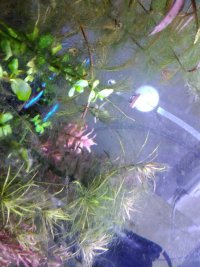
Hi, what I would like to know is the exact type of green algae that is, that is, staghorn, hair, fuzz, bba, etc
This is something different than "regular" green algae which easily removed from the tank, this could be staghorn which more firmly attached to the plant leaves. Also it is more of a blueish color.
This is something different than "regular" green algae which easily removed from the tank, this could be staghorn which more firmly attached to the plant leaves. Also it is more of a blueish color.
Attachments


- Messages
- 560
Looks to me like green thread algae.Hi, what I would like to know is the exact type of green algae that is, that is, staghorn, hair, fuzz, bba, etc
This is something different than "regular" green algae which easily removed from the tank, this could be staghorn which more firmly attached to the plant leaves. Also it is more of a blueish color.
Right, filamentous algaeLooks to me like green thread algae.
- Messages
- 560
Lmk if you get rid of it so i can applaud you.Right, filamentous algae
Why, It's impossible?Lmk if you get rid of it so i can applaud you.
It is always caused by a disruption in the overall balance as the tank knows it. I'm running a diy yeast with sugar based CO2 production, and the reaction ended without having a spare bottle. The tank went almost a week without CO2 supply. So that was the trigger.
Having a consistent balanced ecosystem should in its most part keep algae at a minimum level.
- Messages
- 560
Right. Its just so stubborn its hard to get off wood mostly.Why, It's impossible?
It is always caused by a disruption in the overall balance as the tank knows it. I'm running a diy yeast with sugar based CO2 production, and the reaction ended without having a spare bottle. The tank went almost a week without CO2 supply. So that was the trigger.
Having a consistent balanced ecosystem should in its most part keep algae at a minimum level.
Yes regarding this algae I noticed two different formations, the regular lite green threads relatively easy to remove using a toothbrush, and more blueish in color completely fused to the infested leaves needed to be trimmed.Right. Its just so stubborn its hard to get off wood mostly.
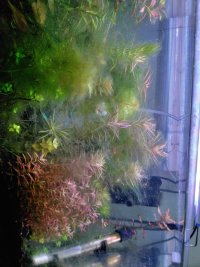
It turns out I also kept the lights for a long duration. Between 10-11 daily hours. Reduced it to 8 hours improved the situation. I'm considering a 6 hours daily however it is not possible without a timer, and I can't integrate such in light system I have which is the simple seven master led.
Oh, I did a quick research and there is a timer with socket, this could work.


Advertisement


- Messages
- 4,102
Prevent algae:
- Reduce light intensity
- Cool water (hence why I'd choose subtropical fishes over tropical fish for planted tanks)
- Large, frequent water changes
My experience is that the first two are sufficient to ignore the third. But with normal to strong light, I would conduct large water changes to reduce the organics produced by plants.
Reduce algae:
- Chemicals
- Blackout
- Shrimps, snails
++++++++++++++++
Trimming is something you have to figure out a little for yourself as there is no wrong or right.
For instance, you can plant plants that are labelled for background also in the foreground and trim those more often.
Oh, interesting stuff:
1. From the pic it's looks like an intense lightning? Dimmer is required?
2. I do have a heater installed and set on 26 degrees C, too hot for plants?
I wouldn't have even considered putting a heater if there weren't fish being introduced into the tank
Reduce algae:
- Chemicals -- too drastic, could damage plants?
- Blackout -- would inhibit plants
- Shrimps, snails -- should introduce, though they limited on how much algae they are able to consume
- Messages
- 4,102
You can't tell from an image if the light is intense or not. The camera does tricks. Oftentimes, you can't even tell in real life if the tank is situated in a bright room.
But the average LED aquarium light at normal output is strong, as strong sells better than dim.
The average aquarium plants does better in unheated tanks. Many danio, dario's, barbs, gourami's, some cory's, tetra's, etc.
- Chemicals; just a general remark; people use em, not me.
- Blackout; plants survive a 3 day blackout.
- Shrimps, snails; yes, correct.
Thanks for replying
I did reduced the duration of the lights, however I realize now a dimmer is required. Though no integration is possible for that model, perhaps there's a solution for that like the timer with socket.
The few fish left after several Golden Algae Eateres jumped out of the tank. Something bothered them. Too many variables in a planted aquarium for handling fish correctly also,..are neon cardinal tetra. I won't remove the heater, however I understand you recommend reducing the heat, to what temperature?
It's winter here now
- Messages
- 560
I have the same green hair algae as you as many of us do. Although yours is growing really fast to have already choked the new growth. It would be best if you removed as much algae by hand as you can. Then listen to ruuds advice ,well said. I keep my tank at 77°F so 25°C. I've heard people do well with plants in 75°F.Thanks for replying
I did reduced the duration of the lights, however I realize now a dimmer is required. Though no integration is possible for that model, perhaps there's a solution for that like the timer with socket.
The few fish left after several Golden Algae Eateres jumped out of the tank. Something bothered them. Too many variables in a planted aquarium for handling fish correctly also,..are neon cardinal tetra. I won't remove the heater, however I understand you recommend reducing the heat, to what temperature?
It's winter here now
25°C, is pretty much what I have now, the heater is set to 26 so it gives always a bit less keeping the tank between 25-25.5 C.
So ruud advised cool water, however I see the temperature is really an not an issue, so I exclude this. As it apparently ok.
Obviously it's a balancing of the tank issue, between CO2-lights-nutrients
I do remove lots of them manually, however some of it been fused to the leaves which can't be removed.
I did a 50% water change today, after that the tank looked a lot better.
I did have co2 supply shortage for a while which most probably triggered the algae, or didn't it ?
"Higher temperatures can exacerbate existing imbalances in your aquarium, such as excessive nutrients or strong lighting, which can contribute to more rapid algae proliferation. For planted tanks, maintaining a temperature range of 72-75°F (22-24°C) is often suggested to help control algae growth."
A one degree reduction is in place, though I don't really want to mess with it now
- Messages
- 560
Ya the co2 fluctuation likely didnt help.25°C, is pretty much what I have now, the heater is set to 26 so it gives always a bit less keeping the tank between 25-25.5 C.
So ruud advised cool water, however I see the temperature is really an not an issue, so I exclude this. As it apparently ok.
Obviously it's a balancing of the tank issue, between CO2-lights-nutrients
I do remove lots of them manually, however some of it been fused to the leaves which can't be removed.
I did a 50% water change today, after that the tank looked a lot better.
I did have co2 supply shortage for a while which most probably triggered the algae, or didn't it ?
I know exactly what you mean it fuses itself to everything. In my experience its next to impossible to fully remove. Very annoying. Since your light doesnt dim it may be best to get some floating plants.
My fish got a strand stuck in his mouth while feeding yesterday (looks like he got it out today).Hes a rather fat cardinal tetra and i literally watched him nibble on a sinking wafer for an hour and a half straight the other day. Prior to that he voraciously gulped down some frozen brine shrimp.
- Messages
- 4,102
You can keep plants in conditions that are not optimal. Chances of leaf abscission, algae infection and discoloration simply increase. But they are chances. One can keep a planted tank in mineral poor conditions under bright sunlight; but it comes with challenges and algae is likely to appear, but not necessarily affect plant leaves.
Messing with CO2 while keeping all else equal is probably the biggest stressor for plants, leaching organics that trigger algal spore germination.
Messing with CO2 while keeping all else equal is probably the biggest stressor for plants, leaching organics that trigger algal spore germination.
Advertisement
- Messages
- 560
5 gal co2 tanks are really easy if you have the money. For us lazy people i like the set it and forget it. I didnt know they last this long, as i filled it months ago august 2024 and still going strong. It was my first time doing co2 and i would say if you can spend a little extra money 150 $ ish (thats US dollars so not sure how easy it is to get them in israel) , then pull the trigger. Not sure if you have them already so just want to make you aware.Yes I finally figured out how to instantly activate DIY CO2 yeast based supply.
- Messages
- 560
Instead of yeast to produce co2 some fill a metal cylinder with co2 gas. Then they use a regulator to regulate how much co2 is dispersed into the tank.Hi, didn't quite realize what you're referring to
- Messages
- 560
Whatever works for you. You can then hook up a solenoid to the regulator so it turns off and on when the lights go on. The solenoid stops the flow of gasses(when put on a timer). Just really easy and you dont have to mess with it until your canister runs out.Oh, interesting, haven't heard about that. Sounds good solution.
I would have considered that, but the diy works fine for me now.
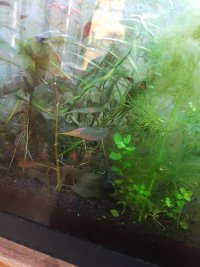
For something completely different, my ludwigia leaves not doing so well, what is this deficiency they showing?
This is not a recognized nutrient deficiency, could be the result of the algae infestation?
This is not a recognized nutrient deficiency, could be the result of the algae infestation?
Attachments

- Messages
- 12,570
It’s not nutrient deficiency. Those leaves appear to be rotting.For something completely different, my ludwigia leaves not doing so well, what is this deficiency they showing?
This is not a recognized nutrient deficiency, could be the result of the algae infestation?
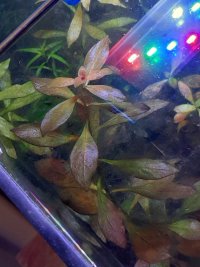
Are all the Ludwigia leaves like this or are there healthy looking leaves at the top of the stems?
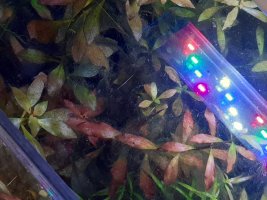
Here..
Before the algae outbreak they were much bigger and colorful
Here some quotation:
"If the bottom leaves are falling off, it could be because they are older. It could also be because they are getting shaded out by leaves that are higher up and then dying.
Finally, the another possibility is that the plant is adjusting to new parameters in your aquarium and is dying back a bit. This is completely normal."
However, this specific stem is a replanted cut off so it supposed to be well adjusted to tank conditions. I could only consider the algae affects.
However, this could be the cause:
This is due to poor flow and subsequently, poor CO2 reaching the bottom of the tank.
Before the algae outbreak they were much bigger and colorful
Here some quotation
:"If the bottom leaves are falling off, it could be because they are older. It could also be because they are getting shaded out by leaves that are higher up and then dying.
Finally, the another possibility is that the plant is adjusting to new parameters in your aquarium and is dying back a bit. This is completely normal."
However, this specific stem is a replanted cut off so it supposed to be well adjusted to tank conditions. I could only consider the algae affects.
However, this could be the cause:
This is due to poor flow and subsequently, poor CO2 reaching the bottom of the tank.
Attachments


- Messages
- 12,570
- Messages
- 4,102
The downsides of dimmed light is elongation of the stem (the L. sessiliflora is notorious for this), lack of colors, and perhaps slow growth. But abscission is not one of em.
Abscission is seen with strong lights and bad diffusion and distribution of CO2 gas. It is an economic decision. Successful high tech tanks have serious water flow to distribute the gas. And serious water changes to control algae.
Abscission is seen with strong lights and bad diffusion and distribution of CO2 gas. It is an economic decision. Successful high tech tanks have serious water flow to distribute the gas. And serious water changes to control algae.
Advertisement
I just did a quick manual removal of algae, and these leaves mentioned were peeled off, already not attached to the stem anymore.
The stem is naked now, should I remove it?
I just Starting to understand the algae, this stem was a replanted cut off which hit the water surface and all its leaves were infested, of course they would melt. I'm new to these concepts.
Infested leaves should be pruned, no bothering to clean them, indeed
the downsides of dimmed light is elongation of the stem (the L. sessiliflora is notorious for this), lack of colors, and perhaps slow growth. But abscission is not one of em.
Now as I realize how to instantly renew the supply when low or not at all, im Starting from a point of assumption that the following requirements are met: consistent flow (instant renewal), stable flow (if low then renew or adding a 2nd source), adequate output (simple, common diffuser is used)
I left with the question whether the distribution of the gas is sufficient?
The plants show quite satisfactory photo, indicated by pearling
The stem is naked now, should I remove it?
I just Starting to understand the algae, this stem was a replanted cut off which hit the water surface and all its leaves were infested, of course they would melt. I'm new to these concepts.
Infested leaves should be pruned, no bothering to clean them, indeed
the downsides of dimmed light is elongation of the stem (the L. sessiliflora is notorious for this), lack of colors, and perhaps slow growth. But abscission is not one of em.
This is all the result of the week or so shortage of CO2 supply.Abscission is seen with strong lights and bad diffusion and distribution of CO2 gas. It is an economic decision. Successful high tech tanks have serious water flow to distribute the gas. And serious water changes to control algae.
Now as I realize how to instantly renew the supply when low or not at all, im Starting from a point of assumption that the following requirements are met: consistent flow (instant renewal), stable flow (if low then renew or adding a 2nd source), adequate output (simple, common diffuser is used)
I left with the question whether the distribution of the gas is sufficient?
The plants show quite satisfactory photo, indicated by pearling
Attachments

- Messages
- 12,570
With the bare stemmed Ludwigia - you could snip the top pair of leaves off & hope it stimulates the production of branches, which can then be dealt with as you choose or snip off what’s left of top growth to replant and toss the remaining stems.The plants show quite satisfactory photo, indicated by pearling
I just did a manual cleanup, the whole substrate was filled with rotting ludwigia leaves and even stems floating. Is this all algae work?
I thought the diatoms was a problem, as you said brown algae only covers the plant, not doing any damage, the green algae on the other hand literally destroy it.
This could swept away an entire tank.
I'm going to install a 2nd co2 source with diffuser, one must eliminate the co2 variable in order to achieve balance in a planted aquarium.
- Messages
- 12,570
Diatoms can cover any surface but they don’t cause damage - though they can get thick enough to block all the light from reaching a leaf, which would eventually kill it.I just did a manual cleanup, the whole substrate was filled with rotting ludwigia leaves and even stems floating. Is this all algae work?
I thought the diatoms was a problem, as you said brown algae only covers the plant, not doing any damage, the green algae on the other hand literally destroy it.
This could swept away an entire tank.
I'm going to install a 2nd co2 source with diffuser, one must eliminate the co2 variable in order to achieve balance in a planted aquarium.
Some other algae that physically attach to leaves do real physical damage that will kill the leaf - the plant will sacrifice leaves like that if it can afford to.
If you manage to clean algae like those off a leaf, it will have holes or very jagged edges depending on where the algae attached and typically some yellowing or browning.
Those dark brown Ludwigia leaves had rot - which can be either bacterial or fungal in nature.
There appears to be a connection between roots & rotting in stem tissues - though your cuttings don’t appear to have stem rot, thankfully so.
But a rooted cutting is far less likely to get stem rot than one without any roots.
In terrestrial plants, one common form of rot affects any/all plant parts & it’s extremely common in seedlings. This is caused by Fusarium oxysporum. Might be called Fusarium wilt.
F.oxysporum is a terrestrial organism but it is known to be capable of surviving for months underwater. It can rot an entire stem, roots (if any) and all, in a matter of a day or two in the worst case scenario.
Bacterial rots can kill very quickly too - but in this case it appears to have affected only the leaves.
I can’t say what exactly caused the Ludwigia leaves to succumb but I can speculate that the combination of erratic carbon levels & algae might possibly have weakened the Ludwigia so it was more vulnerable.
I determined to know the exact algae type.
Perhaps when identifying the exact type special countermeasures are available.
This is not green thread algae
Fuzz, bba?
Green Fuzz Algae (Oedogonium)
All thread algae are indicating low- or fluctuating CO2 levels! Carbon-dioxide fluctuation can be caused by uneven CO2 levels (because of a pH computer for example) or a timer that was not set up correctly (CO2 levels will have to reach the desired level at the time when light - even natural light in your room - appears). The Fuzz Algae is a thread algae that grows thin threads of just a couple of millimeters on plant leaves. It indicates that the plants are suffering (leaves rotting locally) due to mainly nutrient deficiency (for example the local lack of CO2 that is not distributed in evenly by the flow in the whole aquarium). It can appear on old, and damaged leaves. Algae eaters and Amano Shrimp will eat it.
To address the cause, you will have to ensure the proper CO2 levels, and time you CO2 injection according to the lighting period (start 2-3 hours before-, and switch it off together with the lights). Please take the natural light in consideration too. CO2 need of plants can rise due to a cast of light at mornings for example - even if your lamp will switch on at noon.
Green Beard Algae - GBA
All thread algae are indicating low- or fluctuating CO2 levels! Carbon-dioxide fluctuation can be caused by uneven CO2 levels (because of a pH computer for example) or a timer that was not set up correctly (CO2 levels will have to reach the desired level at the time when light - even natural light in your room - appears). The Green Beard Algae is presumably a more virulent form of Green Fuzz Algae. The fine longer threads will attach to plants and hardscape. It can grow a couple of centimeters and form a dense green coat on their surface. It can be very decorative at times. Algae eaters will like it very much.
It can be difficult to remove mechanically, as it attaches strongly to surfaces. the threads are slimy and weak. It is a typical algae of fish tanks without plants, but it does not necessarily indicate bad water quality. In planted tanks it is indicating that the lighting period is too long (reduce it to 8 hours) or CO2 levels are too low, or there is not enough Nitrate in the water.
It is obviously one of these,, looks like fuzz
Fits exactly in cause and appearance
You don't want to mess with your CO2
Attachments


- Messages
- 12,570
‘Green Beard’ is probably also an Oedegonium, just a more vigorous species. There are some 600 different species in Oedegoniacaea.I determined to know the exact algae type.
Perhaps when identifying the exact type special countermeasures are available.
This is not green thread algae
Fuzz, bba?
Green Fuzz Algae (Oedogonium)
All thread algae are indicating low- or fluctuating CO2 levels! Carbon-dioxide fluctuation can be caused by uneven CO2 levels (because of a pH computer for example) or a timer that was not set up correctly (CO2 levels will have to reach the desired level at the time when light - even natural light in your room - appears). The Fuzz Algae is a thread algae that grows thin threads of just a couple of millimeters on plant leaves. It indicates that the plants are suffering (leaves rotting locally) due to mainly nutrient deficiency (for example the local lack of CO2 that is not distributed in evenly by the flow in the whole aquarium). It can appear on old, and damaged leaves. Algae eaters and Amano Shrimp will eat it.
To address the cause, you will have to ensure the proper CO2 levels, and time you CO2 injection according to the lighting period (start 2-3 hours before-, and switch it off together with the lights). Please take the natural light in consideration too. CO2 need of plants can rise due to a cast of light at mornings for example - even if your lamp will switch on at noon.
Green Beard Algae - GBA
All thread algae are indicating low- or fluctuating CO2 levels! Carbon-dioxide fluctuation can be caused by uneven CO2 levels (because of a pH computer for example) or a timer that was not set up correctly (CO2 levels will have to reach the desired level at the time when light - even natural light in your room - appears). The Green Beard Algae is presumably a more virulent form of Green Fuzz Algae. The fine longer threads will attach to plants and hardscape. It can grow a couple of centimeters and form a dense green coat on their surface. It can be very decorative at times. Algae eaters will like it very much.
It can be difficult to remove mechanically, as it attaches strongly to surfaces. the threads are slimy and weak. It is a typical algae of fish tanks without plants, but it does not necessarily indicate bad water quality. In planted tanks it is indicating that the lighting period is too long (reduce it to 8 hours) or CO2 levels are too low, or there is not enough Nitrate in the water.
It is obviously one of these,, looks like fuzz
Fits exactly in cause and appearance
You don't want to mess with your CO2
There is nothing specific to use against Oedegonium that wouldn’t also work with other alfae.
Depending on species, the filaments can be much longer than just a few millimetres though there’s no information to speak of concerning how long they can grow.
You might consider using H2O2 to help kill off the stuff now the underlying cause(s) is sorted.
It is not without risk but it may help.
Peroxide Treatment For Algae in Aquariums
OK, it is indeed now the underlying cause(s) is sorted.
Also, the exact type of this algae is now I believe- staghorn
I will check out hydrogen peroxide usage
Also, the exact type of this algae is now I believe- staghorn
I will check out hydrogen peroxide usage
Hydrogen peroxide or liquid carbon ?
- Messages
- 12,570
H2O2 is much safer & usually also much cheaper.Hydrogen peroxide or liquid carbon ?
Random Great Topic!

Today's Deals
Advertisement
Advertisement
Advertisement