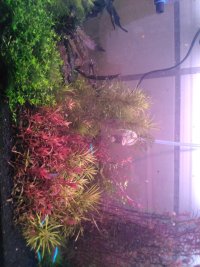
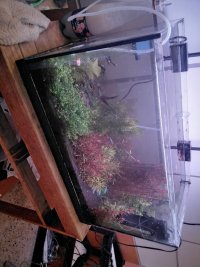
It really doesn’t matter what kind it is so long as it isn’t
cyanobacteria, and since that comes off with ease so it can’t be cyano’.
There is no point to attempting to clean off affected leaves - they’re going to die anyway.
Best to remove all plant parts that are affected by the algae and keep only the clean new top growth - virtually always the top growth remains clear of algae but unfortunately, the rest of the plants that are infested are feeding the algae.
So it helps a lot to remove that food resource along with all the algae itself.
Scrub it off any other surface it may have attached to and if it’s on wood or rock, remove those to scrub if at all possible
Before you start the clean up, fill a filter, a spare one (or the main one temporarily), with just plain
filter floss and start it running. The floss will catch just about every trace of algae that floats free in the water column while you clean up.
Leave it running for a few hours after you’re done and then you can toss the floss or pick most of the algae out that you can & boil it to use again. The boiling is to kill the algae you can’t get off because you won’t get it all off.
Next steps are to correct the underlying cause of the algae growth - so often this is excess light. Either too intense a light or too many hours of light per day or both. Add a lot of floating cover, or reduce hours or dim the light - or do all those things. Find a happy medium.
With a little luck this intensive cleanup plus managing light (also avoid using fertilizer for a little while and don’t overfeed the fish) will solve most of the problem.
Personally I use algae eating beasties (mostly snails) to help also, because total eradication of algae isn’t really possible.
Algae is a part of nature and next to impossible to eliminate without using a lot of ‘chemical warfare’ , which I think is a terrible idea. Just my opinion - I figure so long as it isn’t taking over the tank, it’s all good.