CO2 for 55 gallon tank - any special considerations?

Madchild57

Well Known
Member
Messages
544
My water is likely CO2 deficient since I can't get any new plants to root and I have trouble getting quite a few "easy" plants to grow despite using water column and root tab ferts. If I switch those problem plants into an unfertilized 10 gallon they do begin growing, and nothing else changed except tank size.
Are there any special considerations I should make when using CO2 for such a large aquarium? Last time I thought about this I was told I would need a powerhead and I'm not sure my fish/floaters would be able to handle that. As far as my plants go, they're all low-tech, some fast growers like my water sprite and amazon swords, but all are said to not need added CO2.
 

Advertisement
My water is likely CO2 deficient since I can't get any new plants to root and I have trouble getting quite a few "easy" plants to grow despite using water column and root tab ferts. If I switch those problem plants into an unfertilized 10 gallon they do begin growing, and nothing else changed except tank size.
Are there any special considerations I should make when using CO2 for such a large aquarium? Last time I thought about this I was told I would need a powerhead and I'm not sure my fish/floaters would be able to handle that. As far as my plants go, they're all low-tech, some fast growers like my water sprite and amazon swords, but all are said to not need added CO2.
What’s your filter situation like? You’ll ideally want to use either a reactor or an atomizer rather than an in-tank diffuser on a tank that size to get efficient CO2 diffusion.

The best way to judge whether you are injecting enough CO2 is to ensure you are getting at least a 1pt drop in PH from when your water is degassed/right before your CO2 comes on to when your lights come on and the CO2 has been given time to build up. Right before your CO2 comes on, take out a bit of your water and shake it vigorously for 3 minutes to fully ensure it is degassed. Measure the PH with a PH probe. Then when your lights come on, take the Ph measurement again. Your PH should have dropped 1pt (i.e. 7.5 to 6.5). The drop checker is a nice reference point, but isn’t a great indicator alone because of the delay and it only gives you a reference for a specific area of the tank. Also bubble rate of a bubble counter is almost meaningless because different brand bubble counters on the exact same CO2 system will show different rates because of different bubble sizes. Combine that with people having different tanks and different systems makes bubble rate useless, especially on larger tanks where the bubble rate will be very hard to reliably count. If you can’t drop the PH 1pt without your fish showing signs of distress, you don’t have enough surface agitation/oxygenation in the water column.

The third thing to keep in mind is that you want a quality regulator with a good needle valve that allows precise manipulation of the CO2. Without a good regulator and a good needle valve you can run into a lot of problems with fluctuating CO2 levels.
 

Advertisement
  • Thread Starter
  • #3
What’s your filter situation like? You’ll ideally want to use either a reactor or an atomizer rather than an in-tank diffuser on a tank that size to get efficient CO2 diffusion.

The best way to judge whether you are injecting enough CO2 is to ensure you are getting at least a 1pt drop in PH from when your water is degassed/right before your CO2 comes on to when your lights come on and the CO2 has been given time to build up. Right before your CO2 comes on, take out a bit of your water and shake it vigorously for 3 minutes to fully ensure it is degassed. Measure the PH with a PH probe. Then when your lights come on, take the Ph measurement again. Your PH should have dropped 1pt (i.e. 7.5 to 6.5). The drop checker is a nice reference point, but isn’t a great indicator alone because of the delay and it only gives you a reference for a specific area of the tank. Also bubble rate of a bubble counter is almost meaningless because different brand bubble counters on the exact same CO2 system will show different rates because of different bubble sizes. Combine that with people having different tanks and different systems makes bubble rate useless, especially on larger tanks where the bubble rate will be very hard to reliably count. Your troubles indicate a high likelihood of CO2 injection issues. If you can’t drop the PH 1pt without your fish showing signs of distress, you don’t have enough surface agitation/oxygenation in the water column.

The third thing to keep in mind is that you want a quality regulator with a good needle valve that allows precise manipulation of the CO2. Without a good regulator and a good needle valve you can run into a lot of problems with fluctuating CO2 levels.
I don't have the CO2 yet, I've been debating it for a while, but still CO2-less. My tank is currently around 6.8, fish can tolerate 5.8 pH for such a long time? I thought ph wasn't supposed to change since the plants take up the CO2 quickly.
I have 2 Aquaclear 50 HOBs, one on the right side one on the left
I would highly recommend reading more into what injecting CO2 entails. This website is a great resource: https://www.2hraquarist.com/. But to answer your question, yeah definitely. In nature it’s normal in plenty of areas where fish live in more acidic environments (tetras, angelfish, and lots of other soft water fish) for the PH to gradually drop and rise over the course of 24 hours. What is bad for fish is an immediate change in PH, not a gradual change over the course of an hour. In high tech tanks under a year old with aquasoil, the water is buffered down to a KH of 0 and the PH can get into the 4s and then overnight while the CO2 is off it rises back up to 6 something. Pretty much all soft water fish can handle this no problem, the only problem you run into with tanks where you have a low KH and inject CO2 are with hard water fish like certain cichlids and livebearers.
 
I'm a little suspicious of the idea of injecting CO2 into a fish tank. . . You probably just need more aeration. . . I've got a 55g, and a 10g. Neither has CO2 injection, and both grow plants just fine. . . I do have lots and lots of aeration, though.
 
  • Thread Starter
  • #6
I'm a little suspicious of the idea of injecting CO2 into a fish tank. . . You probably just need more aeration. . . I've got a 55g, and a 10g. Neither has CO2 injection, and both grow plants just fine. . . I do have lots and lots of aeration, though.
I think I'll improve my aeration first and see how it goes, I was always wary of too much aeration because I read that it causes CO2 to leave the tank but now that I think about it, the concentration of atmospheric CO2 is in the millions so it would still diffuse into the tank.
And maybe try liquid carbon even tho it isn't a direct CO2 source.
 

Advertisement
I think I'll improve my aeration first and see how it goes, I was always wary of too much aeration because I read that it causes CO2 to leave the tank but now that I think about it, the concentration of atmospheric CO2 is in the millions so it would still diffuse into the tank.
And maybe try liquid carbon even tho it isn't a direct CO2 source.
Without injecting CO2, you cannot exceed equilibrium. At equilibrium, your CO2 ppm is only like 3-5ppm or so.
Natural environments that support thriving plant growth typically have elevated levels of carbon dioxide (10 - 40+ ppm) from organic decomposition and underground stores of CO2.
One injects CO2 in order to break past the barrier in low tech tanks and reach higher concentrations, typically around 35ppm of CO2, but some tanks and certain plants require even higher levels. When you’re injecting CO2, more oxygenation does require you to inject more CO2 because of off-gassing of CO2, but it also increases fish’s tolerance of CO2 because of the increased oxygenation and greatly lowers the chance of one overdosing/gassing their fish with CO2.
TLDR: Increased oxygenation and surface agitation is almost always a great idea.

Liquid carbon is nowhere near as effective as CO2, but it indeed has shown to help plants a bit. However, if you can’t grow plants to begin with, it won’t be the variable that changes that.

What light, substrate, and ferts are you using? Also what is your KH? These things will help uncover why you are having problems.
 
  • Thread Starter
  • #8
Without injecting CO2, you cannot exceed equilibrium. At equilibrium, your CO2 ppm is only like 3-5ppm or so.
Natural environments that support thriving plant growth typically have elevated levels of carbon dioxide (10 - 40+ ppm) from organic decomposition and underground stores of CO2.
One injects CO2 in order to break past the barrier in low tech tanks and reach higher concentrations, typically around 35ppm of CO2, but some tanks and certain plants require even higher levels. When you’re injecting CO2, more oxygenation does require you to inject more CO2 because of off-gassing of CO2, but it also increases fish’s tolerance of CO2 because of the increased oxygenation and greatly lowers the chance of one overdosing/gassing their fish with CO2.
TLDR: Increased oxygenation and surface agitation is almost always a great idea.

Liquid carbon is nowhere near as effective as CO2, but it indeed has shown to help plants a bit. However, if you can’t grow plants to begin with, it won’t be the variable that changes that.

What light, substrate, and ferts are you using? Also what is your KH? These things will help uncover why you are having problems.
Oh no I was saying I'm probably far below equilibrium and an air stone may help a bit in approaching equilibrium better. I can grow plants, but usually the bullet proof ones. My biggest issue is getting plants to root, I can't get banana lillies and moneywort to root but they grow leaves just fine. Same with hygrophilia pinnatifida but I'm growing it as an epiphyte. My amazon swords are going crazy with leaves and roots. But when I move the moneywort (for example) and put it in a 10 gallon tank unfertilized I get root growth albeit slowly.
My light is https://www.amazon.com/Koval-Aquarium-Extendable-Brackets-45-Inch/dp/B00OY7OQAA although I do have floating water sprite. My substrate is standard gravel. I used to think that was the problem so I added root tabs (Aquarium Coop brand which are mineralized soil so they won't just dissolve into the water). That caused a bunch of my plants to perk up and improve in health a lot, mainly my dwarf red lily and hygro corymbosa (which I did get to root). Along with those root tabs, I dose easy green twice per week because my nitrate level goes to 5 ppm within 48 hours and my plants suffer if I don't dose 2x due to this deficiency. I don't know my exact kh but my water is typically 6.8 pH and comes out at like 7.2-7.4 from the tap, so I think pretty soft.
 
Oh no I was saying I'm probably far below equilibrium and an air stone may help a bit in approaching equilibrium better. I can grow plants, but usually the bullet proof ones. My biggest issue is getting plants to root, I can't get banana lillies and moneywort to root but they grow leaves just fine. Same with hygrophilia pinnatifida but I'm growing it as an epiphyte. My amazon swords are going crazy with leaves and roots. But when I move the moneywort (for example) and put it in a 10 gallon tank unfertilized I get root growth albeit slowly.
My light is Amazon.com although I do have floating water sprite. My substrate is standard gravel. I used to think that was the problem so I added root tabs (Aquarium Coop brand which are mineralized soil so they won't just dissolve into the water). That caused a bunch of my plants to perk up and improve in health a lot, mainly my dwarf red lily and hygro corymbosa (which I did get to root). Along with those root tabs, I dose easy green twice per week because my nitrate level goes to 5 ppm within 48 hours and my plants suffer if I don't dose 2x due to this deficiency. I don't know my exact kh but my water is typically 6.8 pH and comes out at like 7.2-7.4 from the tap, so I think pretty soft.
Okay nice nice, yeah increased oxygenation and even root tabs should help. But regular gravel by itself does indeed give plants a harder time with rooting so that’s most likely a large factor.
 
  • Thread Starter
  • #10
Okay nice nice, yeah increased oxygenation and even root tabs should help. But regular gravel by itself does indeed give plants a harder time with rooting so that’s most likely a large factor.
I think I'm going to track nutrient levels throughout a week period and post them in another thread soon, I know the nitrates from ferts disappear after <48 hours but maybe they disappear even faster since my water sprites get atmospheric co2 and can absorb nutrients much quicker. The biggest mystery to me is why the plant will grow but the roots won't form. Regardless I was perhaps a bit rash to panic about this and go straight to needing CO2 for low tech plants.
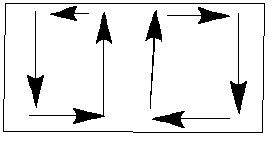
I have an air stone running to aerate better, hopefully increase CO2 levels, with water cycling like
1645844915508.png
Where the middle is the air stone forcing up the water pushed down by the filters after my plants get to it. Before there was no driving force for CO2- depleted water to rise back up
Perhaps I'll give fluorish advance a try
 
I run a 55 gallon aquarium. Substrate is 3-4 mm standard gravel. I've various plants Amazon swords, hygrophila ,ludwigia super reds, African water fern various crypts like pentcii, an balansae. I use root tabs in my 5" deep substrate which I never vacuum (hoping to build up mulm).I also use liquid ferts. I run a fluval 407 to break water surface, which also helps circulate the water great now I've repositioned it.But I too was reluctant to switch over to co2.But glad I did.Im into week 3 now an noticed plant growth by week 2. I'm currently at 1 bubble per second. An my ph was 8, but when at co2 runs after a few hours the ph drops to 7.2 so I could probably go a bit more, but ready to push it yet.......But is co2 worth the investment.????? Yes in my opinion.
 

Random Great Topic!

Advertisement


Advertisement


Advertisement


Back
Top Bottom