Anacharis hitchhikers possibly scuds?

Nothing76

Active Member
Member
Messages
106
Can I get banned for asking too many questions? :(

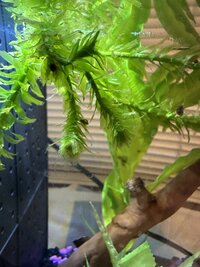
I got two lovely looking bunches of Anacharis from Petco today. I asked the clerk if I could just put them in my tank and she said yes. I have a tank that I have exclusively for plants so I wasn't too worried. I did not rinse them off, I just put them in the "plant tank". Soon after placing them in the tank, I noticed some strange little creatures darting quickly about! From my frantic Google searches, I have learned that they may be scuds? I could have sworn that there was one riding on top of another, but they are quite fast and I doubt I could get a photo of them.

Should I a) Panic, b) calmly attempt to eliminate them (if so, how?), or c) leave them be as they are not harmful/dangerous?

The only potential occupant I might introduce to this tank is a betta, but I will not ever do so if these could potentially harm them.
 

Advertisement
Hey! You could put in a fish that will scarf em up quickly. Bettas will have a great feast on them. They do mate quickly though...
 

Advertisement
Can I get banned for asking too many questions? :(

I got two lovely looking bunches of Anacharis from Petco today. I asked the clerk if I could just put them in my tank and she said yes. I have a tank that I have exclusively for plants so I wasn't too worried. I did not rinse them off, I just put them in the "plant tank". Soon after placing them in the tank, I noticed some strange little creatures darting quickly about! From my frantic Google searches, I have learned that they may be scuds? I could have sworn that there was one riding on top of another, but they are quite fast and I doubt I could get a photo of them.

Should I a) Panic, b) calmly attempt to eliminate them (if so, how?), or c) leave them be as they are not harmful/dangerous?

The only potential occupant I might introduce to this tank is a betta, but I will not ever do so if these could potentially harm them.
Images would be nice to see but assuming you have scuds and both sexes, they do reproduce fairly quickly.

They make excellent live fish food. They’re detritivores so they can be part of a cleanup crew and they adore algae - so they’re good algae eaters albeit very small ones. I’m rather fond of them and they can be quite amusing to watch especially when engaged in the dance ‘o love. But if there are mosses in the tank they’ve been known to strip moss leaves to the point that nothing is left but what looks like a tangle of sewing thread - bare stems.

It seems to be a toss up whether it’s algae they adore most or mosses - either way, they’re not a great idea if the tank has mosses. They can be fed of course - but whether it will deter them from snacking on moss leaves is very hard to say.
A few of them won’t be able to do a great deal of harm to established mosses but a larg enough population of them just might make moss disappear.

I don’t know that the particular species makes much if any difference, but unless you buy a named species identifying which species you may have is very difficult.
 
  • Thread Starter
  • #4
Hey! You could put in a fish that will scarf em up quickly. Bettas will have a great feast on them. They do mate quickly though...
Thank you for the reply! I haven't been able to see them since putting the plants. I suspect they are hiding? If I just keep this as a plant tank would they eventually need to be dealt with or will they just coexist?
 
Thank you for the reply! I haven't been able to see them since putting the plants. I suspect they are hiding? If I just keep this as a plant tank would they eventually need to be dealt with or will they just coexist?
So long as they find sufficient food of the type they normally consume it’s probably no worries to have them. Hungry scuds will eat healthy plants as well as mosses if there are any, so it is most unwise to let them get hungry.
They’re less potential trouble in tanks with fish that like to eat them - the fish keep their numbers in check.
I have yet to encounter a betta that doesn’t think they’re absolutely yummy.
 

Advertisement
  • Thread Starter
  • #7
Images would be nice to see but assuming you have scuds and both sexes, they do reproduce fairly quickly.
They make excellent live fish food. They’re detritivores so they can be part of a cleanup crew and they adore algae - so they’re good algae eaters albeit very small ones.
I don't have any moss in that particular tank, just some Anubias congenis and Echinodorus bleheri. I hope I spelled those right. So I'm getting that they are definitely not harmful to bettas and that the bettas may enjoy feasting upon them. That is good news because they dart around in an alarming manner especially considering that I did not expect them to be there.
Sorry, coexist with what. The Betta?
Coexist with the Betta? Sorry, i'm unclear.
Sorry! I mean with the plants. Will they devour them and become a nuisance?
So long as they find sufficient food of the type they normally consume it’s probably no worries to have them.

Hungry scuds will eat healthy plants as well as mosses if there are any, so it is most unwise to let them get hungry.

They’re less potential trouble in tanks with fish that like to eat them - the fish keep their numbers in check.

I have yet to encounter a betta that doesn’t think they’re absolutely yummy.
Should I throw some fish flakes in periodically to keep them from attacking my plants?
 
If they get hungry they can do a lot of damage if their numbers are high,
Personally I wouldn’t keep them in a plant only tank - only in one with fish to hunt them or in a live food culture. .
 
  • Thread Starter
  • #9
If they get hungry they can do a lot of damage if their numbers are high,

Personally I wouldn’t keep them in a plant only tank - only in one with fish to hunt them or in a live food culture. .
Okay! Thank you so much! This was a mistake tank. It is only 2.5 gallons and I thought it would be sufficient for a betta but I have since learned that this is not adequate. I had already decorated it and decided against returning it, so I thought I would make use of it in another way, hence the plant tank. I know it is cycled, so maybe I could just put a betta in there temporarily to feast on the scuds. I don't know if this would be too much of a stress on the betta?
 
Okay! Thank you so much! This was a mistake tank. It is only 2.5 gallons and I thought it would be sufficient for a betta but I have since learned that this is not adequate. I had already decorated it and decided against returning it, so I thought I would make use of it in another way, hence the plant tank. I know it is cycled, so maybe I could just put a betta in there temporarily to feast on the scuds. I don't know if this would be too much of a stress on the betta?

Many bettas have lived good lives in tanks that size but opinions about minimum tank sizes have evolved and I wouldn’t house a single betta in it permanently.,
 
  • Thread Starter
  • #11
Images would be nice to see but assuming you have scuds and both sexes, they do reproduce fairly quickly.

They make excellent live fish food. They’re detritivores so they can be part of a cleanup crew and they adore algae - so they’re good algae eaters albeit very small ones.

I’m rather fond of them and they can be quite amusing to watch especially when engaged in the dance ‘o love.

But if there are mosses in the tank they’ve been known to strip moss leaves to the point that nothing is left but what looks like a tangle of sewing thread - bare stems.

It seems to be a toss up whether it’s algae they adore most or mosses - either way, they’re not a great idea if the tank has mosses.

They can be fed of course - but whether it will deter them from snacking on moss leaves is very hard to say.

A few of them won’t be able to do a great deal of harm to established mosses but a larg enough population of them just might make moss disappear.

I don’t know that the particular species makes much if any difference, but unless you buy a named species identifying which species you may have is very difficult.
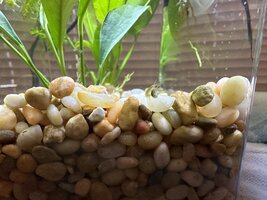
This is the best photo I could get. Is it a snail???
 

Attachments

  • IMG_8061.jpeg
    IMG_8061.jpeg
    352.4 KB · Views: 20

Advertisement


What should I do, if anything?

That is entirely up to you and your take on snails.

Some view as pest as they do multiply very quickly when given the right conditions. (Too much food)

Many others including myself look at them as a valuable addition to a thriving ecosystem. They are very good cleaners of diatoms, and will clean up any food left over from the fishys. Their young also provide a live, nutritional snack for many fish as well.

Many people do keep them in with their bettas BTW.

They will snack on dieing, or dead plant matter, but will not bother live plants.

I have read that they can multiply so fast, that they can clog a filter, but I've yet to witness this, and seems like more of a lack of maintenence IMO.
 
  • Thread Starter
  • #15
That is entirely up to you and your take on snails.

Some view as pest as they do multiply very quickly when given the right conditions. (Too much food)

Many others including myself look at them as a valuable addition to a thriving ecosystem. They are very good cleaners of diatoms, and will clean up any food left over from the fishys. Their young also provide a live, nutritional snack for many fish as well.

Many people do keep them in with their bettas BTW.

They will snack on dieing, or dead plant matter, but will not bother live plants.

I have read that they can multiply so fast, that they can clog a filter, but I've yet to witness this, and seems like more of a lack of maintenence IMO.
I’m opposed to eliminating anything without a good reason, so I think I will just embrace the free additions and leave them be. Thank you so much for your help in identifying them!!
 
I’m opposed to eliminating anything without a good reason, so I think I will just embrace the free additions and leave them be. Thank you so much for your help in identifying them!!
They are bladder snails, not ramshorns. Ramshorn shells are always planispiral - flat coils without any spikes or protrusions.

Bladder snails have a semi conical-shell shape with a pointed spike end.

Two pics of orange ramshorns and two of an adult bladder snail with a white foot rather than the usual dark brown.
 

Attachments

  • IMG_4179.jpeg
    IMG_4179.jpeg
    190.6 KB · Views: 8
  • IMG_4177.jpeg
    IMG_4177.jpeg
    315.1 KB · Views: 8
  • IMG_4071.jpeg
    IMG_4071.jpeg
    250.4 KB · Views: 9
  • IMG_4072.jpeg
    IMG_4072.jpeg
    282.2 KB · Views: 7
  • Thread Starter
  • #17
They are bladder snails, not ramshorns. Ramshorn shells are always planispiral - flat coils without any spikes or protrusions.

Bladder snails have a semi conical shell shape with a pointed spike end.

Two pics of orange ramshorns and two of an adult bladder snail with a white foot rather than the usual dark brown.
Okay should I worry about bladder snails?
 
Okay should I worry about bladder snails?
They are harmless and pretty decent algae eaters. They never bother live plants.

They are capable of explosive reproductive rates if food is plentiful. If food is in short supply their reproductive rate slows down dramatically.

Might or might not appeal to you but their shells are very thin and easily damaged so they are easy to use for live food, even for fish that normally can’t deal with shells to get at the snail within.

When the numbers of mine get too high I squash some and the bottom feeders really go for them - bettas and many other species will also eat a snail snack with great relish.
 
  • Thread Starter
  • #20
They are harmless and pretty decent algae eaters. They never bother live plants.

They are capable of explosive reproductive rates if food is plentiful. If food is in short supply their reproductive rate slows down dramatically.

Might or might not appeal to you but their shells are very thin and easily damaged so they are easy to use for live food, even for fish that normally can’t deal with shells to get at the snail within.

When the numbers of mine get too high I squash some and the bottom feeders really go for them - bettas and many other species will also eat a snail snack with great relish.
So they would be safe to live with bettas what about ghost shrimp? I just got 6 ghost shrimp and they’re really neat! Also will the bettas try to eat the snails while they’re alive or would I have to smoosh them?
No, not at all. They will reproduce but they won't harm anything.
Awesome, I would prefer to just let them be, so I’m glad to know it’s safe to do so. Thank you!!
 
Ramshorn shells are always planispiral - flat coils without any spikes or protrusions.

Boy my eyes must need checking as I swear I see the spiraling, but pic is a tad fuzzy too!

Sorry for the mix up guys!
 

Advertisement


Boy my eyes must need checking as I swear I see the spiraling, but pic is a tad fuzzy too!

Sorry for the mix up guys!

Hey, mistakes happen to us all :-).

I KNOW I need new specs and can’t see some things as well as I once did but I sure didn’t see a flat coil - mind, I kind of have a thing for snails so I recognize some of the most common ones practically without a second glance.
 
So they would be safe to live with bettas what about ghost shrimp? I just got 6 ghost shrimp and they’re really neat! Also will the bettas try to eat the snails while they’re alive or would I have to smoosh them?

Awesome, I would prefer to just let them be, so I’m glad to know it’s safe to do so. Thank you!!
The snails will be perfectly fine with the shrimp. Whether the Betta will eat the snails alive really depends on the Betta. Mine always killed the baby ones but the adults are probably going to be too big for them to eat.
 
  • Thread Starter
  • #25
Okay guys I think I have something other than snails along with snails. What the heck are these??
 

Attachments

  • IMG_8098.jpeg
    IMG_8098.jpeg
    345.1 KB · Views: 6
Okay guys I think I have something other than snails along with snails. What the heck are these??

There are the scuds you originally thought you had.

An excellent image of a pair of amphipods indulging in connubial bliss!
 
  • Thread Starter
  • #27
There are the scuds you originally thought you had.

An excellent image of a pair of amphipods indulging in connubial bliss!

Well darn. Learned a lesson about not just plopping new plants in the tank. I just put a betta in there so maybe he will make a snack of them!
 
Well darn. Learned a lesson about not just plopping new plants in the tank. I just put a betta in there so maybe he will make a snack of them!
More than likely. :)
 
The scuds probably won't be too much of a problem. They mostly eat dead plants and leftover food, but they will occasionally eat live plants, but not enough to do substantial damage except in large numbers. Fortunately, your betta will likely control their population so you probably won't need to worry.

Hitchhikers are very common on plants- I've gotten pond snails, bladder snails, malaysian trumpet snails, ramshorn snails, tubifex worms, detritus worms, java moss, a mystery snail, and a baby fish all from plants! If you don't want these things, then it'll be a good idea to be cautious when adding new plants. If you're fine with them, they typically don't cause too many problems.
 
  • Thread Starter
  • #30
The scuds probably won't be too much of a problem. They mostly eat dead plants and leftover food, but they will occasionally eat live plants, but not enough to do substantial damage except in large numbers. Fortunately, your betta will likely control their population so you probably won't need to worry.

Hitchhikers are very common on plants- I've gotten pond snails, bladder snails, malaysian trumpet snails, ramshorn snails, tubifex worms, detritus worms, java moss, a mystery snail, and a baby fish all from plants! If you don't want these things, then it'll be a good idea to be cautious when adding new plants. If you're fine with them, they typically don't cause too many problems.
A baby fish?? haha that's awesome. I need to look into ways to clean new plants before I get any more. Thanks for your help!
 
A baby fish?? haha that's awesome. I need to look into ways to clean new plants before I get any more. Thanks for your help!
When it comes to free swimming hitchhikers like scuds, dumping new plants in a bucket and leaving them overnight or at least a few hours will typically reveal if there are hitchhikers such as scuds, mayfly type or other aquatic insect larvae, maybe some worms and usually any snails that are big enough to be seen.

I find that using the coldest water you can get from the tap as a sudden plunge won’t harm plants but will shock hitchhiking snails into letting go of their leaf or stem, but it does nothing to remove egg clutches.
 
Advertisement


Advertisement


Advertisement


Back
Top Bottom