Free Swimming German Blue Ram Fry...now What?

redman77

Active Member
Member
Messages
105
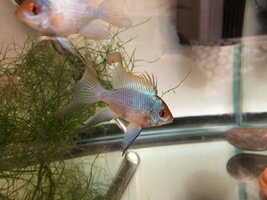
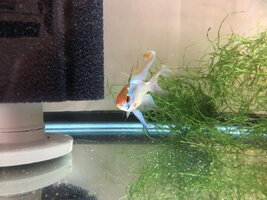
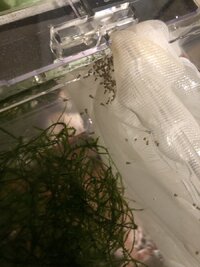
My German Blue Rams (purchased from coralbandit) laid eggs about a week ago and now the fry are free swimming! They are in a 75 gallon community tank and the parents are keeping a close watch on them at the moment. I'm not sure what steps to take next.

Can I leave them in the tank? Or should I separate them (which would be tough b/c I only have the one tank, though I'm not opposed to getting another for breeding purposes in the future)? What should I be feeding them?

Any advice at all would be greatly appreciated. Thanks!!

IMG_20190621_110236.jpg
 

Advertisement
I personally feel you need to move them asap. I am not sure how you would feed them well in that environment. Especially with it being a community tank.....Even with the parents guarding them well (SO FAR!) I don't see you succeeding with them if they stay in the 75 gallon community.

What I did personally was use a hang on the back breeder box. The first couple days I had to feed them powdered food and had to put it right next to them in the box. After a couple days, mine were able to eat baby brine shrimp and I was done with dry food. (until they were like a month old or so) I moved them into a 10 gallon when they were around 2-3 weeks old. They were upgraded to a 20 gallon like month after that and then their final grow out is a 3 foot long 30 gallon and that worked very well. They are only 4 months old and already spawning in the GROW OUT tank!! So it is time to start selling them off!

You will need another tank to grow them out though. That is just unavoidable. They can't grow out in the 75 gallon community. They will be snacks for the other fish. You also want to be giving them daily water changes and in a 75 gallon that is a ton of work!

coralbandit has his ways of doing things. The paint strainers and stuff. He will surely chime in with his methods as well! He has it down to a science!!

And for the record, my rams are from coralbandit as well! Great quality fish, for sure!!
 

Advertisement
  • Thread Starter
  • #3
Thanks, bizaliz, for the detailed response, I appreciate it! Maybe I will work on setting up a new tank soon. In the meantime, I will look into getting a breeder box. But I don't look forward to taking the fry away from their parents - they're doing a great job
 
If you want to pull fry remove the parents first as they will loose their minds !
I find just placing the net near the fry gets the parents right in it !
Once the parents are removed you must be quick.
Use a syphon to suck up the babies and you can transfer them with water to their new home [breeder or tank] .
The parents can go back to 75 ,in with the fry if they are in tank 10 gallon say maybe [depends how **** they are, they may decide to eat them ] or you could give them their own tank and watch the whole show play out next time they spawn hopefully ..
Congrats on the spawn and how many days free swimming?
I feed baby brine shrimp form day one .I offer powder foods in very limited amounts until they are 2-3 weeks old then I try harder to add golden pearls 100 micron ..
 
  • Thread Starter
  • #6
As you all predicted, the fry did not survive the weekend. I came home Sunday and they were all gone.

I'd like to be prepared for the next time they breed (knock on wood). Do you all have any suggestions for a good breeder box? The bigger the better because I probably won't have a chance to setup an actual breeding tank for some time.

Thanks again!
 

Advertisement
  • Thread Starter
  • #8
This is the kind I use

Marina Hang-On Breeding Box, Large

Great, thanks! That's the one I was eyeing.

This is the kind I use

Marina Hang-On Breeding Box, Large

Can I also ask what you use for an air pump? I'm thinking of getting the large box. Amazon shows that people use the Tetra air pump, but I'm not sure what size.
 
Great, thanks! That's the one I was eyeing.

Just a tip....You need to wrap netting of some kind around the grate of the outflow. The babies get stuck in the slits if you dont.

I cut up one of my fish nets and used that. With a tiny rubber binder to wrap it around.

Can I also ask what you use for an air pump? I'm thinking of getting the large box. Amazon shows that people use the Tetra air pump, but I'm not sure what size.

I use a tetra whisper ones mostly. The ones listed for 10 gallons. You'll want to have a control valve in the airline tube that runs to the box. Because even the smaller air pumps can be too strong sometimes. So you'll need a way to decrease the air pressure a bit.
 
The box should work fine just use sponge/net like Liz says and have flow slow so the fry don't get stuck to sponge .
I use Dip and Pours with an air stone but you need to change the water pretty often .
The real trick is getting the eggs before they hatch ! Once they are wigglers moving them is harder and more dangerous for them ..
They should breed again within 14 days .Keep feeding them good and changing water !
 
  • Thread Starter
  • #11
The box should work fine just use sponge/net like Liz says and have flow slow so the fry don't get stuck to sponge .
I use Dip and Pours with an air stone but you need to change the water pretty often .
The real trick is getting the eggs before they hatch ! Once they are wigglers moving them is harder and more dangerous for them ..
They should breed again within 14 days .Keep feeding them good and changing water !

Great, thanks so much to both you and Liz. Funny thing is I didn't plan to breed them, but once I saw the first set of eggs I knew I would be on a mission.
 

Advertisement


  • Thread Starter
  • #12
The real trick is getting the eggs before they hatch !

So they have laid a new batch of eggs. What is the best way to collect them to place in the breeder box? Thanks!
 
So they have laid a new batch of eggs. What is the best way to collect them to place in the breeder box? Thanks!
Where were the laid? Can the object they were laid on be removed?
 
So they have laid a new batch of eggs. What is the best way to collect them to place in the breeder box? Thanks!
Hopefully they laid on something you can remove ?
Where were the laid? Can the object they were laid on be removed?
^^ This ^^
If they were laid on gravel or a piece of wood too large to remove or 'loose' you need t wait till they free swim and try to syphon them out ?.
I use pot bottom trays to be where the rams lay eggs and most are more then happy to use them .
 
  • Thread Starter
  • #15
They laid them on a piece of dragon stone which I can remove. Thanks!!
 
Hello all,

I have two pairs of electric blue long fin rams and I'm trying to get fry from them. They've spawned twice the first time was uncessesscful. The second time I pulled the eggs and put them into a hatching container to hatch them myself. I used about 70% RO and the rest tank water to get my TDS to around 130 and my hatch rate was pretty good! (see pictures). Few days pass and the fry would continue to wiggle but unlike many others, my fry would take around 4 - 5 days to swim, and when they do they would all huddle at the very top corner of the tank and won't swim foraging for food. Sooner or later they would all continue to die off one by one eventually all of them. I've read on another forum that ram fry or rams, in general, are phototaxic? I have a pretty strong LED light above the tank and whenever I turn on the light the male would bully and chase the female. Once I turn the light off he would do a shimmy dance and be very friendly towards her. This is not a coincidence either since 10 out of 10 times he would act this way. I noticed the same thing with the ram fry, once I turned off the light the fry would start trying to swim towards the surface (this is when they were wigglers around day 2 from hatch).

Are you supposed to keep the lights on 24/7 when having fry in the tank? Maybe having day and night cycles really spooked the wigglers and when they start free swimming they had issues.

I did switch the fry to regular tap water which is around 300TDS after they hatched. Didn't think they would need the RO water after fertilization. Is this my problem?

I'm thinking about letting the next spawn be parent raised. What do you guys think? I heard rams are very poor parents thus I tried to artificially hatch them.
 

Attachments

  • IMG-1255.jpg
    IMG-1255.jpg
    262.8 KB · Views: 199
I did switch the fry to regular tap water which is around 300TDS after they hatched. Didn't think they would need the RO water after fertilization. Is this my problem?

Pretty much yes. You don't change anything about the water parameters until they are about a cm long.

Do you know your other waterparameters? TDS is good to know, but it's important to know what portion of that is KH and what is GH, especially as KH determines the pH.

And your observation is right about the lights: These fish (and many others) don't like too bright lights. Can you dial the strength down? Floating plants are also helpful.

Also, what do you feed them? Freshly hatched brine shrimp are great food for when they start to swim free.

I would maybe ask coralbandit , if anyone knows their rams it's him.

I don't know my KH but my GH is around 5 using the API test kit. My pH is around 7.2-7.3 My tank has natural sunlight but not direct sun. I find the fish enjoy that a lot more vs the bright LED.

I tried to feed the fry BBS, New life spectrum fry food, Sera micron. The fry did not seem interested in food rather they were all huddled near the surface of my hatching container and didn't come down midwater searching for food. It was like they were trying to inflate their swim bladder but didn't come down afterwards. I checked my ammonia and nitrites.. all came back 0. Not sure what causes this behavior maybe because I switched the TDS/pH back to my tap water or me switching the lights off at night time. Has anyone experienced something as odd as this?
 
Switching off the lights is definitely not a problem, don't be afraid of that.

The changing of the water parameters is the main problem. It has negative impact on osmoregulation and with it other bodily functions. Try leaving the parameters as they are during incubation.

Also... do the parents care for the fry at all? Doesn't sound like it, honestly.
I haven't seen the fry with parents reach wigglers stage yet. Most of them would turn white. Is it okay to put an air stone near the spawn site when letting the parents raise the fry. This is to increase circulation to aid the parents fanning the eggs.
 
No. Just leave it. Seems you are too much hands on.

Also... what now? Only wigglers or free swimming?

How does your setup look like? I'm losing track.
 

Advertisement


No. Just leave it. Seems you are too much hands on.

Also... what now? Only wigglers or free swimming?

How does your setup look like? I'm losing track.
Nothing as of now. All my wigglers and "free swimmers" died. All huddled at the surface dying one by one. Waiting for next spawn should happen in a few days.

My setup is two electric blue pairs in a 20 gallon. Divided with plastic mesh. Tons of Java moss inside with some almond leaves
85F
TDS Checked just now after a water change with some RO 200ppm
4-5 DGH
7.3-7.4 pH
0 ammonia
0 nitrites
Wanted to add something, not sure if this will be useful but I think this may be my issue. Let me know your thoughts.

My city has pretty hard water. TDS out of tap 300ppm and GH around 10-11 pH around 7.5. Hearing a lot of experienced breeders ram eggs do not do well in hard water so I mix my tap water with RO water to get my TDS around 130-150ish. It does drop my pH to around 7.0-7.2 maybe that is why my pairs sometimes clamp their fins and hide pH swing?

When the pair lay their eggs I pull the plate out and put it into a half gallon jug with 70% fresh same temp RO water with 30% of the tank water and put 10 drops of hydrogen peroxide to prevent fungus. I get very good hatch rates. When the fry reach wiggler stage I will then change 50% of the water with the parents tank water. The fry do start swimming but they would just all huddle at the very top of the container and die. (see picture)

How are you supposed to keep water params consistant? All the while dealing with hard water & trying to lower TDS to get good hatch rates.

I'm thinking about just trying to hatch my eggs in my tap water, having to deal with flucuating water params are stressing out my fish and causing more hard than good. I believe stable water params is better than chasing ideals. What do you think?

Do I keep the lights on 24/7 when the eggs turn into wigglers?
 

Attachments

  • 20160517_124820.jpg
    20160517_124820.jpg
    85.4 KB · Views: 186
Strange, I've never seen wigglers all huddled like that. Lack of sufficient oxygenation maybe? I keep my TDS around 80- 100ppm when raising fry, keeping things as steady as possible for the first month. I do plenty changing of water, just keeping the water consistent. In the wild rams come from water as soft as < 30 TDS.
I prefer to leave the fry with parents until they learn not to eat them, and typically remove them from their 8gal breeder tank when the parents are ready for a new spawn, which poses risk to the now 10-14 day old fry. I siphon the fry out with airline tubing, or sometimes move the parents to another tank, raising the fry in their original mature tank (had more success that way) until they're 'cramped' and they go into a bigger grow out tank.

When removing the fry instead:
I had fry gradually dying off on my first few attempts, but rectified that with having them in a larger volume of water - a +-15l plastic tub, with small sponge filter, airstone and a few pieces of horntwort/ susswassertang and a few salvinia bits. I feed crushed egg yolk for first 3 days of free swimming, as well as hikari first bites + banana or microworms (or vinegar eels, but they are less nutritious), by squeezing the mix and some water at the fry (in a small dropper thing, like a miniature turkey baster). I do this from the time they are wigglers (minus the egg yolk) so the parents realise there's food around.
After a few days, I add baby brine shrimp to the feeding routine. By now one can see them eating pretty clearly (magnifying glass also useful). I run the lights as normal, around 10-12 hours a day. Large water changes ever 2 days (50-60%) or 30-40% daily. The hardest part IMO is finding the right balance feeding versus water changes (ie. overall quality). I just check the TDS during this time, for every W/C and in general. So long as your tap/ RO mix is consistent, there should not be issues.
Two weeks in and you're usually okay, more so after a month. My pH ends up around 7.5 but I don't really test it much, and instead just stick to routine.

Some links that may help:

(good watch)

If you get really lucky, mature pairs will raise generation after generation without eating them, in the same tank.
This guy managed it:

Thanks for the response. Very good info! It might be a lack of oxygenation. My friend told me this as well. Next time I'll make the airstone more aggressive. I haven't gotten pass the "free swimming at the surface" huddling hurdle yet but all the little tips and tricks def do help. Do you lower water levels when fry are starting to free swim? I plan to leave the light on 24/7 for at least a week and a half. Just got another batch of eggs last night. Will try to post updates. The male didn't seem to interested in fertilizing tho. Flashing + sitting on tank floor not swimming....
 
Thanks for the response. Very good info! It might be a lack of oxygenation. My friend told me this as well. Next time I'll make the airstone more aggressive. I haven't gotten pass the "free swimming at the surface" huddling hurdle yet but all the little tips and tricks def do help. Do you lower water levels when fry are starting to free swim? I plan to leave the light on 24/7 for at least a week and a half. Just got another batch of eggs last night. Will try to post updates. The male didn't seem to interested in fertilizing tho. Flashing + sitting on tank floor not swimming....

No problem, I know the challenge of ram fry nd went through my own hurdles. Rewarding though, when it works out.

I don't lower water no, just keep parameters all pretty steady. I doubt lack of light is your issue (24/7 unnecessary) , and suggest just watching some videos and trawling through a few theads. And as suggested, coralbandit is the ram breeding OG around here.
You mentioned that you mix RO + tap. My RO unit pH comes out as nothing or 6 pH 17 TDS. My tap water comes out as 7.4~.5 When I mix the two using a 75-70% RO to 30% tap. My pH comes out to be around 7.1-7.0 pH. Doesn't the RO mixture adapt to my tap's pH since it has no KH and would get all the buffers from my tap? Having a difference in pH sucks because when I want to switch my tank over to straight tap water there is a pH difference I have to account for
 
Doesn't the RO mixture adapt to my tap's pH since it has no KH and would get all the buffers from my tap?

It dilutes your KH. E.g. if your tap KH is 10 and you cut with 70% RO the KH is diluted down to three. 1:1 cuts KH (and GH) to half, 1:2 to a third, 1:3 to a fourth.
The pH on the other hand, while determined by KH and CO2 from the air, is ultimately dependend on the amount of H+ ions (provided by acids) in the water. KH determines how much H+ is necessary before they affect pH, as H+ and carbonates react and gas out as CO2, which in turn is also a source of H+ as it is solved in water as carbonic acid which can react back to carbonates aswell under the right circumstances. So KH, pH and CO2 form a continuum, that balances out constantly.
So when you lower KH you lower the possible lowest pH, as it takes less H+ to lower it.
 
Thanks for all your replies. Wanted to post some pictures of some pairs I have! Have a great weekend :)
 

Attachments

  • IMG-1263.jpg
    IMG-1263.jpg
    144.9 KB · Views: 230
  • IMG-1260.jpg
    IMG-1260.jpg
    180.7 KB · Views: 133
  • IMG-1226.jpg
    IMG-1226.jpg
    120 KB · Views: 166

Advertisement


Thanks for all your replies. Wanted to post some pictures of some pairs I have! Have a great weekend :)

Stunning long fin examples! Good luck with the breeding.
 
Nice LF EBRs !
If the eggs hatch don't mess with your water . It is fine .
The fry gathering is usually not a good sign but also does not happen all the time .
First food should be BBS . Once they eat this for a couple days /week you can try to mix a prepared food with the BBS. I like Golden pearls 100 micron . I feed BBS for almost the whole first month along with other prepared foods .
You can lower the water level and that will make adding new clean water easier then trying to vacuum around the fry . Just top off till tank is full over a week or so and then start doing water changes .

To avoid water shifting parameters just learn how much RO you mix with your tap and replace what you remove with the same formula .
I get my water to under 100 [my tap is 350+] by mixing RO. I don't change parameters until 1-2 months old then I slowly bring them into my tap and they will grow out in that .
Good luck !
Thanks for the reply coralbandit! Yes hopefully the fry gathering is due to low oxygen.. will report back in a couple days
 
10 drops of H2o2 may be a bit heavy ..
Recommended dose is 1ml [ maybe 2-3 drops ] per gallon ..
I would reduce the peroxide in hatching .
 
10 drops of H2o2 may be a bit heavy ..
Recommended dose is 1ml [ maybe 2-3 drops ] per gallon ..
I would reduce the peroxide in hatching .
This batch I reduced the HP to 5 drops. Very low antifungal. Trying instead focusing on clean water. So far 36 hours and no fungus at all! The eggs are now in a small Lee specimen container. Will move them into a half gallon breeder box soon.
 
Finally today we have free-swimming fry. Although I am running into the same problem with huddling at the surface.... Maybe it's because a lack of parenting? I know there is enough oxygen because it is constantly getting fresh water from the main tank. Using a marina breeder box. Any ideas why? I haven't messed with the water or anything either just 50% water changes using main tank water.
 

Attachments

  • IMG-1282.jpg
    IMG-1282.jpg
    141.6 KB · Views: 160
Finally today we have free-swimming fry. Although I am running into the same problem with huddling at the surface.... Maybe it's because a lack of parenting? I know there is enough oxygen because it is constantly getting fresh water from the main tank. Using a marina breeder box. Any ideas why? I haven't messed with the water or anything either just 50% water changes using main tank water.

Hmmm, strange. Looks like they're bunched up toward the light - perhaps you need a bit more over them?
And I don't think adding a pleco or any other fish is necessary, at least in my experience.
Why don't you just let the parents have a go? I usually separate fry from parents when I see them occasionally picking off a few fry.
Also check out
He's a local (to me) and very experienced breeder - perhaps you pick up a few things from his photos/ posts?
 
Update: 90% of the fry passed this morning. Not really sure what is going on.... checked all the params.. checked out all normal. Haven't done a water change ever since the fry wiggled on the main tank. I keep a low-power USB led light over them 24/7 ever since they started wiggling. Not overly powerful and not blinding that's for sure. I was going to let the parents go at raising the fry this time but unfortunately, the pair that had this spawn I had to relocate them into another tank. The next spawns will be parent-raised. Will keep posting updates.
Hmmm, strange. Looks like they're bunched up toward the light - perhaps you need a bit more over them?
And I don't think adding a pleco or any other fish is necessary, at least in my experience.
Why don't you just let the parents have a go? I usually separate fry from parents when I see them occasionally picking off a few fry.
Also check out
He's a local (to me) and very experienced breeder - perhaps you pick up a few things from his photos/ posts?
I will check out the Ram Tank, a good read that's for sure! The fry gathering at the surface is definitely very frustrating!!!! :(
 
Update: 90% of the fry passed this morning. Not really sure what is going on.... checked all the params.. checked out all normal. Haven't done a water change ever since the fry wiggled on the main tank. I keep a low-power USB led light over them 24/7 ever since they started wiggling. Not overly powerful and not blinding that's for sure. I was going to let the parents go at raising the fry this time but unfortunately, the pair that had this spawn I had to relocate them into another tank. The next spawns will be parent-raised. Will keep posting updates.

I will check out the Ram Tank, a good read that's for sure! The fry gathering at the surface is definitely very frustrating!!!! :(

Update: I can clearly see 10 or so fry with orange bellies. Fed some powder food with some BBS hoping they will eat. Some fry are not eating.
 

Advertisement


Update: I can clearly see 10 or so fry with orange bellies. Fed some powder food with some BBS hoping they will eat. Some fry are not eating.

Squirting some crushed egg yolk (into a fine powder/ paste with a little water) really helps my fry in the first 2/3 days, along with the other stuff mentioned. For whatever reason I find many fry didn't touch BBS at first, only getting into it after the initial couple days. By then some are weak and die off.
 
Update: Now that my small batch of 14.. 3-week old fry are eating and growing well, I noticed that they are very scared of any sudden movements and me when I feed them. I had to cover the breeder box that they are in with paper on all sides to hopefully reduce the amount of stress. I've watched youtube videos and read forums that people use white non-see-through containers to hatch and raise the fry in. The fry clumping up might be due to a natural instinct in which they seek safety in numbers. Since the free-swimming fry have eyes they might see that the clear environment is a threat and eventually die off due to stress. I have a batch of ram eggs that will hatch tonight and this time I will try to do more frequent water changes, increase the capacity of the hatching container, and try using a white non-see-through container. Will update
 
Update: Fry have been free-swimming now, and is exhibiting the same behavior as previous batches. Fry are not clumping up like before but are staying near the surface not swimming down hunting for food. Things I tried differently this batch: larger volume of water, white non see through container, more water changes, and increase of oxygen. Just gave them some fresh SF BBS and hopefully they will eat... also tried egg yolk and some golden pearls. Very discouraging to say the least
 

Attachments

  • IMG_1332.jpg
    IMG_1332.jpg
    185.7 KB · Views: 149
  • IMG_1331.jpg
    IMG_1331.jpg
    87.6 KB · Views: 138
Stupid question, but have you at any point considered leaving several clutches with the parents until one reaches free swimming stage?

Also, how many clutches have you lost by now?
 
Stupid question, but have you at any point considered leaving several clutches with the parents until one reaches free swimming stage?

Also, how many clutches have you lost by now?
I've tried to leave 2 batches with the parents and they aren't the best parents. The female will not fan the eggs whatsoever and the male barely makes an effort. I thought about putting an airstone near the eggs to aid the parents with the fanning but I just ended up hatching them myself. I get about a 90% hatch rate so my water is good. Any batches I leave with the parents they end up getting mostly fungused.

I've lost about 6 clutches now.. all showing the same symptoms. I tried using a pipet to suck the fry up then spitting them out near the bottom but they just float to the top and continue to strut around
 
Yeah, I've dug a bit since I last posted in your thread a few weeks ago. The domestic strains of not only GBRs but also some Apistos are becoming unable to care for their young, something simply first obeserved in GBRs, resulting in this becoming a thing firmly connected with them.
I would give it some more tries with the parents. This is a marathon, not a sprint.

If that doesn't work out your fish might be simply so overbred they don't produce completely viable (as in "surviving a certain stage", not as in "not fertile eggs") offspring.
Electric blue rams certainly are very inbred that's for sure! Thanks for all the tips. Trying everything I can at this point.
 
You're welcome. I dare to predict with a little irony: If you should at one point give up and move the fish to a regular tank to just keep and showcase them they suddenly breed successfully within two weeks.
Wouldn't be the first time it happens. :D
 
Try adding a few fry back to the pair and see what the do .
The ' using a pipet to suck the fry up then spitting them out near the bottom ' could possibly be damaging them .
I see no need for two air stones either . One barely moving water is what I star fry out with .
 
Advertisement


Advertisement


Advertisement


Back
Top Bottom