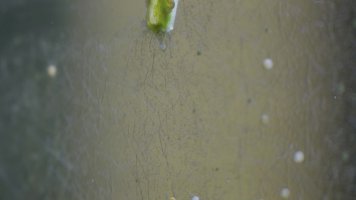
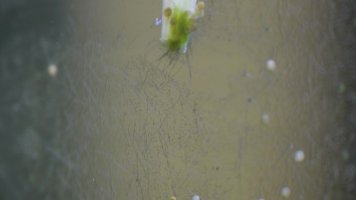
5 Gallon Tank What are these dots on the plants?

Dantel

Active Member
Member
Messages
173
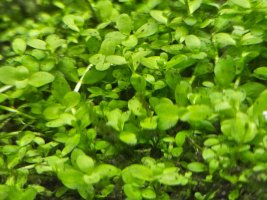
There are some dots both on the plants and on the glass. They are not dirt but sticked to the glass and plants.

Tank:
CO2
filter
light
micro macro fertilizer (estimated index method)
no livestock, not even snails
dirt substrate covered with 1.5-inch sand
2.5 years old tank
plants are Monte Carlo (some Java moss is mixed in)
weekly major water change (due to never being able to make the water quality good, and plants constantly dying)

I have seen improvement in plant health beginning with fertilizer, but the roots are still unhealthy
 

Attachments

  • 20260223_194122.jpg
    20260223_194122.jpg
    421.7 KB · Views: 121
  • 20260223_194115.jpg
    20260223_194115.jpg
    403.3 KB · Views: 120
  • 20260223_194105.jpg
    20260223_194105.jpg
    362 KB · Views: 52
  • 20260223_194102.jpg
    20260223_194102.jpg
    358.6 KB · Views: 91

Advertisement
Looks like it may be the start of Black Beard Algae. It is hard to see from the pictures, but some of them look a bit fuzzy. If that is true, it is likely BBA. I had some BBA in one of my tanks that looked a bit like the pictures you posted when it first started.
 

Advertisement
The spots on the glass seem vaguely like copepods, and the ones on the plants seem vaguely like baby snails. The pictures are a bit fuzzy. Do these spots move around?
 
Just wondering, do those wee dark spots on the leaves move?

Any chance that they jump like fleas, if you disturb them?

If yes is the answer to both those questions , they are springtails - with that very dark colouring they could be the species Podura aquatica.

They are 100% harmless and can be actively beneficial as they consume general detritus & particularly fungus. They make good fish food too, if a fish manages to catch one, which is easier said than done.

If they move but don’t jump like fleas it’s possible that they are aphids, which are very destructive sap sucking insect pests.

This^^^^

Get a brine shrimp net, cull some of them out of tank and look at them under a magnifying glass.

No idea what size tank we’re talking about here but a school of leopard danio would make quick work of them.
 
  • Thread Starter
  • #6
Looks like it may be the start of Black Beard Algae. It is hard to see from the pictures, but some of them look a bit fuzzy. If that is true, it is likely BBA. I had some BBA in one of my tanks that looked a bit like the pictures you posted when it first started.
The spots on the glass seem vaguely like copepods, and the ones on the plants seem vaguely like baby snails. The pictures are a bit fuzzy. Do these spots move around?
Just wondering, do those wee dark spots on the leaves move?

Any chance that they jump like fleas, if you disturb them?

If yes is the answer to both those questions , they are springtails - with that very dark colouring they could be the species Podura aquatica.

They are 100% harmless and can be actively beneficial as they consume general detritus & particularly fungus. They make good fish food too, if a fish manages to catch one, which is easier said than done.

If they move but don’t jump like fleas it’s possible that they are aphids, which are very destructive sap sucking insect pests.
This^^^^

Get a brine shrimp net, cull some of them out of tank and look at them under a magnifying glass.

No idea what size tank we’re talking about here but a school of leopard danio would make quick work of them.
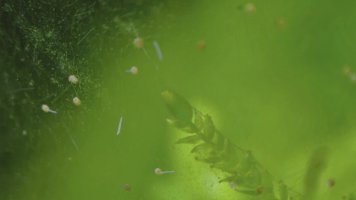
Sorry for the late reply. Here are close-ups with a microscope.
I don't know how to attach a video. Here is a link (expires in two days): Watch Edited 2026-03-22 20-09-18 | Streamable


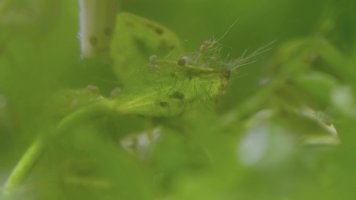
I also added some pictures.
- The black dots look like some living thing, but they don't move.
- Also, there are two worm-looking things that were moving in this frame
Edited 2026-03-22 20-09-18 - frame at 1m3s.jpg
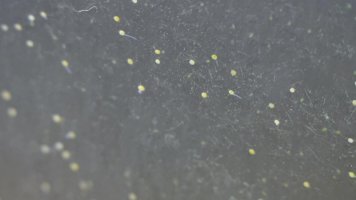
- Last thing is the amount of straight hairy things in the water. There are literally pointy, straight white hair things in water everywhere. No idea whether they come from my filter or what. I am not mentioning the algae on the glass, but literally something floating in the water
Edited 2026-03-22 20-09-18 - frame at 2m1s.jpgEdited 2026-03-22 20-09-18 - frame at 1m48s.jpgEdited 2026-03-22 20-09-18 - frame at 1m41s.jpg
 

Attachments

  • Screenshot 2026-03-22 201149.png
    Screenshot 2026-03-22 201149.png
    2 MB · Views: 57
  • Screenshot 2026-03-22 200658.png
    Screenshot 2026-03-22 200658.png
    2.6 MB · Views: 43
  • Screenshot 2026-03-22 200402.png
    Screenshot 2026-03-22 200402.png
    3.2 MB · Views: 50

Advertisement
Pretty good photos - but I wish I knew what those round things that appear to have some sort of a tail could be.

There are some very tiny flatworms - quite possibly Rhabdocoelae spp., which are just too small to bother anything that’s not smaller than they are and are part of the general group we refer to as detritus worms.

What happens if you try to gently rub those round things off a leaf?
 
  • Thread Starter
  • #8
Pretty good photos - but I wish I knew what those round things that appear to have some sort of a tail could be.

There are some very tiny flatworms - quite possibly Rhabdocoelae spp., which are just too small to bother anything that’s not smaller than they are and are part of the general group we refer to as detritus worms.

What happens if you try to gently rub those round things off a leaf?
Yeah, I am not worried about the worm, it's kinda harmless. But these round things are like some alien-type things. They are either dead or they just don't move.

What about the weird white strings of hair? What are those? I don't like the fact that they are everywhere in the water.

Here is another video (expires in 2 days): Watch 2026-03-23 02-01-54 | Streamable
 

Attachments

  • 2026-03-23 02-01-54 - frame at 0m14s.jpg
    2026-03-23 02-01-54 - frame at 0m14s.jpg
    137.9 KB · Views: 27
  • 2026-03-23 02-01-54 - frame at 0m31s.jpg
    2026-03-23 02-01-54 - frame at 0m31s.jpg
    172 KB · Views: 95
  • 2026-03-23 02-01-54 - frame at 0m52s.jpg
    2026-03-23 02-01-54 - frame at 0m52s.jpg
    75.7 KB · Views: 70
  • 2026-03-23 02-01-54 - frame at 1m38s.jpg
    2026-03-23 02-01-54 - frame at 1m38s.jpg
    73.2 KB · Views: 28
  • 2026-03-23 02-01-54 - frame at 2m2s.jpg
    2026-03-23 02-01-54 - frame at 2m2s.jpg
    115.6 KB · Views: 102
  • 2026-03-23 02-01-54 - frame at 2m23s.jpg
    2026-03-23 02-01-54 - frame at 2m23s.jpg
    109.9 KB · Views: 70
They do look very egg like - can they be wiped off if you try?

The thread like things could be a lot of things - from microplastic fibres to dust.

Just curious but do you use floss in the filter?
 
  • Thread Starter
  • #11
Looks like eggs.
What do those eggs turn into? I have never seen any creature in the tank so far. I expect it to be visible and very numerous, hence the huge number of eggs.

They do look very egg like - can they be wiped off if you try?

The thread like things could be a lot of things - from microplastic fibres to dust.

Just curious but do you use floss in the filter?
Is the video with the link visible? Yes, I tried wiping them, and not much happens actually (its in the video). They get stuck to the stick and don't move either.

I do wipe the glass weekly, and this is how I have been dealing with them, but I am very curious what they are.

I was using floss a long time ago, and upon seeing these white, straight, thread-like things, I switched to a sponge.

By the way, the white, straight, thread-like things as seen in the video look like some type of living thing to me. like a type of algae or something

The same thing looks to be on plants too
 

Advertisement


Great photos! I don't know what those round things are, but they kind of remind me of ostracods. The ostracods I'm used to seeing move around fairly quickly though. Maybe they're some kind of sessile ostracod?

I'd guess the stringy hair things are algae.
 
  • Thread Starter
  • #13
Great photos! I don't know what those round things are, but they kind of remind me of ostracods. The ostracods I'm used to seeing move around fairly quickly though. Maybe they're some kind of sessile ostracod?

I'd guess the stringy hair things are algae.
I might have a theory. I feel like those eggs are for flatworms or something. I think they either turned or turning into flatworms. And we saw some next to the eggs in the pictures as well. Does anyone know the species of those flatworms? I can search for their egg. But it is still very odd that they would plant the eggs everywhere on the glass. I feel like something in the filter might be planting the eggs and eggs spread around in the tank
 
Interesting. I don't know the first thing about flatworm eggs. Maybe if you're lucky, you'll see one of your worms lay one or see one hatch. I'd be curious to know.
 
If the worms are as small as they appear to be, they are probably Rhabdocoelae though there are some very small planarian species.

The interesting thing I learned when I looked into the possibility that these are worm eggs is that some Rhabdocoelae species lay eggs that they attach to surfaces, including glass, with a tiny stalk.

They wouldn’t be distributed by a filter or even just water currents, as the worm attaches them deliberately and since they are sticky, they aren’t going to be moving around.

I’d never looked into the reproductive habits of Rhabdocoelae before so it was a surprise to me to learn this about them.

The subfamily of worms most likely to reproduce in this manner, so I read, would be the Ascophorinae, which belong to family Typhloplanidae in the order Rhabdocoelae.

If that’s what these things are, the good news is that in a fish tank, the Rhabdocoelae are harmless.

The largest species of them is maybe 5mm long and most are much smaller than that with a number of them being less than 1mm in length. Very, very small indeed.,

Almost all of them are carnivorous but they are so freaking small they just don’t pose any threat to our wet pets - they’re part of the big varied group of wee beasties that end up living in most tanks eventually.

These tiny flatworms function as clean up crew on an extremely small scale.
 
  • Thread Starter
  • #16
If the worms are as small as they appear to be, they are probably Rhabdocoelae though there are some very small planarian species.

The interesting thing I learned when I looked into the possibility that these are worm eggs is that some Rhabdocoelae species lay eggs that they attach to surfaces, including glass, with a tiny stalk.

They wouldn’t be distributed by a filter or even just water currents, as the worm attaches them deliberately and since they are sticky, they aren’t going to be moving around.

I’d never looked into the reproductive habits of Rhabdocoelae before so it was a surprise to me to learn this about them.

The subfamily of worms most likely to reproduce in this manner, so I read, would be the Ascophorinae, which belong to family Typhloplanidae in the order Rhabdocoelae.

If that’s what these things are, the good news is that in a fish tank, the Rhabdocoelae are harmless.

The largest species of them is maybe 5mm long and most are much smaller than that with a number of them being less than 1mm in length. Very, very small indeed.,

Almost all of them are carnivorous but they are so freaking small they just don’t pose any threat to our wet pets - they’re part of the big varied group of wee beasties that end up living in most tanks eventually.

These tiny flatworms function as clean up crew on an extremely small scale.
Thank you a lot. This is interesting.

The only thing is that the worms are smaller than the eggs which makes me wonder if the eggs grow by time
 
Thank you a lot. This is interesting.

The only thing is that the worms are smaller than the eggs which makes me wonder if the eggs grow by time
Eggs don’t grow.

But we have no good way that I can think of to determine exactly which species laid them if they are indeed eggs,

Wish I did know - this is the kind of detail I like to learn about.
 
  • Thread Starter
  • #18
Eggs don’t grow.

But we have no good way that I can think of to determine exactly which species laid them if they are indeed eggs,

Wish I did know - this is the kind of detail I like to learn about.
If I had time, I would have wanted to put timelapse on the microscope. I think it would be cool to even make a video like that.

Thank you for your help
 
If I had time, I would have wanted to put timelapse on the microscope. I think it would be cool to even make a video like that.

Thank you for your help
That would be cool.
 
Advertisement


Advertisement


Advertisement


Back
Top Bottom