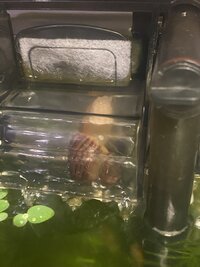
Springtails : Collembola
Identity: Springtails - Isotomidae family (elongated bodied variety). From the genus
Isotomurus (there are many more genera often found)
.
Common means of transfer: Usually floating plants. Emersed plants. Leaf litter.
Harmful to: nothing.
Benefits: Great snack for fish that feed from the surface. Eats dead plant matter, fungus, algae and microorganisms from floating plants and the brace of a tank.
What to look for: Springtails are hexapods, so they will have six legs. Can come in a variety of colours, yellow, black, blue, orange, green and more. Some are patterned and young springtails are incredibly small and white, though otherwise they resemble adults. They don't enter the water column, they stay on the surface of the aquarium and are often found on floating plants and the brace of a tank. They will congregate in moist areas. When spooked they will use a specialized appendage called a furcula, which is folded under the abdomen, to quickly spring up to 4 inches from the threat.
How to eliminate: Increase surface agitation. Some people use a hair dryer to fry those that they see.
Similarities: Fleas, aphids. Unlike fleas which have large hind legs designed for jumping, springtails have normal hind legs. Fleas will be brown and flat side to side, while springtails have a rounder body and come in many colours. Unlike springtails, aphids have more of a pear shape to them.
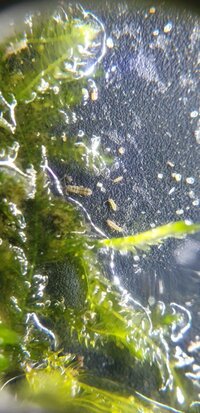
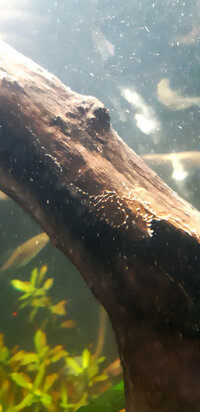
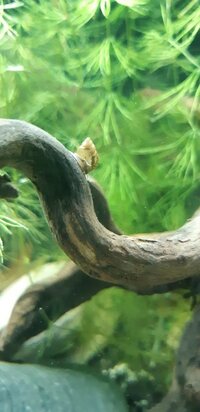
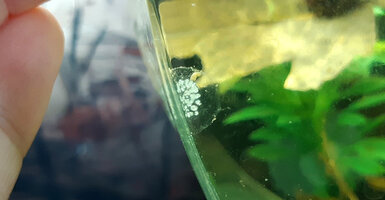
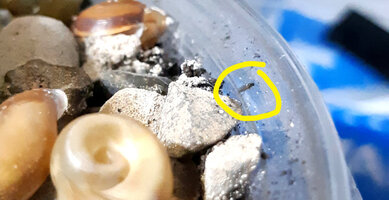
Adult on my brace (I gave them some moss...)
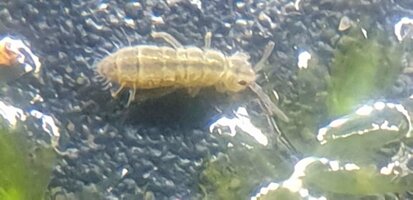
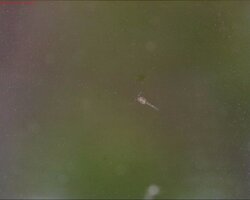
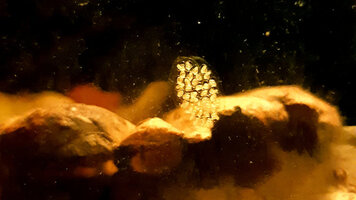
 Younger Springtails (and another springtail variety I'll talk about later)
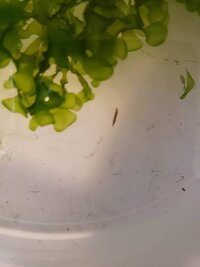
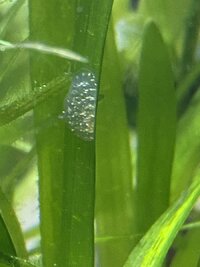
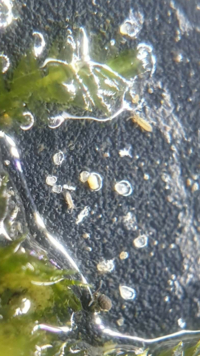 Adult on my floating water sprite:
 Identity:
Globular Springtails - Sminthuridae family.
Common means of transfer: Same as above.
Harmful to: nothing
Benefits: Same as above, only cuter.
What to look for: Springtails are hexapods, so they will have six legs. Unlike the long bodied members of the Isotomidae family, globular springtails are speherical and more compact. Adults are smaller than their long-bodied counterparts. Their movements are the same as those above. They spend their time on floating plants and braces of tanks and can spring when threatened. These guys are much more numerous in my tank, especially on my plants. The longer-bodied springtails seem to be more numerous on my brace.
How to eliminate: Same as above
Similarities: Same as above.
(I'll see if I can get better pics when I get a better camera)
Globular springtails on my brace enjoying their moss:
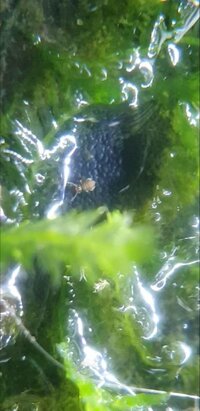
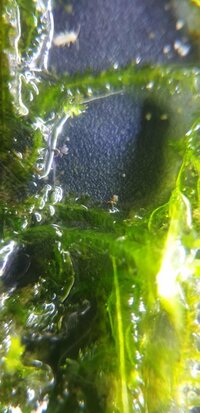
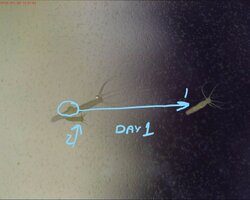
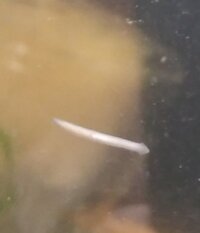
Two springtail types together, the elongated bodied springtail isn't an adult
 Group photo, elongated are more numerous in this pic (and they appear in different stages of their life), but there is a Glob beside the adult.