Need help with a Thailand biotope

propel

Active Member
Member
Messages
473
This is probably the millionth time I've ask a question like this, but I just can't pinpoint what I'm going to do.

Tank is 10 gallons, currently home to a store bought koi plakat and a couple nerite snails. About 2-3 inches of sand substrate.

I'm aiming for a Thai pond biotope. In terms of fauna for the tank I'm looking for either a B. smaragdina or B. imbellis, and some sort of tiny live food critter like daphnia, scuds, or seed shrimp.

What I'm not 100% sure on is the substrate, plants, PH, and tannin count.

In terms of plants I'm looking for a floating plant (more like a second one since I'm sure on getting duckweed, I know how much it spreads btw) and one or two rooted plants. One of the rooted plants I want to be more bushy and the other I want to be a grass or stem plant that will send off shoots and spread across the tank.


TLDR: What substrate and Thailand native plants should I use for my Thai pond biotope?
 

Advertisement
If this hobby is for you, expect a lot of changes and additional tanks in the near or far future.

For most biotopes, use sand mixed with leaf litter (if collected locally, crumble the leaves to tiny pieces to avoid recognition of non-Thai leaves, combined with (purchased) leaves in original shape, like guava. Upside is that guava leaves decompose relatively slowly and look gorgeous, having green, grey, bleu-ish tints.

Plants: Phalaris arundinacea and Festuca arundinacea, both of which need to purchased not at the usual aquarium stores, and need to grow out of the water. If not possible, go with Hygrophila corymbosa, Limnophila sessiliflora and Ceratopteris thalictroides.

pH is an endpoint, don't focus on it. Determine how much bicarbonates your source water has and decide how much bicarbonates you want and adjust your source water by adding or diluting.

Tannins.... you probably mean humic substances (but everybody refers to them as tannins). Pretty much every biotope should have them. The leaves color the water somewhat, but after a few weeks it is pretty much gone, even when you add new dry leaves. If you want tinted water, preparing your water with black tea (without caffeine) or rooibos is the easiest way to have fun with the tint and maintain or adjust with every water change.
 

Advertisement
  • Thread Starter
  • #3
If this hobby is for you, expect a lot of changes and additional tanks in the near or far future.

For most biotopes, use sand mixed with leaf litter (if collected locally, crumble the leaves to tiny pieces to avoid recognition of non-Thai leaves, combined with (purchased) leaves in original shape, like guava. Upside is that guava leaves decompose relatively slowly and look gorgeous, having green, grey, bleu-ish tints.

Plants: Phalaris arundinacea and Festuca arundinacea, both of which need to purchased not at the usual aquarium stores, and need to grow out of the water. If not possible, go with Hygrophila corymbosa, Limnophila sessiliflora and Ceratopteris thalictroides.

pH is an endpoint, don't focus on it. Determine how much bicarbonates your source water has and decide how much bicarbonates you want and adjust your source water by adding or diluting.

Tannins.... you probably mean humic substances (but everybody refers to them as tannins). Pretty much every biotope should have them. The leaves color the water somewhat, but after a few weeks it is pretty much gone, even when you add new dry leaves. If you want tinted water, preparing your water with black tea (without caffeine) or rooibos is the easiest way to have fun with the tint and maintain or adjust with every water change.
From some photos I've seen the water seems to be pretty clear but still acidic and leafy, maybe I could boil most of the tannins out so there's a light tint?

I'll probably use sand but I found ADA Amazonia which is an aquasoil with a PH of 5.5 which is lower than what I wanted but still might work.

I've thought about using waterthyme but depending on if it's better than water sprite for my aim environment idk if I'll get it.

Here's a reference image of a stream in Thailand I'm going to use as a guide for my tank. He also found waterthyme there.
 

Attachments

  • Screenshot_20230910_004813_YouTube.jpg
    Screenshot_20230910_004813_YouTube.jpg
    334.1 KB · Views: 99
Blackwater tanks are the most clear tanks. This is a snapshot of my blackwater tank, with 0 bicarbonates in the water. As a matter of fact, there isn't much in the water at all.

IMG_20230901_212022301-2.jpg

As you can tell, although there's over 10 pounds of wood in the tank and the bottom is completely covered with leaf litter, the water isn't tinted anymore. Sometimes I add a small bag with tea directly in the tank and it gets stained really fast, similar to the image you shared. A week later, when I conduct a water change with pure water, the tint is reduced. Another week later I can decide to add a tea bag, or reduce the tint further.

Leaves hardly stain water. The reason to boil leaves for blackwater purposes is to kill exotic microbiota.

I would not add aquasoil in your tank for the purpose of just lowering pH. Focus on reduction of bicarbonates. Aquasoil releases H+ ions in exchange for e.g. calcium ions, thereby lowering the pH (not because of the calcium, but because of the release of H+). However, aquasoil also releases many minerals.

Blackwater tanks are low in minerals, therefore low in bacteria. That's the idea of blackwater. Not the pH or the tannins...

Forgot to add: the color of your light makes a difference also. Mine is very white. If I'd use a warmer light source, the tank would look a little different.
 
  • Thread Starter
  • #5
Blackwater tanks are the most clear tanks. This is a snapshot of my blackwater tank, with 0 bicarbonates in the water. As a matter of fact, there isn't much in the water at all.

As you can tell, although there's over 10 pounds of wood in the tank and the bottom is completely covered with leaf litter, the water isn't tinted anymore. Sometimes I add a small bag with tea directly in the tank and it gets stained really fast, similar to the image you shared. A week later, when I conduct a water change with pure water, the tint is reduced. A week later I can decide to add a tea bag, or reduce the tint further.

Leaves hardly stain water. The reason to boil leaves for blackwater purposes is to kill exotic microbiota.

I would not add aquasoil in your tank for the purpose of just lowering pH. Focus on reduction of bicarbonates. Aquasoil releases H+ ions in exchange for e.g. calcium ions, thereby lowering the pH (not because of the calcium, but because of the release of H+). However, aquasoil also releases many minerals.

Blackwater tanks are low in minerals, therefore low in bacteria. That's the idea of blackwater. Not the pH or the tannins...
Thanks!

My taps PH is around 8, maybe 8.5, so pretty hard. I was thinking of doing a 50/50 or 70/30 mix of distilled and tap so there is less mineral count and a lower PH to start. Then I'll top up with distilled water and occasionally a bit of tap (to ensure necessary minerals are still there for the plants and betta). I'll let the leaves, wood, and other things continue to acidify the water.

Any quick ways of reducing bicarbonates?
 
Your tap water contains plenty of bicarbonates, and carbonates given the pH.

Diluting your tap water with pure water is the way to reduce (bi)carbonates.

You could experiment with different ratios and measure the KH.

Again, forget about the pH measurement. If your KH, for instance, equals 2 or 3 dKH, your pH will be around 7. If you add botanicals, wood, leaves, the pH will be around 6.5. Getting below 6 is never easy.

I assume my blackwater tank with 0 dKH has a pH of somewhere around 5 - 5.5.
 

Advertisement
  • Thread Starter
  • #7
Your tap water contains plenty of bicarbonates, and carbonates given the pH.

Diluting your tap water with pure water is the way to reduce (bi)carbonates.

You could experiment with different ratios and measure the KH.

Again, forget about the pH measurement. If your KH, for instance, equals 2 or 3 dKH, your pH will be around 7. If you add botanicals, wood, leaves, the pH will be around 6.5. Getting below 6 is never easy.

I assume my blackwater tank with 0 dKH has a pH of somewhere around 5 - 5.5.
Aight.

I do think I've figured out what plants I'm using though. I'm thinking about getting water lettuce since I believe it's native to Thailand and has long roots that the betta would love. Apparently it's toxic and illegal to have in some places though, so I might have to get Asian watermoss. I'm also getting duckweed(obviously) and water sprite.

Tank will be filterless, so 2 floating plants and a bunch of stems should do a perfect job of filtering the water.
 
Just have a go with the plants. You can always remove them and put a floater in a large drinking glass, if you no longer like to make use of it. I use lots of vases and containers to store plants that I don't want to use at the moment but maybe in a year from now.
 
  • Thread Starter
  • #9
Just have a go with the plants. You can always remove them and put a floater in a large drinking glass, if you no longer like to make use of it. I use lots of vases and containers to store plants that I don't want to use at the moment but maybe in a year from now.


I also made a blueprint for the tank. Thoughts?
 

Attachments

  • 20230910_131439.jpg
    20230910_131439.jpg
    332.5 KB · Views: 73
The heater is going to create a considerable heat gradient in your tank. Warm on the left, cooler on the left. Reasons:
- minimal flow in tank
- the heating part is between the side and the heater's thermostat

I would position the heater much more horizontal, above the substrate and with the heating part centered. Next, place the aerator next to the heating part to create some water/heat movement.
 
Aight.

I do think I've figured out what plants I'm using though. I'm thinking about getting water lettuce since I believe it's native to Thailand and has long roots that the betta would love. Apparently it's toxic and illegal to have in some places though, so I might have to get Asian watermoss. I'm also getting duckweed(obviously) and water sprite.

Tank will be filterless, so 2 floating plants and a bunch of stems should do a perfect job of filtering the water.
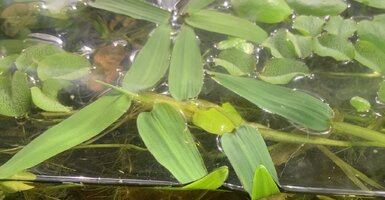
If you can’t get water lettuce, try Asian watergrass instead. It’s the only true grass that’s aquatic - very attractive too. Species name is Hygrorhyza aristata. I’ll post a pic of some of mine.

Water lettuce isn’t poisonous and the ‘toxin’ in it is the same one found in Pothos, Philodendron and a wide array of other plants. It’s calcium oxalate crystals which cause symptoms of pain, burning and inflammation of mucous membranes if ingested. The crystals aren’t water soluble so they’re not going to bother fish but the plant can be invasive where the weather allows it to keep growing so I’d not be surprised if it’s illegal to have in some areas.

I think the leaves of the watergrass look like they’re made of silk twill - I really like the texture they have and it grows fairly quickly. The petioles are puffed up and full of air, which is how it floats and as older leaves fade, the petioles rot quickly but they are easy to pull off if you want to do that.
 

Attachments

  • IMG_5226.jpeg
    IMG_5226.jpeg
    246.9 KB · Views: 68

Advertisement


  • Thread Starter
  • #12
If you can’t get water lettuce, try Asian watergrass instead. It’s the only true grass that’s aquatic - very attractive too. Species name is Hygrorhyza aristata. I’ll post a pic of some of mine.

Water lettuce isn’t poisonous and the ‘toxin’ in it is the same one found in Pothos, Philodendron and a wide array of other plants. It’s calcium oxalate crystals which cause symptoms of pain, burning and inflammation of mucous membranes if ingested. The crystals aren’t water soluble so they’re not going to bother fish but the plant can be invasive where the weather allows it to keep growing so I’d not be surprised if it’s illegal to have in some areas.

I think the leave of the watergrass look like they’re made of silk twill - I really like the texture they have and it grows fairly quickly. The petioles are puffed up and full of air, which is how it floats and as older leaves fade, the petioles rot quickly but they are easy to pull off if you want to do that.
I've thought about water grass before but I think I've decided on the Asian watermoss. I found a good deal for it on eBay.

Edit: linked spiderwood instead of watermoss
 
I've thought about water grass before but I think I've decided on the Asian watermoss. I found a good deal for it on eBay.

Edit: linked spiderwood instead of watermoss
It’s not bad either. Whatever works, right?
 
  • Thread Starter
  • #14
It’s not bad either. Whatever works, right?
I did find some water grass for about 7-8 bucks on eBay too, maybe I'll get some later on into the new tanks life cycle or to replace any floaters if they die off.
 
I did find some water grass for about 7-8 bucks on eBay too, maybe I'll get some later on into the new tanks life cycle or to replace any floaters if they die off.
I find it remarkably easy to grow, that’s for sure. It’s not fussy so long as it gets plenty of strong light, which is true for all the floating plants I know of.
 
  • Thread Starter
  • #16
The heater is going to create a considerable heat gradient in your tank. Warm on the left, cooler on the left. Reasons:
- minimal flow in tank
- the heating part is between the side and the heater's thermostat

I would position the heater much more horizontal, above the substrate and with the heating part centered. Next, place the aerator next to the heating part to create some water/heat movement.
I found some leaves and sticks from my local park. One's Oak but unsure about the other leaves.
 

Attachments

  • 20230910_202939.jpg
    20230910_202939.jpg
    200.9 KB · Views: 80
  • 20230910_202539.jpg
    20230910_202539.jpg
    236.9 KB · Views: 134
Looks like you’ve got some beech ( or maybe elm) leaves and what looks like it might be from a little leaf linden, maybe a maple leaf too. But the oak leaves all appear to be green.

Leaves from most any deciduous tree or shrub should be ok but they should either be picked off the tree after they start to change colour in fall or have fallen off after changing colours so there’s no sap in them to speak of. Green leaves aren’t usually suitable to use even if they’re dry - they’ll still have some sugary sap in them.

Once they change colour on the tree, it means the tree has withdrawn the sap in preparation for winter so they’re safe to dry out and use.
 
  • Thread Starter
  • #18
Looks like you’ve got some beech ( or maybe elm) leaves and what looks like it might be from a little leaf linden, maybe a maple leaf too. But the oak leaves all appear to be green.

Leaves from most any deciduous tree or shrub should be ok but they should either be picked off the tree after they start to change colour in fall or have fallen off after changing colours so there’s no sap in them to speak of. Green leaves aren’t usually suitable to use even if they’re dry - they’ll still have some sugary sap in them.

Once they change colour on the tree, it means the tree has withdrawn the sap in preparation for winter so they’re safe to dry out and use.
Alright. I'll take out any with green on them and boil the rest in the future when the tank is redesigned.
 
  • Thread Starter
  • #19
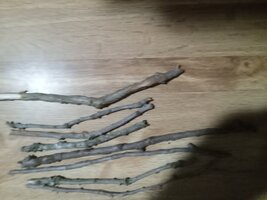
I'm doing a 10 gal biotope for a betta smaragdina and I want some sticks or roots that I can put in to help with replicating the natural habitat.

I know about spider wood and willow branches, but I already have spider wood (from ZooMed, and it doesn't have those thin twirly branches like a lot of pieces do) and I can't find any dried willow branches that aren't on Amazon.

If anyone can send a link where I can get only the branches from spiderwood, or dried willow branches, or something else that'll work please do.
 
Just about any piece of hard wood would be safe for your tank, except evergreens.
I've used dead Red bud & Crepe Myrtle branches in my tanks.
Just hunt the area for dead branches, making sure they aren't contaminated by herbicides or pesticides.
 
  • Thread Starter
  • #21
Just about any piece of hard wood would be safe for your tank, except evergreens.
I've used dead Red bud & Crepe Myrtle branches in my tanks.
Just hunt the area for dead branches, making sure they aren't contaminated by herbicides or pesticides.
I've done that and do have some sticks, but there's not many sticks that fit what I'm looking for around here. None of them look like spiderwood or anything like that.
 

Advertisement


Yeah, you have to look long & hard sometimes to find that perfectly shaped piece of driftwood. Good luck & post pics when you find the prized piece.
 
  • Thread Starter
  • #23
Yeah, you have to look long & hard sometimes to find that perfectly shaped piece of driftwood. Good luck & post pics when you find the prized piece.
I already have driftwood, it's just sticks that I'm looking for. Might just have to go with spider wood.
 
I already have driftwood, it's just sticks that I'm looking for. Might just have to go with spider wood.
Do you drive? I see shrubs and trees periodically that are either dead or have a lot of dead wood that are growing beside parking lots and driveways and some other spots locally that wouldn’t be difficult to get to that would probably be fairly close to what you want.

They’re easier to see now the leaves are falling.

There’s a really nice one I drive by regularly when I grocery shop and one of these days I’ll remember a pair of pruners and a saw so I can take it before someone else does.

Should be a nice long bent trunk but that’ll work great in my big terrarium and lots of other pieces that’ll work in an aquarium. Be a bit of effort but it’ll be free.
 
  • Thread Starter
  • #25
Do you drive? I see shrubs and trees periodically that are either dead or have a lot of dead wood that are growing beside parking lots and driveways and some other spots locally that wouldn’t be difficult to get to that would probably be fairly close to what you want.

They’re easier to see now the leaves are falling.

There’s a really nice one I drive by regularly when I grocery shop and one of these days I’ll remember a pair of pruners and a saw so I can take it before someone else does.

Should be a nice long bent trunk but that’ll work great in my big terrarium and lots of other pieces that’ll work in an aquarium. Be a bit of effort but it’ll be free.
I don't drive.
 
But is there nowhere you can go walking, to a wood or park or anything? Any thoroughly dead sticks and twigs should be fine, providing no contamination as mentioned above.
 
Advertisement


Advertisement


Advertisement


Back
Top Bottom