What sand grain size is best for plants?


Advertisement
Trying to decide which sand to get. What grain size is best for plants? I want a darker colored sand like black diamond blasting sand or carib sea moon sand, but I'm not really sure yet. Suitable for plants is my first priority; and being good for corydoras would be an added bonus.
That somewhat depends on the plant itself. Roots aren’t all the same - very fine threadlike roots, in my personal experience, are easiest to plant and keep in place in fine sand.

That includes a lot of things such as carpeting plants, Micranthemums, Eleocharis species & Hemianthus, & young Helanthiums, among others. These plants may eventually grow an extensive root system but it takes time and they start out being difficult to keep in place.

Rootless cuttings have much the same problem regard of their species. No roots means nothing to hold them in place except friction. You get more friction from sand or possibly very fine gravel with particles no bigger than maybe 3mm.

Coarse thick roots are found on crypts & swords once they are established and they can grow very long. So established ones can be planted successfully in most gravels as well as finer substrates. New ones without rocks it’s to speak of have the same problem as rootless cuttings.

Ludwigia repens and most of the Hygrophilas I’m familiar with grow a very substantial root system with a bit of time. Hygros shave coarser roots, Ludwigias are finer.

So overall, I believe a fine to medium texture sand works best for the majority of plants.

As for the little catfish, soft fine sand is the best substrate choice for them.
 

Advertisement
  • Thread Starter
  • #3
That somewhat depends on the plant itself. Roots aren’t all the same - very fine threadlike roots, in my personal experience, are easiest to plant and keep in place in fine sand.

That includes a lot of things such as carpeting plants, Micranthemums, Eleocharis species & Hemianthus, & young Helanthiums, among others. These plants may eventually grow an extensive root system but it takes time and they start out being difficult to keep in place.

Rootless cuttings have much the same problem regard of their species. No roots means nothing to hold them in place except friction. You get more friction from sand or possibly very fine gravel with particles no bigger than maybe 3mm.

Coarse thick roots are found on crypts & swords once they are established and they can grow very long. So established ones can be planted successfully in most gravels as well as finer substrates. New ones without rocks it’s to speak of have the same problem as rootless cuttings.

Ludwigia repens and most of the Hygrophilas I’m familiar with grow a very substantial root system with a bit of time. Hygros shave coarser roots, Ludwigias are finer.

So overall, I believe a fine to medium texture sand works best for the majority of plants.

As for the little catfish, soft fine sand is the best substrate choice for them.
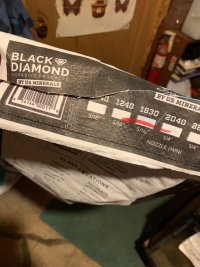
when you say "fine to medium texture" is that like a 0.5-1mm grain size? I'm considering using black diamond blasting sand with the 20/40 grit. What grain size is that?
 
I’m pretty sure you’ll be happy w blasting sand. But…. do not get the Fine as it’s literally like powder. Mine was medium and it’s a nice avg coarse sand or fine gravel.
Whether it’s the best for l plants, I’m not sure. I have grown Amazon Sword and Willow Hygro in the same size of CaribSea fine gravel.
IMG_5579.jpeg
 
I’m pretty sure you’ll be happy w blasting sand. But…. do not get the Fine as it’s literally like powder. Mine was medium and it’s a nice avg coarse sand or fine gravel.
Whether it’s the best for l plants, I’m not sure. I have grown Amazon Sword and Willow Hygro in the same size of CaribSea fine gravel.
View attachment 913789
I wish I could find blasting sand anywhere near here.
 

Advertisement
I like a coarse sand to fine gravel. Up to 3mm grain size and smooth rather than sharp.
 
Pool filter sand has always worked well for us. It can be used as a cap for dirt if you plan on doing a dirted tank. If you just go with the PFS it seems to hold the plants down pretty good till they root as long as you don’t have too many crazy digging inhabitants.
 
I don't think the grain size is critical for plants, though some sand-sifting fish prefer it fine. I like to mix grain sizes as it looks more natural, this is quite easy for me as I collect it from a river, but it does depend what type of sand I can get easily at any particular time. My biggest tank has mostly very fine sand, which is what I could collect when I was setting it up. From very fine sand to almost gravel I have not seen much difference in plant growth. I definitely prefer natural colored sand, neither white nor black.
 
  • Thread Starter
  • #10
any thoughts on ADA sand? It's a splurge, I know, but my birthday is coming up and I think my parents would get it as a gift for me. I was reading through old threads similar to this one and one person said they liked ADA Colorado or La Plata as it hid waste/detritus and still looked natural. Anyone grew plants in it? I'm thinking about creating some kind of a rock barrier and filling up the space behind it with fluval stratum to grow some stem plants, then leaving a big open sandy spot for the corys

I've also been considering UNS sand. It says it has a grain size of 0.4-0.9mm would this be okay?
 
All my tanks but one have ADA La Plata only. Plants grow in it. All species.
 

Advertisement


Any sand will grow plants - that UNS one would be extremely fine textured in that grain size.
 
The sand is suitable for sand sifters, burrowers, substrate spawners. No worries.

Collect oak, beech, birch leaves, boil the leaves, tear the leaves apart and mix if with the sand, making the substrate more natural, more organic, more interesting for fish.
 
  • Thread Starter
  • #15
Now i'm having second thoughts about ADA sand...it's really expensive. Any ideas for cheaper alternatives?
 
Now i'm having second thoughts about ADA sand...it's really expensive. Any ideas for cheaper alternatives?
What colour do you want?

All the truly dirt cheap options are fairly light in colour.

You find variable shades of beigeish to light brown to near white in play sands or pool filter sands and then horticultural or construction sands tend to be darker but not all that dark.

Though they really are a massive pain to wash clean, I don’t mind the colour of the sands you find being sold to mix into concrete.

Those are usually about as close to a neutral ‘dirt’ colour as you can find but it’s wise to test any sand like that for calcium content since some of them, depending on where they come from, contain a lot of lime. Some of the regionally quarried sands in Ontario are often heavy on lime as there is so much limestone in some areas of the province.

Blasting sand is black and next least costly.

From here on, prices increase quite steeply.
 
Or use a finer sand at the bottom and one large bag of ADA on top. Larger particles will stay on top.

Sand lasts a lifetime. You can re-use it over and over again. Say, you'll have it for the next 50 years, then the cost per year isn't that bad. And you'll have to look at it for the next 50 years. That or cheap mono-sand + going out for dinner once.

Good luck choosing.
 
Below is 50, 60, 70 pounds (3 or 4 large bags) of inert ADA La Plata sand without root tabs or other substrate additives.

Running on rain water, fish waste, dead tree leaves, and nitrate, potassium, magnesium, phosphate, sulphate salts.

Calcium, iron and all the other trace elements are all extracted from decomposition of waste. It has to be.

The tank has a few Dario fish and about 25 Medaka fish.

I guess neglible KH, very low GH, pH swinging between 6 and 7, room temperature. The tank hasn't seen a water change since, I can't recall, a few years. There's a small filter hanging in the left to add some water movement; mostly for "environmental enrichment". I can remove it without any penalty.

I could have used a much cheaper brand of sand, large grain size sand, super fine silt/clay, root tabs, aquasoil, volcanic sand, lava split, tiny pebbles, dyed sand, et cetera. The plants would have looked the same. At least after a few months or so. I've all used these substrates in a distant past, although I still have a tank with volcanic sand and some tanks have ADA La Plata mixed with silt/clay.

The light output is 10% of normal light output. The duration is currently about 12 hrs.

Annual costs to run this tank is about 10-20 bucks (mostly electricity and a few bucks for fish food and salts). Investment costs is, yes the ADA sand, the rimless tank, the aquarium light. The filter ("water pump") was only 20 bucks. Plants and fish are all born, cultivated from other tanks or ponds.

IMG_20250104_081038933.jpg
 
The sand is suitable for sand sifters, burrowers, substrate spawners. No worries.

Collect oak, beech, birch leaves, boil the leaves, tear the leaves apart and mix if with the sand, making the substrate more natural, more organic, more interesting for fish.
How long do you boil the leaves ?

A little tip with deeper substrate or just under any substrate is putting some crushed lava rock. Lava rock is very porous thus allows for better water flow and aeration of deep root structures. The porosity of the rock encourage beneficial bacteria growth and extra filtration for nitrogen cycle and microbiome. A little crushed lava rock at the bottom of the substrate helps you make hills and slopes easily without worrying about dead zones in your deep substrate. This can be acheived by pouring it or stacking filter socks (mesh bags) with lava rock filled in them. Opening the possiblity of an elevated look with your hardscape. Plus its dirt cheap many landscapers use it for yards.
 
I don't boil leaves. But those less experienced perhaps worry, about (terrestrial) critters, or notice very temporary things, like a little tint, not sinking to the bottom. Next they buy aquarium products to solve temporary issues that resolve on their own. They always do.

PS: how does one create hills with sand if only the bottom layer is rock? I don't see a difference if everything would be made from sand. To create hills, hardscape needs to stick out at substrate surface level. Otherwise it'll even over the course of time.
True. Just a way if doing it. Either way works. Yes it does need something to hold it together like a rock sticking out to catch it. I was confused because you said boil the leaf, i thought it was a necessary step. The lava rock method can save on expenses.
 
Sometimes a leaf falls onto the water. Indoors it needs some help to get there.
 

Advertisement


Back
Top Bottom