To start off the information portion of this thread, I will begin by discussing the importance of substrate choices in the planted aquarium and my experiences with the ones I used. For me, aquascaping is a hobby where you create works of art inspired by nature itself, just like the famous Takashi Amano himself. Substrates will help build the foundation for a stunning hardscape and eventually a complete aquascaped aquarium. However, it can be easy to overlook the "nutritional aspect" of the planted aquarium, often with dire consequences soon after setup. When we look at nature and it’s lovely surroundings, homogeneity is more regarding substrate choices.
Overview of Substrate Choices
To create an effective display for you and your fish, I personally recommend sticking with only one substrate (or two if you are an expert and have designed a few aquascapes already). The reason I do not recommend two substrates for a beginner is that the substrates can get mixed easily and a harmonious combination must be chosen to prevent the substrate level from distracting from the final scene. Substrate will also serve another vital purpose in your aquarium. It will support your plant life and be able to support the hardscape. Certain substrates will also change the water chemistry, so it is substantial for the aquascaper to do research regarding a proper substrate choice. Knowing how these substrates will alter Chemistry will be vital for your livestock as well.
Substrate Choices
Inert Gravel/Sand. This option includes all the gravel you can obtain at your local pet store, including the natural toned pebbles and the painted black stones (and yes, all those colored unnatural gravel choices as well). I do not recommend utilizing this mainly because there are other much better options available for an aquascaper to use. If using inert gravel or sand, regularly dosing
root tabs will be key to a healthy aquarium and it can be done successfully. In fact, I was able to get
S Repens to grow significantly for a few months in inert sand with root tabs. However, plants did not grow as well as plants in some of the other substrates, so my opinion still stands in regards to this. However, if using a dual substrate like mentioned above, using inert sand or gravel may help complete your composition visually.
 S Repens
in
pool filter sand with root tabs
Aqua Soil. These include UNS
Controsoil and
ADA Amazonia. These are the best options for a densely planted aquarium. It will offer a ton of nutrients and can be utilized to grow coveted carpeting plants with ease. It also looks visually appealing when paired with hardscape elements like seiryu stone or ohko stone. With all these substantial benefits, one may wonder why this substrate is not used more often. Well, to put things simply, it is expensive! To get a 9-liter bag it will cost you roughly 50 dollars, and you would need multiple bags to fill up a larger aquarium. Additionally, you absolutely cannot do a
fish-in cycle with aquasoil as it will leech a ton of
ammonia in the beginning (I do not recommend adding fish to newly aquascaped tanks regardless, I will explain my reasons for this in another post). If your water has a higher
pH, your fauna will not last long from ammonia poisoning. However, plants will utilize ammonia and using soil will allow the plants to have an easier adjustment period. This is single handedly the most suitable substrate in any aquascape. After all, Takashi Amano used aquasoil in many of his own stunning aquascapes. (Note: Will lower the pH in your tank for a while until nutrients are depleted)
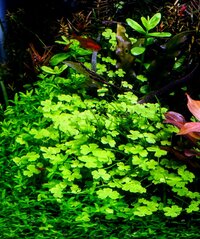
Hydrocotyle Japan and
Pearlweed growing thick in ADA Amazonia
Potting soil capped with sand/gravel. I have not used this option before in my tanks due to the margin of error with this choice. You initially have to make sure your soil stays submerged by capping it with inert sand or gravel. Additionally, this will be very problematic to maintain since plant roots will penetrate the soil layer. Pulling or moving any of these plants will cause the soil to float all over the place. You additionally have to make sure the soil is devoid of any additives that can kill your fish (or merely cause a mess in general). However, some people are able to pull it off successfully, and it is a very cheap option to consider.
(Enriched) gravel. I will include substrates like
Seachem Fluorite and
Caribsea Ecocomplete in this category. These are better options than inert substrates, but are not as enriched or beneficial as aquasoil IME. If using these substrates, root tabs may also need to be used periodically to ensure your plants have everything they require and planting delicate carpeting plant species or plants with thin roots may be difficult. Aesthetics wise, these substrates can be very appealing in a planted aquarium and can be mixed with inert substrates to create stunning aquascapes and may be economically better for a larger aquarium.
 Water Wisteria
growing in Eco Complete substrate
Conclusion of Substrate Choices
As always, carry out further research on this subject matter here on Fishlore by looking at many of the other wonderful threads and articles on this topic. Feel free to also collect data from some external sources regarding substrate choices best for your own setup, not every aquarium is created the same and also for the fact that I am not an expert.
In the subsequent post to follow; I will explain the importance of Substrate Placement and why it is pivotal in the creation of an aquascape.
(Which is the main focus of this thread, just felt like I needed to mention the substrate choices first). 


