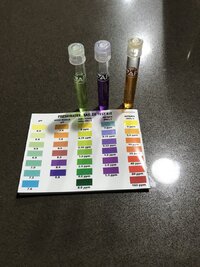
You will not have any
ammonia,
nitrite, or
nitrate in your tank when it is first filled unless your
tap water contains one or more of those chemicals. My tap water is treated with
chloramine which is a combination of chlorine and ammonia, so my tap water does contain ammonia. Those who live in areas with agricultural runoff often find nitrates in their water, especially if it comes from a shallow well.
Thus, it is not surprising that your water tested zero for ammonia, nitrite and nitrates. That is good.
Cycling a tank will take 6-8 weeks under normal conditions. Adding a bacterial supplement such as
Quickstart or Fritz Turbozyme may help stabalize the tank during that period, but no matter what the marketing people state on the bottle, there is no such thing as "instant cycling" using a bottled product. A tank is cycled only when
beneficial bacteria have colonized the substrate, filter media, and the surfaces of the glass, plants,
heater, filter tubes, etc.
The closest thing to instant cycling is starting your cycle using cycled media from another tank. If you have another tank or if you have a friend who has a tank, take some of the filter media from the established tank and use it in your filter. That is the best and fastest way to cycle a tank.
To cycle a tank, the bacteria responsible for the nitrogen cycle must be fed with some form of nitrogen. Personally, I always start my cycle by adding a pinch of
fish food to the tank every day, just as I would if the tank had fish in it. Some people start with a raw fish or piece of frozen fish. Some have even used a small quantity of urine. After about three week, I will add a few hardy fish to the tank so it becomes a
fish-in cycle rather than
fishless cycle. If the ammonia level gets above 1ppm with fish in the tank, you will need to do a
water change.
Many people use ammonia to cycle the tank. This can be either pure household ammonia or
ammonium chloride. If you use household ammonia, be sure it does not contain any detergents, or scents. Those would be harmful. You want nothing other than ammonia and water. Ammonia is strong, so it does not take much in a 5 gallon tank to reach 2
ppm, which is the desired ammonia concentration. Do not add any more ammonia until the concentration has dropped to zero; then raise it to 2 ppm again. Keep repeating this until the ammonia drops to zero within 24 hours and you start to see nitrite and nitrate increasing.
Ammonium chloride is frequently purchased from
Dr. Tim's Aquatics. It is ammonia that has been neutralized with hydrochloric acid. Thus, while ammonia is alkaline, ammonium chloride is slightly acidic. The problem with using ammonium chloride is that the cycle can stall if the
pH in the tank gets too low. If that happens, do a water change or add a pinch of baking soda to your tank. It looks like your pH is currently close to neutral.


 .