Invasive Honeysuckle Rootwood for Aquariums

PlatedLilyAquatics

New Member
Member
Messages
20
Hey all,

June is Invasive Species Awareness Month (I was wrong, it's technically April, but shouldn't *every* month be invasive species awareness month? ) so I wanted to post about a related project I've been working on for the past year.

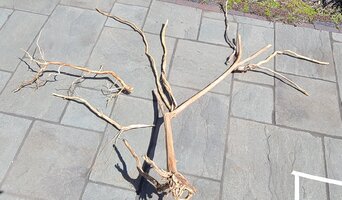
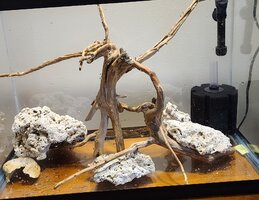
We have large stands of an invasive Chinese shrub called Amur Honeysuckle and it spreads like the devil! As I harvested the wood I noticed how neat it looks without the bark so I stripped a few pieces, let them dry fully in the sun, then added them to an aquarium.

In the past 12 months I have noticed little-to-no degradation and no negative effects on my snails or fish.

I just want to encourage others to find local sources for aquascaping materials rather than having them imported from overseas and potentially contributing to the overharvesting issues abroad.

Thanks for your time!
20230525_131437.jpg20230501_135151.jpg20230501_133833.jpg

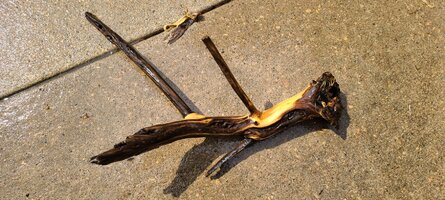
12 Months in an aquarium and some discoloration but still solid and sturdy - No rot!20230612_154923.jpg
 

Advertisement
Is it just me? Or is this a way to get rid of an invasive species or get a bunch of people to plant it for driftwood? :D Lol!
 

Advertisement
  • Thread Starter
  • #3
Is it just me? Or is this a way to get rid of an invasive species or get a bunch of people to plant it for driftwood? :D Lol!
Haha yes I had the same thought. The thing is there is so much of it all around that I don't think we're in danger of running out anytime soon.
 
  • Thread Starter
  • #5
Lol, no worries here in Indiana. It is EVERYWHERE!
I think most parts of the United States, unfortunately.

It is quite lovely wood, though. I have started making walking staffs out of it in addition to the driftwood decor. In talks with my LFS to see if they will start carrying my stuff instead of their current imports!

Very exciting stuff.20230416_114918.jpg
This is a 20g I am starting with some ~12 inch pieces of wood.
 

Advertisement
  • Thread Starter
  • #7
Can you put up a picture of a live plant? No clue what it looks like?
This is what they look like in the ground. Twisty branches all come up from a central root ball which is of a typically shallow depth - this makes the complex root structures easier to preserve when the plant is levered out of the ground.
20230519_190700.jpg

Picture of the plant pulled out and trimmed of leaves.
20230519_190717.jpg

Close up of the root structure.
20230519_190724.jpg
 
Didn’t know it was awareness month. Guess I started my project the right month then lol invasive blackberry removal from my neighborhood nature park and lake so native species can be encouraged :)
 
  • Thread Starter
  • #9
Didn’t know it was awareness month. Guess I started my project the right month then lol invasive blackberry removal from my neighborhood nature park and lake so native species can be encouraged :)
Thank you for your service

Edit: awareness month is in April, oopsies! Still a good cause tho!
 
  • Thread Starter
  • #11
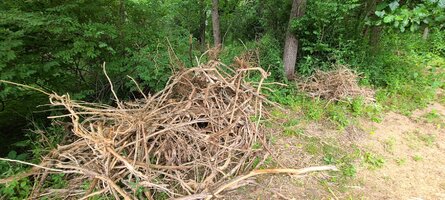
I have been busy. lots of wood to process this summer. Longest piece i have pulled out so far is over 9 ft long.20230613_143802.jpg20230613_143833.jpg20230613_143846.jpg
 

Advertisement


We have it throughout the local woods where it has spread from yards over the years. There is a variety with pink flowers as well. Bittersweet is another invasive that has spread everywhere. I have used it in paludariums. It's a vine, so you can find some cool shapes. Burning bush is another common invassive that has spread to the woods, but I find everything about it ugly, including the wood.

One good thing about the honeysuckle is that the birds love the berries :). But then they spread the seeds:(.
 
  • Thread Starter
  • #13
We have it throughout the local woods where it has spread from yards over the years. There is a variety with pink flowers as well. Bittersweet is another invasive that has spread everywhere. I have used it in paludariums. It's a vine, so you can find some cool shapes. Burning bush is another common invassive that has spread to the woods, but I find everything about it ugly, including the wood.

One good thing about the honeysuckle is that the birds love the berries :). But then they spread the seeds:(.
I believe there was a study done on the spread of honeysuckle and it was found to be strongly correlated to white tail deer movement and, subsequently, deer ticks.

It's a trifecta of problematic organisms all moving and working together.
 
Thank you for your service

Edit: awareness month is in April, oopsies! Still a good cause tho!
It’s to support a better cause. I’ve had a lifelong interest in ethnobotany and being a nature park the city is fully supportive of me bringing back the native plants that thrived here once. I need to do a historical deep dive on the land itself. I can see it was once part of a farm. The lake is likely man made at least in part and is limited to bluegill and a few bass. I have full approval to remove all invasive and propagate existing native plants on site. When I want to add plants, I just need to make a plan and the city will buy me plants :) The lake will eventually be made a kids fishing hole, but that’s in the future.

These pics are basically the same spot, just slightly different angle.
 

Attachments

  • IMG_9855.jpeg
    IMG_9855.jpeg
    895.4 KB · Views: 97
  • IMG_9858.jpeg
    IMG_9858.jpeg
    1.1 MB · Views: 131
We have it throughout the local woods where it has spread from yards over the years. There is a variety with pink flowers as well. Bittersweet is another invasive that has spread everywhere. I have used it in paludariums. It's a vine, so you can find some cool shapes. Burning bush is another common invassive that has spread to the woods, but I find everything about it ugly, including the wood.

One good thing about the honeysuckle is that the birds love the berries :). But then they spread the seeds:(.
At least in Indiana, the variety with the pink flowers is the native honeysuckle (trumpet honeysuckle, Lonicera sempervirens) while the ones with the white flowers are invasive (Amur honeysuckle and Japanese honeysuckle).
 

Random Great Topic!

Advertisement


Advertisement


Advertisement


Back
Top Bottom