
You are using an out of date browser. It may not display this or other websites correctly.
You should upgrade or use an alternative browser.
You should upgrade or use an alternative browser.
How do you raise nitrate levels?
Advertisement

- Messages
- 52
Hmm I thought Nitrate is supposed to be at Zero?I know I don’t remember which one is bad for fish at high levels though.
Advertisement
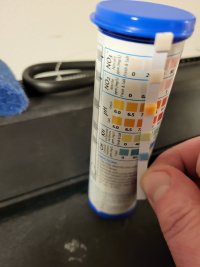
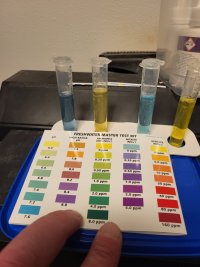
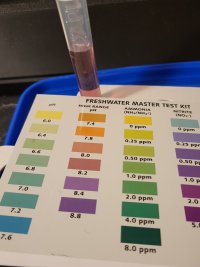
These are the parameters I've had. I use reverse osmosis water since our city water is high in ammonia. I had a 55 gallon full of tetras and have had three disease outbreaks in less than a year. I don't know that I've successfully cycled the tank.Hmm I thought Nitrate is supposed to be at Zero?I know I don’t remember which one is bad for fish at high levels though.
Attachments

- Messages
- 5,576
MOST of the time, when a tank is cycled,
readins will be zero ammoni, zero nitrite, but nitrAte will be higher then zero.
Unless you have discus or certain species, what sounds like high nitrate levals of 40. ppm are nothing to worry about. But a water change might be a good idea to keep it from getting much higher. And even higher doesnt mean that you panic and do a 70% water change and wash all the filters and deco. Fish dont like changes!
Anyways, how old is your tank? what is in it? Have you started a cycle?
I've had the tank since May of 2024. There are currently four Colombian tetras, two red eye tetras, and one white skirt tetra. I hadn't added anything since the last disease outbreak in October until recently adding six Goyder River rainbowfish that all died within a week. I don't know if the tank is cycled because I've gotten so much conflicting information.MOST of the time, when a tank is cycled,
readins will be zero ammoni, zero nitrite, but nitrAte will be higher then zero.
Unless you have discus or certain species, what sounds like high nitrate levals of 40. ppm are nothing to worry about. But a water change might be a good idea to keep it from getting much higher. And even higher doesnt mean that you panic and do a 70% water change and wash all the filters and deco. Fish dont like changes!
Anyways, how old is your tank? what is in it? Have you started a cycle?

- Messages
- 15,210
So long as you have 0ppm ammonia and 0ppm nititrie you are good to go. Normally a cycled tank will have some nitrates, but if the bioload is low and/or you have live plants, it is possible to be reading 0ppm nitrates in a cycled tank.
Advertisement

- Messages
- 4,173
After that amount of time the tank will be cycled but with a low bio load (given your stock level in a 55). Remember if you're using only RO water you need to be adding minerals to raise the GH, otherwise you will definitely have health issues. This applies even to tetras somewhat but especially to rainbowfish. You can also add some nitrates and minerals for the benefit of the plants. The easiest way is to use an all-in-one fertilizer.

- Messages
- 4,102
Remineralize: calcium sulphate CaSO4 and magnesium sulphate MgSO4, in a ratio that is pseudo-scientifically / psychologically comfortable 
The total amount depends on the fish you have; plants need only very low amounts of calcium, magnesium and sulphate.
What plants need the most: potassium nitrate KNO3. Buy a bucket for a few bucks and you'll have plant food for years.
The rest of the plant food, including phosphates and iron, which plants require only in super low amounts, will automagically appear in your tank if you have fish swimming around.
Plants need a variety of nutrients in order grow properly. They need sunlight of proper intensity, frequency and duration. They need carbon dioxide, calcium and magnesium. They need the macronutrients nitrogen, phosphorus, and potassium in good amounts. They need a variety of micronutrients such as: iron, sulfur, molybdenum, manganese, boron, nickel, cobalt, and zinc. These micronutrients are necessary, but only required at minute concentrations.
There are three types of fertilizers.
One is an all-in-one fertilizer that contains both macronutrients and micronutrients. The objective is to add more of these nutrients than are needed by the plants and then remove the excess through frequent water changes. Aquarium Co-Op Easy Green is a common example of this type of all-in-one fertilizer. There are other examples as well such as NilocG Thrive.
Another type of fertilizer is one that contains a mixture of micronutrients. These are added it tiny doses as that is all that is required. One common example of this type of fertilizer is Seachem Flourish Comprehensive Supplement. Some fish keepers make the mistake of believing that this is an all-in-one product, but it is not. It does not contain significant levels of nitrogen or phosphorus.
The final type of fertilizer that contains one or more specific nutrients. For example, API Leaf Zone contains potassium (a macronutrient) and iron (a micronutrient). The Seachem Flourish line contains Flourish Nitrogen, Flourish Phosphorus, and Flourish Potassium. The Flourish Nitrogen contains both ammonium and nitrate forms of nitrogen. Flourish Phosphorus is a solution of potassium phosphate, so it provides two macronutrients. Flourish Potassium is derived from potassium sulfate. Thus, it provides potassium (a macronutrient) and sulfur (a micronutrient).
Although phosphorus is a macronutrient required in good concentrations, excessive phosphorus (normally as phosphates) can exacerbate algae growth. Thus, be careful in adding phosphate to your tank.
For those who intend to keep invertebrates such as shrimp, be sure to check the amount of copper in the product. While copper is required for all plants and animals, invertebrates can be killed by excessive levels of copper. That is why copper is used to kill ich in the aquarium. If you plan on keeping shrimp, look for a shrimp-safe fertilizer.
I have used specific products as examples. There are other reputable producers of aquarium fertilizers. Brightwell Aquatics makes a good line of fertilizers. I use their micronutrients as they are more concentrated than Flourish Comprehensive. Thus, Brightwell is less expensive in the long run.
Be careful in purchasing products to read the labels carefully. Some products claiming to be all-in-one do not provide significant levels of macronutrients.
Are all.of these compounds available on Amazon? Is there a brand you recommend? If I do this ot should raise nitrates where they need to be?Remineralize: calcium sulphate CaSO4 and magnesium sulphate MgSO4, in a ratio that is pseudo-scientifically / psychologically comfortable
The total amount depends on the fish you have; plants need only very low amounts of calcium, magnesium and sulphate.
What plants need the most: potassium nitrate KNO3. Buy a bucket for a few bucks and you'll have plant food for years.
The rest of the plant food, including phosphates and iron, which plants require only in super low amounts, will automagically appear in your tank if you have fish swimming around.
So add some fertilizer and nitrates should go where they need to be? Is it something you just dump into the tank?Plants need a variety of nutrients in order grow properly. They need sunlight of proper intensity, frequency and duration. They need carbon dioxide, calcium and magnesium. They need the macronutrients nitrogen, phosphorus, and potassium in good amounts. They need a variety of micronutrients such as: iron, sulfur, molybdenum, manganese, boron, nickel, cobalt, and zinc. These micronutrients are necessary, but only required at minute concentrations.
There are three types of fertilizers.
One is an all-in-one fertilizer that contains both macronutrients and micronutrients. The objective is to add more of these nutrients than are needed by the plants and then remove the excess through frequent water changes. Aquarium Co-Op Easy Green is a common example of this type of all-in-one fertilizer. There are other examples as well such as NilocG Thrive.
Another type of fertilizer is one that contains a mixture of micronutrients. These are added it tiny doses as that is all that is required. One common example of this type of fertilizer is Seachem Flourish Comprehensive Supplement. Some fish keepers make the mistake of believing that this is an all-in-one product, but it is not. It does not contain significant levels of nitrogen or phosphorus.
The final type of fertilizer that contains one or more specific nutrients. For example, API Leaf Zone contains potassium (a macronutrient) and iron (a micronutrient). The Seachem Flourish line contains Flourish Nitrogen, Flourish Phosphorus, and Flourish Potassium. The Flourish Nitrogen contains both ammonium and nitrate forms of nitrogen. Flourish Phosphorus is a solution of potassium phosphate, so it provides two macronutrients. Flourish Potassium is derived from potassium sulfate. Thus, it provides potassium (a macronutrient) and sulfur (a micronutrient).
Although phosphorus is a macronutrient required in good concentrations, excessive phosphorus (normally as phosphates) can exacerbate algae growth. Thus, be careful in adding phosphate to your tank.
For those who intend to keep invertebrates such as shrimp, be sure to check the amount of copper in the product. While copper is required for all plants and animals, invertebrates can be killed by excessive levels of copper. That is why copper is used to kill ich in the aquarium. If you plan on keeping shrimp, look for a shrimp-safe fertilizer.
I have used specific products as examples. There are other reputable producers of aquarium fertilizers. Brightwell Aquatics makes a good line of fertilizers. I use their micronutrients as they are more concentrated than Flourish Comprehensive. Thus, Brightwell is less expensive in the long run.
Be careful in purchasing products to read the labels carefully. Some products claiming to be all-in-one do not provide significant levels of macronutrients.
- Messages
- 4,102
You can add fertilizer anyway, anyhow you like. What goes in the tanks, stays in the tank. All obligate aquatic plants and marginal plants adapted to submersed conditions are capable of taking in fertilizer at every location, be it in substrate or in water.
The typical benchmark for dosing is actually potassium. With KNO3 (a salt), you have potassium (K) and nitrates (NO3), and very most likely the only fertilizer compounds any modestly stocked fish tank "with a few plants" ever needs.
Here's an example: Amazon.com: Potassium Nitrate Technical Grade KNO3 4LBs 4 LBs (Granulated) : Health & Household
This is just the first hit on amazon I encountered. KNO3 is KNO3, regardless of the brand. You can buy the dry salt or a commercial brand, like Seachem, that uses exactly the same.
Dissolve some in a bottle of demiwater from the supermarket and you have your premium, superdelux fertilizer.
Alternatively, you can purchase a commercial bottle of liquid ferilizer RayClem refers to. In which case I would strongly recommend a macro-fertilizer, which is .... potassium and nitrates ....and sometimes phosphates (but fish produce sufficient) ...and sometimes also magnesium...and sometimes also calcium.
If you remineralize water with calcium, magnesium and sulphates, you'll have more than sufficient, even for the most demanding planted tanks.
Regarding your question, "will it raise levels where it needs to be"; the answer simply depends on how much you dose.
But what is your purpose?
You can measure 50 ppm nitrates, and hardly see any growth. You can measure 0 ppm nitrates, and see some growth (you cannot measure stored nitrates in leaf tissue...).
Plant fertilizer is a prerequisite for healthy and growing plants. A prerequisite.
My best anecdote: in one of my tanks I grow plants in 100% RO water with 0 plant fertilizer, thanks to the blackwater fish. Occasionally, i see a leaf turning yellow, an indicator for a mineral-deprived environment. But most leaves are green and there is growth.
Advertisement
No it's not. Zero nitrates is essentially the natural state. In natural bodies of water that are unpolluted, nitrate will be zero. Because we keep our fish in closed systems, there is essentially no way for the nitrates to escape except via plant uptake and water changes. While they are nowhere near as toxic as ammonia and nitrite, they are still a toxic pollutant at high enough concentrations.
- Messages
- 5,576
Interesting. With the parameters I showed in the photo on post #3 are there any theories why the rainbowfish didn't make it?What FishDin said, No nItrates after your tank is definitly cyced is rare, but possible with live plants.
Think of nitrates like air polution, it would be ideal to have zero,
Congrats on no nitrates!
- Messages
- 5,576
I will first say, somtimes fish get stressed during transition and dont recover.
And now I will say "im not sure!"
But I do know that fish dont like change. Did you acclimate them slowly to the new water? Even if your RO water is healthier then the pet store water, ii might have been too much of a change for already stressed fish.
And just for the sake of saving money and time,
If your tank is fully cycled,the bio bacteria should eliminate the ammonia in the tap water. and you should not need RO water just for that purpose.
Plants need a variety of nutrients in order grow properly. They need sunlight of proper intensity, frequency and duration. They need carbon dioxide, calcium and magnesium. They need the macronutrients nitrogen, phosphorus, and potassium in good amounts. They need a variety of micronutrients such as: iron, sulfur, molybdenum, manganese, boron, nickel, cobalt, and zinc. These micronutrients are necessary, but only required at minute concentrations.
THIS ^^^
As exhibit A: the label of a commonly used AIO fertilizer, notice the ratios of elements. Keeping the ratios of all those elements in the water column at all times is the key to successfully keeping plants alive. It can vary depending on whether tank is low tech/high tech, low light/high light, has CO2 or not. Only constant is all plants need all those elements in a fairly consistent ratio to survive.

Do the parameters in post #3 indicate a full cycle?I will first say, somtimes fish get stressed during transition and dont recover.
And now I will say "im not sure!"
But I do know that fish dont like change. Did you acclimate them slowly to the new water? Even if your RO water is healthier then the pet store water, ii might have been too much of a change for already stressed fish.
And just for the sake of saving money and time,
If your tank is fully cycled,the bio bacteria should eliminate the ammonia in the tap water. and you should not need RO water just for that purpose.
I think there is some confusion. The plant advice is appreciated, but I'm more concerned about the lack of nitrates. Is that something I should be concerned about? Is this likely what caused my rainbows to die within a week?
A low nitrate test result is not necessarily a problem if your plant growth is satisfactory. If the plants are not growing well, you might need to add nitrogen compounds like urea, ammonium sulfate (alum) or sodium or potassium nitrate to the tank. However, raising nitrate levels does not necessarily insure good plant growth. Good growth requires that the plants have access to all the nutrients they need. That is why I discussed the types of fertilizers. If you add Seachem Flourish Nitrogen will definitely increase nitrate levels, but that might not be all your plants need. It just is not that simple.
- Messages
- 5,576
- Messages
- 4,102
Pathogens, oxygen-deprivation, toxins, poor diet, recessive defects, acute stress, chronic environmental stressors, diathesis-stress combo's....
The introduction of new fish can be tricky for any hobbyist.
I work with live food and try to suppress enviromental stressors by mimicking a species' natural environment to some extent. But if the fish are weakened, the acute stress of transportation and introduction might be sufficient to end their lives prematurely.
Healthy adult fish are fairly tolerant to mineral composition and concentration in water.
And I believe nitrogen is typically not a very fast killer. In fact, I've never seen any conclusive proof of nitrogen being the cause of death, except for studies where fish were deliberately exposed to assess LCx.
Advertisement
Interesting. With the parameters I showed in the photo on post #3 are there any theories why the rainbowfish didn't make it?
Rainbow fish are some of sturdiest, hardest to kill fish there are. They are practically indestructible, the perfect beginner fish. And no, a lack of nitrate in the system is not going to kill any fish, especially a rainbow fish.
Only thing that could is adding to many at once and you got an ammonia surge but that wouldn’t just effect the rainbow but all fish in tank so that’s not it.
Only thing left is improper acclimation and they suffered PH or osmotic shock (rapid shift in GH/water hardness parameters) or in some cases both, a lethal 1/2 punch that will take down most any fish.
Did you drip acclimate the rainbow for at least a hour when you got them home?
Here’s the quick AI generated effects of osmotic shock simply because I’m to lazy to type it all out.
not bad really. “ Osmotic shock primarily effects the following organs and systems:
Gills (Primary Organ): As the direct interface with the water, the gills are the most vulnerable and often the first organ to suffer damage. Osmotic shock causes capillary congestion, lamellar aneurysms, and severe gill tissue damage. This hinders respiration, ion exchange, and overall acid-base regulation.
Kidneys: These are crucial for extracting excess water (in freshwater) or conserving water (in marine environments). Shock causes severe stress on the kidneys, leading to malfunction, inability to maintain electrolyte balance, and sometimes irreversible damage.
Liver: The liver is heavily involved in metabolic regulation and stress response, often experiencing damage when the fish is under severe osmotic stress. It may show increased activity of enzymes (ALT/AST) and changes in lipid metabolism.
Skin and Mucosa: Damage to the protective mucus coating can occur, leading to defects and making the fish more susceptible to secondary infections, such as bacteria or parasites.
Blood and Plasma (Physiological System): Osmotic shock alters blood chemistry, leading to hyperglycaemia (elevated blood glucose) as a stress response, along with changes in hematological parameters like hemoglobin concentration.”
Most fish after sever osmotic shock will linger a few days and then simply die. They will never fully recover if they do live as some of the damage is irreversible.
You really need to get you the proper liquid GH and KH test kits (API is fine) so you really do have an actual master test kit. Your test strips are kind of suspicious to me being your liquid test shows a higher ph range but KH/GH on strips seems low level (expired ?).

- Messages
- 11,830
Nitrite is the bad one.Hmm I thought Nitrate is supposed to be at Zero?I know I don’t remember which one is bad for fish at high levels though.
What's drip acclimating?Rainbow fish are some of sturdiest, hardest to kill fish there are. They are practically indestructible, the perfect beginner fish. And no, a lack of nitrate in the system is not going to kill any fish, especially a rainbow fish.
Only thing that could is adding to many at once and you got an ammonia surge but that wouldn’t just effect the rainbow but all fish in tank so that’s not it.
Only thing left is improper acclimation and they suffered PH or osmotic shock (rapid shift in GH/water hardness parameters) or in some cases both, a lethal 1/2 punch that will take down most any fish.
Did you drip acclimate the rainbow for at least a hour when you got them home?
Here’s the quick AI generated effects of osmotic shock simply because I’m to lazy to type it all out.
“ Osmotic shock primarily effects the following organs and systems:
Gills (Primary Organ): As the direct interface with the water, the gills are the most vulnerable and often the first organ to suffer damage. Osmotic shock causes capillary congestion, lamellar aneurysms, and severe gill tissue damage. This hinders respiration, ion exchange, and overall acid-base regulation.
Kidneys: These are crucial for extracting excess water (in freshwater) or conserving water (in marine environments). Shock causes severe stress on the kidneys, leading to malfunction, inability to maintain electrolyte balance, and sometimes irreversible damage.
Liver: The liver is heavily involved in metabolic regulation and stress response, often experiencing damage when the fish is under severe osmotic stress. It may show increased activity of enzymes (ALT/AST) and changes in lipid metabolism.
Skin and Mucosa: Damage to the protective mucus coating can occur, leading to defects and making the fish more susceptible to secondary infections, such as bacteria or parasites.
Blood and Plasma (Physiological System): Osmotic shock alters blood chemistry, leading to hyperglycaemia (elevated blood glucose) as a stress response, along with changes in hematological parameters like hemoglobin concentration.”
Most fish after sever osmotic shock will linger a few days and then simply die. They will never fully recover if they do live as some of the damage is irreversible.
You really need to get you the proper liquid GH and KH test kits (API is fine) so you really do have an actual master test kit. Your test strips are kind of suspicious to me being your liquid test shows a higher ph range but KH/GH on strips seems low level (expired ?).

- Messages
- 5,747
If you are only using RO water and not adding any minerals this is not ideal for rainbow fish, which do better in harder water as GlennO mentioned, most tetras should be OK though. I am not saying that this was necessarily the problem but it could have contributed. As others have said 0 nitrates will not harm fish and that is an "ideal", natural situation. I have had tanks that consistently read 0 nitrates but have very good plant growth even without adding any fertilizer for long periods. These tanks have always been relatively understocked, for their size, and with small fish, I assume that any nitrates produced are being consumed by the plants.
Adding tank water to new fish very slowly over a relatively long period to acclimate them to the new water gradually so that they are not shocked by any sudden change in temperature or chemical composition. Usually this is done by setting up a drip system from the tank to a bucket containing the new fish and their original water.What's drip acclimating?
- Messages
- 5,576
I usually use the bag acclimating method for 60-90 minutes.
float the bag that the fish came in in your tank.
open the bag carefully.
eyeball approximity 10% or less of the ammount of petstore bag water and scoop out that much tank water and add it to the bag. if possible just shut the lid on the bag opening so that the fish dont swimmout,
repeat every ten minutes or so, removing excess water and toss it, dont let petstore water into the tank unless its a quaranteen tank.
It is best To net the fish and add them to the tank to avoid geting petstore water in the tank. if its a quaranteen tank, I just allow them to swim out of the bag.
The bag method should only be used for store bout fish that were in the bag for less the 4 hours, If you order fish on line, the minute you open the bag, ammonia is releasesed in high quantity, I dont know the science of it, but it is important to get the fish into a container, tank, or bucket were the lid stays open, then add some prime.
good Luck!
fiy, I have also found rainbow fish to be harder then average to keep.
What's drip acclimating?
Also were these fish you picked up at local store or were they shipped in?
If they were shipped there is a whole other list of things that could have happened like they got to cold/hot or there was an ammonia surge when you opened bag.
- Messages
- 52
How does this drip system look?If you are only using RO water and not adding any minerals this is not ideal for rainbow fish, which do better in harder water as GlennO mentioned, most tetras should be OK though. I am not saying that this was necessarily the problem but it could have contributed. As others have said 0 nitrates will not harm fish and that is an "ideal", natural situation. I have had tanks that consistently read 0 nitrates but have very good plant growth even without adding any fertilizer for long periods. These tanks have always been relatively understocked, for their size, and with small fish, I assume that any nitrates produced are being consumed by the plants.
Adding tank water to new fish very slowly over a relatively long period to acclimate them to the new water gradually so that they are not shocked by any sudden change in temperature or chemical composition. Usually this is done by setting up a drip system from the tank to a bucket containing the new fish and their original water.
The fish lived for a week Would a surge in ammonia take that long to kill them? Not trying to argue, but that doesn't seem realistic. The tank has no ammonia.I usually use the bag acclimating method for 60-90 minutes.
float the bag that the fish came in in your tank.
open the bag carefully.
eyeball approximity 10% or less of the ammount of petstore bag water and scoop out that much tank water and add it to the bag. if possible just shut the lid on the bag opening so that the fish dont swimmout,
repeat every ten minutes or so, removing excess water and toss it, dont let petstore water into the tank unless its a quaranteen tank.
It is best To net the fish and add them to the tank to avoid geting petstore water in the tank. if its a quaranteen tank, I just allow them to swim out of the bag.
The bag method should only be used for store bout fish that were in the bag for less the 4 hours, If you order fish on line, the minute you open the bag, ammonia is releasesed in high quantity, I dont know the science of it, but it is important to get the fish into a container, tank, or bucket were the lid stays open, then add some prime.
good Luck!
fiy, I have also found rainbow fish to be harder then average to keep.
These were shipped in. The fish lived for a week. Even if there was a surge wouldn't that have killed them much sooner?Also were these fish you picked up at local store or were they shipped in?
If they were shipped there is a whole other list of things that could have happened like they got to cold/hot or there was an ammonia surge when you opened bag.
- Messages
- 5,576
These were shipped in. The fish lived for a week. Even if there was a surge wouldn't that have killed them much sooner?
It’s all a matter of the degree of severity of the shock, whether it be an ammonia surge upon opening bag or PH/osmotic shock caused by differing water hardness parameters. Where a quick change of 100>225ppm GH may take days to show effects but fish will probably recover a rapid change of 100>325ppm may kill them in a singe night.
Advertisement
They lived for a week. Are GH and PH related to ammonia? How are you supposed to adjust that? It seems at some point you can't keep making adjustments. Not trying to argue but something has to give.It’s all a matter of the degree of severity of the shock, whether it be an ammonia surge upon opening bag or PH/osmotic shock caused by differing water hardness parameters. Where a quick change of 100>225ppm GH may take days to show effects but fish will probably recover a rapid change of 100>325ppm may kill them in a singe night.

- Messages
- 10,216
Ammonia can raise pH. Base ammonia pH is 11 I believe. Saying that you need a lot of ammonia to raise a tanks level. People dose ammonia to cycle without having their tanks go wacky.
Shipped fish that have been in a bag for 2+ days should be "plopped and dropped".
That means you float them in their new tank to obtain proper temp then you open their bag and dump them into a net over a bucket so none of their water enters your tank and then you release them.
It is confusing but how fish are introduced is different depending on how you get them.
Drip is the way most should go when bringing fish home from a store.
You should probably be adding a little [10%] of your tap water to the RO to easily and consistently buff up your water.
If you are using RODI get rid of the DI.
There is always the chance you just got 6 fish that were not well.
Your original fish are still doing well?
Are GH and PH related to ammonia?
Ammonia/ammonium is related to PH. Below say 6.5 all ammonia exists as ammonium, which is completely non-lethal to fish.
https://www.researchgate.net/figure...mmonium-NH-3-NH-4-ratio-and-pH_fig4_267784123
But ph and osmotic shock (water hardness related) is completely different than high ammonia levels. It’s even possible that your rainbows experienced a trifecta of all 3.
Shipped fish that have been in a bag for 2+ days should be "plopped and dropped".
I myself would never plop n’ drop.
It’s very simple to mix up say 30-50ml of your tank water with 4-5 drops of prime for every 3 bags of fish and simply cut a small hole in bag and inject that mixture into each bag (bulb syringe or turkey injector) before fully opening bag up. It will nullify any ammonia surge. Then you can continue doing the drip acclimate method as normal.

- Messages
- 1,790
Wow…..read through this several times. After seeing all the comments, your data, and all, I think there are two factors that jump out at me.
Acclimation and GH shock. 0 nitrate is not going to kill fish. Ammonia issues would affect all fish, not just the rainbows.
GH shock would do in the rainbows going from a normal GH to 0 GH with your RO water. This is especially true if Acclimation was not carried out carefully. It would also explain the suddenness of the rainbows dying while your other fish lived.
Do not use only RO water. Low GH is one thing…..0 GH is another, not good thing. Read up on which acclimation process you want to go with, rehearse/plan and apply. Do this into a QT if possible so as to protect your display tank fish as much as possible.
1. Plop-n-Drop method after floating in tank water to temperature match does quickly remove fish from bag water which is getting a major pH rise/potential ammonia burns upon opening. It does not help with GH sensitivity in fish.
******* And….your water may simply have too little GH for rainbow fish to do well in as I think they prefer to have a decent GH level overall.*****
2. Drip Method does help with GH gradual adjustment, but one has to both carefully monitor/treat Ammonia rising due to pH going up when bag water is exposed to room air (dosing with Prime) and maintaining the same general water temp as the bucket with drip-receiving fish gets cooler than tank temp during the lengthy time dripping takes.
3. Floating Bag method is good for temperature matching and can be good for ammonia burn prevention if Prime is added to just opened bag. It can be helpful for gradual mixing of water GH issues as well if bag water is gradually replaced with tank water. Float bag for temp match, open bag and put in drops of Prime, remove abt half of bag water, slowly add 2-3oz at a time (in several minute intervals) of tank water to bag with turkey baster. When bag is pretty full, remove half to two thirds and repeat process. It takes about an hour and by the time you’re done, the fish are in bag water which is 90-99% the same as yours. Carefully net fish or use hand and release into tank. Dump bag water into sink, not tank. No shock……or at least very minimal shock.
Different people here have preferred acclimation methods….we don’t all agree on one method. In case you didn’t notice, my preferred method is…….#3.
In case you didn’t notice, my preferred method is…….#3.
This ^^^
Bulb syringes are the perfect tool for doing in bag water swaps. Also useful for dusting off your substrate, blowing detritus off your plants etc.
Amazon.com: 3 Pack Hand Bulb Ear Syringes, Soft Reusable Rubber Suction Ear Bulb Syringe Ball, Baby Ear Cleaning Bulb, Ear Washing Squeeze Bulb for Kids, Adults, Pet (3 Sizes) : Health & Household
Big one is least often used one but it can seriously blast clean tight crevices in between rocks. Actually like these much better than turkey basters.
- Messages
- 4,173
I haven't added any minerals. Parameters are shown on post #3.I read through this again but I'm still not clear on if you're adding minerals to your RO water. Are you? And if so what's your GH? Rainbowfish will definitely get sick rather quickly if they are put in water with 0 GH.
- Messages
- 4,173
Ok. It seems that GH is 0 then which is likely to be the source of fish and plant health issues. Add some GH booster according to directions. Seachem Equilibrium or Fritz RO Recharge for example but there are lots of brands to choose from.I haven't added any minerals. Parameters are shown on post #3.
I added some Equilibrium recently.Ok. It seems that GH is 0 then which is likely to be the source of fish and plant health issues. Add some GH booster according to directions. Seachem Equilibrium or Fritz RO Recharge for example but there are lots of brands to choose from.
- Messages
- 4,173
Ok. I suggest adding enough Equilibrium to raise GH to at least 3dGH (about 50ppm). Slightly higher if you want to keep rainbowfish again.I added some Equilibrium recently.
Random Great Topic!
Today's Deals
Advertisement
Advertisement
Advertisement