Help with Curly! His beautiful fins are wasting away!

robm74

New Member
Member
Messages
43
Tank
What is the water volume of the tank? 2.5 gallons
How long has the tank been running?
Does it have a filter? Yes
Does it have a heater? Yes
What is the water temperature? 79
What is the entire stocking of this tank? (Please list all fish and inverts.) Just Curly plus a log and a plastic plant

Maintenance
How often do you change the water? One time per week
How much of the water do you change? About 50%
What do you use to treat your water? API Stress Coat+
Do you vacuum the substrate or just the water? We vacuum the substrate every other water change

*Parameters - Very Important
Did you cycle your tank before adding fish? No
What do you use to test the water? APT Freshwater Test Kit
What are your parameters? We need to know the exact numbers, not just “fine” or “safe”.
Ammonia: 0-.25 ppm (prior to today's water change), 0 (after) This has been constant.
Nitrite: 0
Nitrate: 0
pH: 7.4-7.6 (this is constant)

Feeding
How often do you feed your fish? Twice daily
How much do you feed your fish? Two pellets each feeding
What brand of food do you feed your fish? Northfin Betta Bits
Do you feed frozen? No
Do you feed freeze-dried foods? No

Illness & Symptoms
How long have you had this fish? January 2021
How long ago did you first notice these symptoms? We think about 6-8 weeks
In a few words, can you explain the symptoms? All fins dramatically changed in fullness, size and color
Have you started any treatment for the illness? No
Was your fish physically ill or injured upon purchase? We noticed some lighter/whiter areas in front of his gills and of course the curled dorsal fin, hence the name - Curly!
How has its behavior and appearance changed, if at all? Appearance as mentioned, reducing coloring and fullness of all fins - including dorsal, and no more curl/ No noticeable change in behavior - still swimming okay and blowing bubbles at the surface, no loss of appetite.

Explain your emergency situation in detail.
(Please give a clear explanation of what is going on, include details from the beginning of the illness leading up to now)
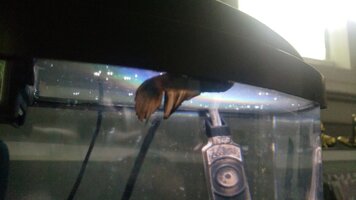
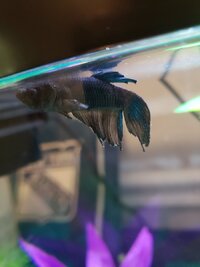
Our son's betta, named Curly - for the curl that we noticed in his dorsal fin when we got him in January 2021 - seems to be having a problem with his fins. You can clearly see the "before" and "after" photos - before from earlier this year and more recent. They seem to be losing color and wasting away.

We think this has been a slow progression and we really didn't notice the dramatic shift until more recently.

Curly isn't behaving any differently from what we see, is still blowing bubbles on the surface, seems to be swimming around okay and is eating just fine.

We haven't shifted any routines on our end. Food is the same. Temp and water conditions are consistent - weekly water changes. He has a log and plastic plant in the tank - we first thought he may have torn some of his dorsal fin on a sharp edge on the log but we then noticed the fin issue is not confined to the dorsal.

Any help would be appreciated. Our son lost his other fish, Happy, in under a year so we want to do everything to make Curly healthy again.
 

Attachments

  • 20210124_135920.jpg
    20210124_135920.jpg
    145.8 KB · Views: 140
  • 20210124_135939.jpg
    20210124_135939.jpg
    137.1 KB · Views: 142
  • 20210907_192253.jpg
    20210907_192253.jpg
    97.5 KB · Views: 154
  • 20210907_192257.jpg
    20210907_192257.jpg
    105.9 KB · Views: 150
  • 20210917_191712.jpg
    20210917_191712.jpg
    112.3 KB · Views: 108

Advertisement

Advertisement
Thank you for your reply. Is there any specific reason you are suggesting more frequent water changes? Someone else is telling us we are way UNDERfeeding him.
Had a betta whose fins got maybe a bit worse than that. That was how i treated it. How much you feeding him?
 
  • Thread Starter
  • #5
Had a betta whose fins got maybe a bit worse than that. That was how i treated it. How much you feeding him?
Two feedings daily, two pellets of Northfin Betta Bits each time.
 

Advertisement
Imo he looks a little thin, so I would say you are underfeeding. However, malnourishment alone probably wouldn't cause his fins to deteriorate so much. He likely ripped his fins on the plastic plant in the tank and they became infected (fin rot).

There is no way there are 0 nitrates in a tank that small, perhaps try testing his water again. The ammonia spike points to a water quality issue or cycling issue. Fin rot is most often caused by poor water conditions so that is why frequent WCs are often the best course of treatment. Clean water is the best medicine and the least stressful course of treatment for sick fish.

As a side note, in a 2.5 gallon I would suggest changing the water minimum 2-3x per week when the fish is healthy because it is such a small volume of water.
 
  • Thread Starter
  • #8
Imo he looks a little thin, so I would say you are underfeeding. However, malnourishment alone probably wouldn't cause his fins to deteriorate so much. He likely ripped his fins on the plastic plant in the tank and they became infected (fin rot).

There is no way there are 0 nitrates in a tank that small, perhaps try testing his water again. The ammonia spike points to a water quality issue or cycling issue. Fin rot is most often caused by poor water conditions so that is why frequent WCs are often the best course of treatment. Clean water is the best medicine and the least stressful course of treatment for sick fish.

As a side note, in a 2.5 gallon I would suggest changing the water minimum 2-3x per week when the fish is healthy because it is such a small volume of water.
Okay, will take care of this. As for the fin rot, we were thinking the plastic plant is the culprit so we will remove it and maybe replace with a silk plant? However, with fin rot, would all of his fins be affected, like we are seeing? Or, would just one fin where the rot has set in?
Thank you everyone for the advice.

Just to confirm it seems that no one is recommending introducing any medicine at this time, correct? Just increase the food a bit, change the water 2-3x per week (what percentage each time?)

Silk or live would be good.

Yes, all of his fins would be affected after the initial infection if it went weeks without treatment. It would take a toll on his immune system and the infection would spread to his other fins. Assuming there was a water quality issue then this would stress him out more and make the fin rot worse. He would also lose his color just like he has in the before and after pictures.


Edit: looking at the pictures again his fin rot is quite bad so I would recommend using aquarium salt to treat it since in this case I do not think WCs would be enough.

I would first dissolve 1 TBSP in his WC water for the full 2.5 gallon. Continue to do the 50% WCs every 2-3 days and to keep the 1 tbsp concentration of salt only add 0.5 tbsps into the WC water before adding to tank. Salt treatment should not exceed 2 weeks. Do 2 50% WCs at the end of treatment to remove salt from the tank. If you have a gravel vacuum I would also recommend giving the gravel a really good clean to suck up any waste or uneaten food that might be decomposing in the tank.
 
  • Thread Starter
  • #10
Silk or live would be good.

Yes, all of his fins would be affected after the initial infection if it went weeks without treatment. It would take a toll on his immune system and the infection would spread to his other fins. Assuming there was a water quality issue then this would stress him out more and make the fin rot worse. He would also lose his color just like he has in the before and after pictures.


Edit: looking at the pictures again his fin rot is quite bad so I would recommend using aquarium salt to treat it since in this case I do not think WCs would be enough.

I would first dissolve 1 TBSP in his WC water for the full 2.5 gallon. Continue to do the 50% WCs every 2-3 days and to keep the 1 tbsp concentration of salt only add 0.5 tbsps into the WC water before adding to tank. Salt treatment should not exceed 2 weeks. Do 2 50% WCs at the end of treatment to remove salt from the tank. If you have a gravel vacuum I would also recommend giving the gravel a really good clean to suck up any waste or uneaten food that might be decomposing in the tank.
Thanks for taking a second look. We will do this now. I have some API Aquarium salt, so assume that's okay. According to the instructions (picture attached), we should use 1 tablespoon for 5 gallons. Your guidance is 1 tablespoon for 2.5 gallons. Just wanted to make sure this is okay.

Are you saying use the 1 tablespoon of salt only on this very first 2.5 gallon full change - and then do 1/2 tablespoon of salt into the subsequent 50% water changes for 2 weeks? Is there a point when we should stop the water changes with salt ahead of the two week period?
 

Attachments

  • salt.png
    salt.png
    1.1 MB · Views: 86
Thanks for taking a second look. We will do this now. I have some API Aquarium salt, so assume that's okay. According to the instructions (picture attached), we should use 1 tablespoon for 5 gallons. Your guidance is 1 tablespoon for 2.5 gallons. Just wanted to make sure this is okay.

Are you saying use the 1 tablespoon of salt only on this very first 2.5 gallon full change - and then do 1/2 tablespoon of salt into the subsequent 50% water changes for 2 weeks? Is there a point when we should stop the water changes with salt ahead of the two week period?

Yes that salt is exactly the kind you need. The concentration they recommend on the carton is more of a prevention type dosage. In this case to treat the infection 1 tbsp per 2.5 gallons would be good to start with. I've personally used this concentration for treating a fungal infection and bettas can tolerate up to 1 tbsp per gallon so it's a safe level for him.

Correct, 1 tbsp for the first 50% WC then 1/2 tablespoon for each subsequent WC. 2 weeks is just the maximum amount of time they can tolerate the salt treatment. You will likely see improvements far sooner than 2 weeks. Once the black edges around his fins disappear and you see some fin regrowth you can stop the salt treatment. I would still continue with frequent 50% WCs until his fins fully heal. It may take some time for them to fully grow back, but the purpose of the salt treatment is to kill the infection on his fins to give them a chance to begin to regrow.
 

Advertisement


  • Thread Starter
  • #12
Okay, well we did a large water change yesterday and added a proportional amount of Aquarium Salt. We have some Indian Almond Leaf coming tomorrow - would anyone recommend using that?

Also, we took out one of his fake plants that we think may have injured him at some point - that's the purple/pinkish one. I bought these silk plants last night and was thinking of adding one of them - maybe the stringy green one on the right, so he has at least something else in the tank.

But wasn't sure if that is too much stress for the fish right now, as we've done a lot over the past 48 hours: upped the food amount, a couple of water changes, removed the fake plant.

Unfortunately now we are noticing a change in behavior - he's hanging out at the top of the tank more but is still eating just fine. Wonder if it's because he's having a hard time swimming?
 

Attachments

  • curly today.png
    curly today.png
    1.2 MB · Views: 105
  • new plants.png
    new plants.png
    1 MB · Views: 99
  • Old plant.png
    Old plant.png
    685.8 KB · Views: 115
IALs could be used after the salt treatment, although I personally don't think they are super effective for anything other than tinting the water to reduce stress which is exactly what I use it for. Other people swear by it saying it has antimicrobial properties due to the tannic acid it produces but it's a pretty weak acid so who knows if it actually helps with infections.

I believe your found the culprit, that plant certainly would have torn his fins. The silks ones you bought are good. Does he have any hiding places near the surface or caves at the bottom? Having plenty of hiding places will also help reduce stress by helping him feel secure in his environment.

Do you remove him from the tank during WCs?
 
  • Thread Starter
  • #14
IALs could be used after the salt treatment, although I personally don't think they are super effective for anything other than tinting the water to reduce stress which is exactly what I use it for. Other people swear by it saying it has antimicrobial properties due to the tannic acid it produces but it's a pretty weak acid so who knows if it actually helps with infections.

I believe your found the culprit, that plant certainly would have torn his fins. The silks ones you bought are good. Does he have any hiding places near the surface or caves at the bottom? Having plenty of hiding places will also help reduce stress by helping him feel secure in his environment.

Do you remove him from the tank during WCs?
No, we don't remove him during the water changes. Up until now, he hasn't really been bothered by them. He kind of moves out of the way.

He still has a log in the tank. That's where he seems to sleep and hide sometimes. See photo I just took.

But with us removing the (bad) plant, there is nothing else for him to check out or hide in. We'll add the silk plant(s) today but do you recommend any other toys or things to put in the tank - we only have 2.5 gallons, so not a ton of space.
 

Attachments

  • tank.png
    tank.png
    1.3 MB · Views: 143
No, we don't remove him during the water changes. Up until now, he hasn't really been bothered by them. He kind of moves out of the way.

He still has a log in the tank. That's where he seems to sleep and hide sometimes. See photo I just took.

But with us removing the (bad) plant, there is nothing else for him to check out or hide in. We'll add the silk plant(s) today but do you recommend any other toys or things to put in the tank - we only have 2.5 gallons, so not a ton of space.

That's good, I just wanted to check since it's much more stressful to keep moving him back and forth for WCs.

If it is a swimming issue he will have trouble swimming down to the bottom of the tank too and it is often accompanied by bloating which I don't see on him.

I would probably add all of the silk plants if they'll fit. That should give him plenty of cover and things to look at. Imo their environment is the best "toy" they could have. If there is enough enriching things in the tank they will entertain themselves and spend all day weaving around the tank exploring behind plants, through logs etc. Obviously the more space you can give him the more things you can add for enrichment and there will be more room for him to explore.

One suggestion to keep things interesting for him is to move his decor around every month to create a "new" environment for him to explore.
 
  • Thread Starter
  • #16
That's good, I just wanted to check since it's much more stressful to keep moving him back and forth for WCs.

If it is a swimming issue he will have trouble swimming down to the bottom of the tank too and it is often accompanied by bloating which I don't see on him.

I would probably add all of the silk plants if they'll fit. That should give him plenty of cover and things to look at. Imo their environment is the best "toy" they could have. If there is enough enriching things in the tank they will entertain themselves and spend all day weaving around the tank exploring behind plants, through logs etc. Obviously the more space you can give him the more things you can add for enrichment and there will be more room for him to explore.

One suggestion to keep things interesting for him is to move his decor around every month to create a "new" environment for him to explore.
All sounds good. There seems to be different opinions about adding aquarium salt to the tank, though. On another board, someone said not to do that. But we did, so I guess we have to decide if we want to keep on going with the salt? Here's a short video of him today. Also wondering if we should shut off the aerator occasionally over the next few days. Thinking that he may be having a hard time swimming and tiring him out a bit due to his tiredness and trying to recover. What do you think?
 
All sounds good. There seems to be different opinions about adding aquarium salt to the tank, though. On another board, someone said not to do that. But we did, so I guess we have to decide if we want to keep on going with the salt? Here's a short video of him today. Also wondering if we should shut off the aerator occasionally over the next few days. Thinking that he may be having a hard time swimming and tiring him out a bit due to his tiredness and trying to recover. What do you think?

That is true, although same goes with antibiotics and other medications which imo are much more taxing for a fish to deal with. Either way fin rot that severe imo would have needed to be treated with something other than just WCs. It's definitely a personal choice if and what you choose to medicate with.

His fins look a ton better already and he's even regaining color! The black edges are pretty much gone which is a really good sign. Next you'll start to see some clearish white fin regrowth. His breathing is a little heavy, which could be from stress or being pushed around by filter flow. What kind of filter do you run? From the pictures it looks like a HOB filter which can be modified if you feel like the flow is too strong with a filter baffle. I would not turn it off though since your beneficial bacteria need oxygenated water. If there's not too much surface agitation then the flow is probably not too strong, which makes me think he could just be stressed out from all he's endured lately. To help reduce stress I would turn his lights off for a day or two. You could also do your 50% WCs every 3 days instead of 2 to give him extra time to relax between WCs.
 
  • Thread Starter
  • #18
That is true, although same goes with antibiotics and other medications which imo are much more taxing for a fish to deal with. Either way fin rot that severe imo would have needed to be treated with something other than just WCs. It's definitely a personal choice if and what you choose to medicate with.

His fins look a ton better already and he's even regaining color! The black edges are pretty much gone which is a really good sign. Next you'll start to see some clearish white fin regrowth. His breathing is a little heavy, which could be from stress or being pushed around by filter flow. What kind of filter do you run? From the pictures it looks like a HOB filter which can be modified if you feel like the flow is too strong with a filter baffle. I would not turn it off though since your beneficial bacteria need oxygenated water. If there's not too much surface agitation then the flow is probably not too strong, which makes me think he could just be stressed out from all he's endured lately. To help reduce stress I would turn his lights off for a day or two. You could also do your 50% WCs every 3 days instead of 2 to give him extra time to relax between WCs.
Thank you again for your continued responses and detail.

The aerator is a Aqueon Mini-Bow. Not sure what baffle would work on it?

As for Curly today, here's a link to a video I just took. He's spending quite a bit of time at the top of the tank, fins fluttering a bit and still kind of heavy breathing. He ate all three pellets for breakfast and his one lunch pellet.

The water parameters:
We had to swap out a bit of the water yesterday due to adding the silk plant, but the large water change (50-60%) was on Tuesday when we added the salt. Not sure if it's a coincidence or not, but after that is when Curly started hanging out more at the top of the tank.

Currently 0 nitrates and nitrites. The pH is about 7.6 - this has been the case since we got the fish (we do have a pH down product but have never used it). Ammonia is a bit hard to read, looks to be slightly more than 0 but less than .25 ppm.

Would you recommend another water change today (25%) or waiting another day?
Should we not do any other salt - or another medication?

Just wanted to make sure things aren't getting worse. Thanks!
 

Attachments

  • 20210923_134853.jpg
    20210923_134853.jpg
    173.5 KB · Views: 106
  • 20210923_134354.jpg
    20210923_134354.jpg
    89.1 KB · Views: 96
Thank you again for your continued responses and detail.

The aerator is a Aqueon Mini-Bow. Not sure what baffle would work on it?

As for Curly today, here's a link to a video I just took. He's spending quite a bit of time at the top of the tank, fins fluttering a bit and still kind of heavy breathing. He ate all three pellets for breakfast and his one lunch pellet.

The water parameters:
We had to swap out a bit of the water yesterday due to adding the silk plant, but the large water change (50-60%) was on Tuesday when we added the salt. Not sure if it's a coincidence or not, but after that is when Curly started hanging out more at the top of the tank.

Currently 0 nitrates and nitrites. The pH is about 7.6 - this has been the case since we got the fish (we do have a pH down product but have never used it). Ammonia is a bit hard to read, looks to be slightly more than 0 but less than .25 ppm.

Would you recommend another water change today (25%) or waiting another day?
Should we not do any other salt - or another medication?

Just wanted to make sure things aren't getting worse. Thanks!


I'm confused I googled the aqueon mini bow and it is a 1 gallon tank.. not 2.5. Can you confirm that it is 2.5 gallons? Because that would make a huge difference in treatment.

Forget the baffle idea. After watching the video I can say it definitely is not a heavy flow issue stressing him. You actually have quite a bit of biofilm built up on the surface which will deplete oxygen from the tank. Biofilm is essentially a collection of microorganisms that have adhered to the surface of the water because there is an excess of nutrients for them to feed on (decomposing organics) and no flow/agitation to break them up. This might also be why he is spending a bit of time at the surface. He is in a low oxygen environment and bettas have adapted to breathe atmospheric oxygen in such circumstances thanks to their adaptation the labyrinth organ. You can remove biofilm by blotting it with paper towel but the cause should also be addressed. A good scrub of the sides of the tank and serious gravel vacuum would also help with reducing biofilm build up. Cleaning the inside of the filter and filter intake should help too, but don't overclean filter media!

Interesting his behaviour changed after the WC. Usually fish recuperate and thrive off of water changes except when they have lived for a long time in dirty water. If he's not used to clean water it can take some adjusting. I know you do big WCs weekly but in such a small tank it doesn't make much of a dent when toxic compounds accumulate so quickly.

Your pH is good and not relevant if it's stable. The primary concern is ammonia and nitrites since you had a random ammonia spike. He does seem quite stressed still so I would wait another day to do your WC and turn his tank lights off. If it is the salinity bothering him (which I don't think it is bettas have a solid tolerance) you could try reducing the concentration by not adding salt next WC and see how he behaves. That would bring you to a 1/2 tbsp per 2.5 gallons. I would not recommend adding any other medications right now.

As a side note if you're only feeding him one brand of pellet and nothing else I would encourage you to add some more variety to his diet. Frozen or freeze dried foods such as bloodworms and brine shrimp are a great source of protein. I have found they tend to prefer frozen foods (especially blood worms which can be fed with tongs for ease) and when they are sick I give them all they can eat, literally. When I was helping my own betta heal some scraped off scales he got frozen blood worms and pellets daily. My thought process is while healing they need extra nutrients to rebuild the cells they need to. Might be something to look into. Bug bites are also a huge fish favorite, I use the cichlid s/m sized granules for my betta.

Definitely keep us posted with how he's doing! I admire your willingness to help him and learn.
 
  • Thread Starter
  • #20
I'm confused I googled the aqueon mini bow and it is a 1 gallon tank.. not 2.5. Can you confirm that it is 2.5 gallons? Because that would make a huge difference in treatment.

Forget the baffle idea. After watching the video I can say it definitely is not a heavy flow issue stressing him. You actually have quite a bit of biofilm built up on the surface which will deplete oxygen from the tank. Biofilm is essentially a collection of microorganisms that have adhered to the surface of the water because there is an excess of nutrients for them to feed on (decomposing organics) and no flow/agitation to break them up. This might also be why he is spending a bit of time at the surface. He is in a low oxygen environment and bettas have adapted to breathe atmospheric oxygen in such circumstances thanks to their adaptation the labyrinth organ. You can remove biofilm by blotting it with paper towel but the cause should also be addressed. A good scrub of the sides of the tank and serious gravel vacuum would also help with reducing biofilm build up. Cleaning the inside of the filter and filter intake should help too, but don't overclean filter media!

Interesting his behaviour changed after the WC. Usually fish recuperate and thrive off of water changes except when they have lived for a long time in dirty water. If he's not used to clean water it can take some adjusting. I know you do big WCs weekly but in such a small tank it doesn't make much of a dent when toxic compounds accumulate so quickly.

Your pH is good and not relevant if it's stable. The primary concern is ammonia and nitrites since you had a random ammonia spike. He does seem quite stressed still so I would wait another day to do your WC and turn his tank lights off. If it is the salinity bothering him (which I don't think it is bettas have a solid tolerance) you could try reducing the concentration by not adding salt next WC and see how he behaves. That would bring you to a 1/2 tbsp per 2.5 gallons. I would not recommend adding any other medications right now.

As a side note if you're only feeding him one brand of pellet and nothing else I would encourage you to add some more variety to his diet. Frozen or freeze dried foods such as bloodworms and brine shrimp are a great source of protein. I have found they tend to prefer frozen foods (especially blood worms which can be fed with tongs for ease) and when they are sick I give them all they can eat, literally. When I was helping my own betta heal some scraped off scales he got frozen blood worms and pellets daily. My thought process is while healing they need extra nutrients to rebuild the cells they need to. Might be something to look into. Bug bites are also a huge fish favorite, I use the cichlid s/m sized granules for my betta.

Definitely keep us posted with how he's doing! I admire your willingness to help him and learn.
Hello again. I wanted to give you a bit of an update (By the way, our tank is 2.5 gallon - we have an older version of the Mini-Bow which is 2.5 gallons)

We did a 25% water change yesterday, but did not do the salt to see if that makes a difference. The parameters are stable - the ammonia was definitely 0 when I tested after the tank change.

Will try to get some frozen food this weekend.

Fins appear, though can't be certain, to be regrowing. Possibly a slight improvement with his coloring. And he's still eating just fine.

But his behavior is what's concerning us most. He spent most of yesterday at the top of the tank, with occasional visits sitting on the bottom. He's breathing is pretty labored

This morning he was right next to the heater and not moving much. Then he noticed us and came over for food and he ate everything.

Then he noticed us and came over for food and he ate everything.

Can you see any clues in this video and pictures I just took? Curly September 25

Should we stay the course on just doing water changes or do anything else? Thank you again!
-Rob
 
feel inside the log with your finger. it may have a hard edge that is cutting the fins
if so, use fine sand paper to smooth out the edges. The outer edge is likely okay, but the inside edge may be where the damage comes from.

someone here had that issue a while back with interior edge being razor sharp, just a though. Good luck
 

Advertisement


  • Thread Starter
  • #22
I'm confused I googled the aqueon mini bow and it is a 1 gallon tank.. not 2.5. Can you confirm that it is 2.5 gallons? Because that would make a huge difference in treatment.

Forget the baffle idea. After watching the video I can say it definitely is not a heavy flow issue stressing him. You actually have quite a bit of biofilm built up on the surface which will deplete oxygen from the tank. Biofilm is essentially a collection of microorganisms that have adhered to the surface of the water because there is an excess of nutrients for them to feed on (decomposing organics) and no flow/agitation to break them up. This might also be why he is spending a bit of time at the surface. He is in a low oxygen environment and bettas have adapted to breathe atmospheric oxygen in such circumstances thanks to their adaptation the labyrinth organ. You can remove biofilm by blotting it with paper towel but the cause should also be addressed. A good scrub of the sides of the tank and serious gravel vacuum would also help with reducing biofilm build up. Cleaning the inside of the filter and filter intake should help too, but don't overclean filter media!

Interesting his behaviour changed after the WC. Usually fish recuperate and thrive off of water changes except when they have lived for a long time in dirty water. If he's not used to clean water it can take some adjusting. I know you do big WCs weekly but in such a small tank it doesn't make much of a dent when toxic compounds accumulate so quickly.

Your pH is good and not relevant if it's stable. The primary concern is ammonia and nitrites since you had a random ammonia spike. He does seem quite stressed still so I would wait another day to do your WC and turn his tank lights off. If it is the salinity bothering him (which I don't think it is bettas have a solid tolerance) you could try reducing the concentration by not adding salt next WC and see how he behaves. That would bring you to a 1/2 tbsp per 2.5 gallons. I would not recommend adding any other medications right now.

As a side note if you're only feeding him one brand of pellet and nothing else I would encourage you to add some more variety to his diet. Frozen or freeze dried foods such as bloodworms and brine shrimp are a great source of protein. I have found they tend to prefer frozen foods (especially blood worms which can be fed with tongs for ease) and when they are sick I give them all they can eat, literally. When I was helping my own betta heal some scraped off scales he got frozen blood worms and pellets daily. My thought process is while healing they need extra nutrients to rebuild the cells they need to. Might be something to look into. Bug bites are also a huge fish favorite, I use the cichlid s/m sized granules for my betta.

Definitely keep us posted with how he's doing! I admire your willingness to help him and learn.
Here's a new 30 second video of Curly today, see breathing:
Curly September 27

Food wise, we were on 2/2 but the consensus here was that is not enough food, so we updated to 3/1/3 about a week or so ago (NorthFin Betta Bits).

He still is interested in eating. However, yesterday at dinner time, he spit out one of the three pellets. This morning, he spit out one of the three again. Not sure what if anything this means.

We will get the Kordon products today, will do a 25% water change tomorrow and add them and do a gravel scrub with a turkey baster. I think we are also going to try and get Curly over to the place we bought him from - about 15 minutes away - a specialty pet store (local, not a chain) to take a look and see if they have any insight. If we do, we will try to reduce the water level in the tank so as to minimize any chance of spillage and not disrupt him too much.

We thought the benefit of this outweighs any risk?

Also, do you think we should still keep the tank light off during the day or give him some light?

Is there a point that we try to be more aggressive in treatment? We're not sure how long we stick with what we are doing before seeing improvement - it's been about a week since the behavior changed, longer than that for the fins.

Thank you!
 
His fins are looking better but he's clearly still stressed. It would not be a good idea to stress him further by bringing him to a pet store..

You could try soaking the pellets before feeding to make them softer and easier to digest.

Since having the lights off hasn't really helped you might as well turn them back on and give him a day/night cycle. How many hours are the lights usually on per day?

I'm not familiar with other medications since to use them you really need to know exactly what it is you're treating or risk making the problem much worse. His fins seem to be improving with the WCs and like I said since his fin rot was neglected for so long it will take quite some time for his fins to regrow. He didn't deteriorate overnight and similarly he will not recover overnight either.
 
  • Thread Starter
  • #24
His fins are looking better but he's clearly still stressed. It would not be a good idea to stress him further by bringing him to a pet store..

You could try soaking the pellets before feeding to make them softer and easier to digest.

Since having the lights off hasn't really helped you might as well turn them back on and give him a day/night cycle. How many hours are the lights usually on per day?

I'm not familiar with other medications since to use them you really need to know exactly what it is you're treating or risk making the problem much worse. His fins seem to be improving with the WCs and like I said since his fin rot was neglected for so long it will take quite some time for his fins to regrow. He didn't deteriorate overnight and similarly he will not recover overnight either.
Okay, thank you again. We won't bring him in but maybe would shoot some videos and bring them to the store to discuss.

Here are a couple just shot videos: New Videos 9/27

He's pretty much hanging out at the surface of the tank - I would say he's having some trouble swimming, as he gets blown around a bit by the current.

The tank lights are usually on about 10 hours per day - under normal circumstances.
 
  • Thread Starter
  • #25
In addition to the fish's physical appearance, his behavior has changed too. As mentioned, he's spending most of his time at the top of the tank, not moving around much. When he does try to swim, it looks like he's having trouble - just yesterday when he was trying to swim down, he kind of rolled over - and then decided to come right back to the top.

Updated photos and videos: https://photos.app.goo.gl/ckLwuPx4jRqTSSnM9

We've been changing about 25% of the water daily - and treating with Kordon NovaAqua Plus and Fish Protector

If anyone has any other thoughts it would be appreciated. It seems like we may be running out of time based on the behavior - or maybe this is start of a long road to recovery?

Given the deterioration in behavior, would it be time to try a medication - like a Bettafix (though we know there are lot of thoughts on that), an antibiotic or anything else?

Thank you
 
Just read through entire thread as son thinking about getting a betta. Sorry nothing to add but I feel kind of attached to this little guy Curly now and can’t work out how to follow without commenting. I hope he gets sorted x
 
  • Thread Starter
  • #28
I would do API general cure at this point and definitely switch to verity of frozen foods such as brine shrimp, mysis shrimp,daphnia,krill and other fresh water frozen foods. I would also perform methylene blue dip for about 30 min. every day for at least a week. I do this dip every other water change as a prophylactic treatment.
Thank you. We may try the API or Kanaplex.

We purchased some frozen brine shrimp but it's "Spirulina Brine Shrimp" Is that ok?
 
  • Thread Starter
  • #29
His fins are looking better but he's clearly still stressed. It would not be a good idea to stress him further by bringing him to a pet store..

You could try soaking the pellets before feeding to make them softer and easier to digest.

Since having the lights off hasn't really helped you might as well turn them back on and give him a day/night cycle. How many hours are the lights usually on per day?

I'm not familiar with other medications since to use them you really need to know exactly what it is you're treating or risk making the problem much worse. His fins seem to be improving with the WCs and like I said since his fin rot was neglected for so long it will take quite some time for his fins to regrow. He didn't deteriorate overnight and similarly he will not recover overnight either.
Thanks for the advice. We thinking of starting the Kanaplex tomorrow.

It doesn't look like the fins have gotten worse on Curly since we started the more frequent water changes, but he hasn't gotten much better either. If you see the "before" and "current" photos attached, what's most concerning is that his entire front fins - just below his "chin" are almost all gone. Those are the reddish ones.

Do you know if these will grow back? We're operating on a hunch that these front fins allow him to steer and better maintain buoyancy, because when he does swim he can't really navigate well.

Check out these videos: 2 new photos by Robert Melstein

Especially the first one - both from today - where he tries to swim down to the bottom of the tank but kind of flips over. Not sure if you see anything in these that we are missing.
 

Attachments

  • 33353.jpeg
    33353.jpeg
    172.5 KB · Views: 121
  • 20211001_075413.jpg
    20211001_075413.jpg
    93.7 KB · Views: 88
  • Thread Starter
  • #30
His fins are looking better but he's clearly still stressed. It would not be a good idea to stress him further by bringing him to a pet store..

You could try soaking the pellets before feeding to make them softer and easier to digest.

Since having the lights off hasn't really helped you might as well turn them back on and give him a day/night cycle. How many hours are the lights usually on per day?

I'm not familiar with other medications since to use them you really need to know exactly what it is you're treating or risk making the problem much worse. His fins seem to be improving with the WCs and like I said since his fin rot was neglected for so long it will take quite some time for his fins to regrow. He didn't deteriorate overnight and similarly he will not recover overnight either.

I did get a shipment of Indian Almond Leaf and haven't added it, yet. Just was a bit concerned - I've read a couple of reviews where the IAL killed someone's fish possibly due to a toxic batch? But if there isn't a lot of risk there, we may try.

I've also held off with the KanaPlex and Focus, just because things aren't getting worse - though they aren't getting much better either. The dorsal and tail fins seem to be regrowing a bit but the ventrals not at all.

We've added San Francisco Bay Brand fish food to his diet - frozen SPIRULINA brine shrimp. This is what the store had. Is spirulina okay for bettas? SFBB

Attached are updated photos and a video here: New video by Robert Melstein

There looks to be some sort of bulge behind his left gill?

Thanks again for the help!
 

Attachments

  • 20211008_194440.jpg
    20211008_194440.jpg
    78.1 KB · Views: 117
  • 20211009_084809.jpg
    20211009_084809.jpg
    110.3 KB · Views: 96
  • 20211009_084811.jpg
    20211009_084811.jpg
    113.5 KB · Views: 84
  • 20211009_084846.jpg
    20211009_084846.jpg
    77 KB · Views: 83
Thank you. We may try the API or Kanaplex.

We purchased some frozen brine shrimp but it's "Spirulina Brine Shrimp" Is that ok?
Sure, you can try spirulina . just fyi-in my usage of Kanaplex- I found this medicine to be ineffective . I had better results with API general cure, but then again, it is hard to say what we dealing here with. I hope he feels better soon☺️
 

Advertisement


I did get a shipment of Indian Almond Leaf and haven't added it, yet. Just was a bit concerned - I've read a couple of reviews where the IAL killed someone's fish possibly due to a toxic batch? But if there isn't a lot of risk there, we may try.

I've also held off with the KanaPlex and Focus, just because things aren't getting worse - though they aren't getting much better either. The dorsal and tail fins seem to be regrowing a bit but the ventrals not at all.

We've added San Francisco Bay Brand fish food to his diet - frozen SPIRULINA brine shrimp. This is what the store had. Is spirulina okay for bettas? SFBB

Attached are updated photos and a video here: New video by Robert Melstein

There looks to be some sort of bulge behind his left gill?

Thanks again for the help!

I have never had any issues using IALs. It is highly unlikely that it was the leaves that killed their fish. Minimal risk in trying the leaves imo. I regularly add homemade blackwater extract to my betta's tank.

His ventral may take some more time to heal since his body has a lot of damage and infection to fight. I do know they can grow back, although probably not to the same length as they were before.

Yes, spirulina is fine for bettas. It's just some added micronutrients in the brine shrimp's digestive tract.

Since he doesn't look bloated I'm thinking it could possibly be a tumor.

As a side note, his swim bladder (used to control buoyancy) looks a little swollen. This would account for his swimming issues and staying up near the surface. It's the bump near caudal fin. I've never dealt with swim bladder issues and treatment varies depending on the cause. In this case it's probably from some kind of internal infection, but I am not well versed in fish medications so I cannot advise further.
 
  • Thread Starter
  • #33
I have never had any issues using IALs. It is highly unlikely that it was the leaves that killed their fish. Minimal risk in trying the leaves imo. I regularly add homemade blackwater extract to my betta's tank.

His ventral may take some more time to heal since his body has a lot of damage and infection to fight. I do know they can grow back, although probably not to the same length as they were before.

Yes, spirulina is fine for bettas. It's just some added micronutrients in the brine shrimp's digestive tract.

Since he doesn't look bloated I'm thinking it could possibly be a tumor.

As a side note, his swim bladder (used to control buoyancy) looks a little swollen. This would account for his swimming issues and staying up near the surface. It's the bump near caudal fin. I've never dealt with swim bladder issues and treatment varies depending on the cause. In this case it's probably from some kind of internal infection, but I am not well versed in fish medications so I cannot advise further.
Okay, thank you. I will try the leaves and see if there is further improvement.

As for the meds, will try to avoid I guess - but what is the tipping point to try? He seems to be getting better so not sure.
 
  • Thread Starter
  • #34
Hello everyone. Things were getting better with Curly but over the last few days, things have taken a turn for the worse.

See just taken pics and short video: https://photos.app.goo.gl/6WPDsYcKLWjWGeJt6

As you can see, the fins are not in good shape - concerned that once they get to his body, it's all over.

We have never medicated him - tried just focusing on water quality and food - but wonder if it's time to try. I have Kanaplex and API Fin Cure ready to go. If we didn't add a medicine, our plan was to do another 25-40% water change tomorrow (we did a 60-70% water change yesterday).

He is almost exclusively hanging out at the top of the tank. When we feed him, if the food pellets drop he tries to go after them by diving. He definitely looks like he's having trouble swimming. When we shut his light off, he does try to swim around a bit - this is usual behavior for him; maybe he sees his reflection better. The breathing doesn't seem too labored though.

His demeanor doesn't seem too bad, except he's just sitting at the top of the tank. When our son comes into the room, he does respond.

As for parameters, I checked everything yesterday. pH was about 7.6 but this is consistent, 0 nitrites, possibly slightly elevated nitrates but hard to tell on the color chart, ammonia looked to be 0 to .25 ppm. Temperature is about 78-80.

One other variable: A few weeks back we started feeding him San Francisco Bay Brand Frozen Spirulina Brine Shrimp. He really likes it, but it's hard to manage in the tank - anything that he doesn't eat floats around and to the bottom and it's hard to remove. We're thinking this may be leading to a change in tank parameters and leading to the fin rot.

Any advice here? Should we start a medication and if so, which one? Thank you!
 
  • Thread Starter
  • #35
Hi again - I am looking for some advice based on the following update.
We treated Curly with Kanaplex and Jungle Fizz Fungus cure. We waited about 2 weeks and then a few days ago tried again with the Kanaplex blended into his food with Focus.

Unfortunately, it doesn't seem to have helped with the fin rot. Things don't look like they've gotten worse, but they don't seem to be turning the corner either.

He is still eating, but occasionally spits out a pellet here and there. In terms of behavior, he mostly spends his days at the top of the tank. When he sees me, he does become active but it's hard for him to swim and kind of just floats back up to the surface.

On another board I was advised to try Aqua Cipro - as maybe the previous meds did not work and this infection is just stubborn.

Nitrates and nitrites are 0, pH is 7.6 (this is how it's always been), ammonia looks to be 0.25 ppm - will do a 25% water change tomorrow.

Anyone have any further advice? Thank you!
 

Attachments

  • 20220108_192518.jpg
    20220108_192518.jpg
    85.3 KB · Views: 71
  • 20220111_192732.jpg
    20220111_192732.jpg
    71.6 KB · Views: 71
  • 20220111_192808.jpg
    20220111_192808.jpg
    68.6 KB · Views: 114

Random Great Topic!

Advertisement


Advertisement


Advertisement


Back
Top Bottom